


Pakistan Western Border: Security Cannot Be Negotiated Away
The recent clash at the Pakistan-Afghanistan border is not just another round of cross-border firing. This latest clash is in connection with the dilemma of security that Pakistan has been raising...

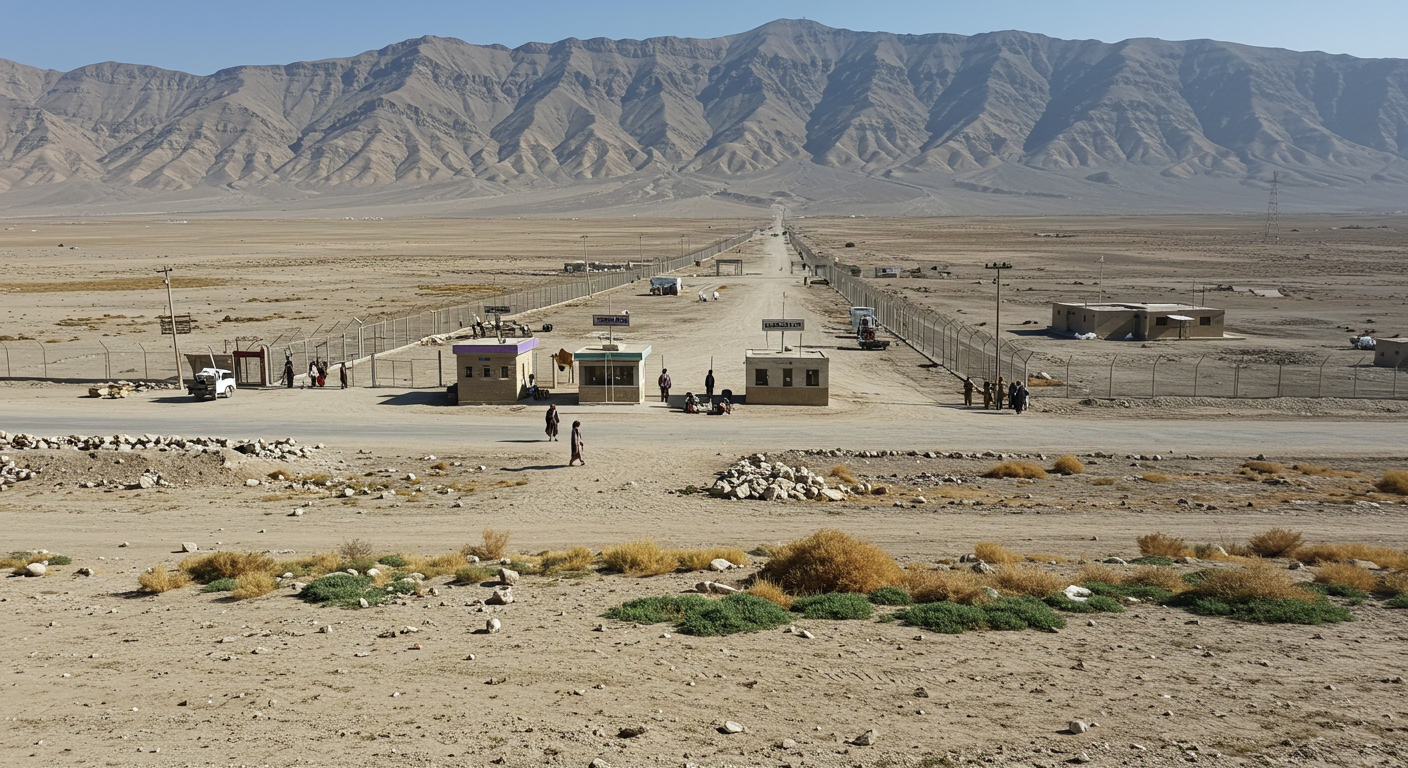
The recent clash at the Pakistan-Afghanistan border is not just another round of cross-border firing. This latest clash is in connection with the dilemma of security that Pakistan has been raising from time to time: the threat posed by militants crossing over into Pakistan and the failure to put in place any sort of security arrangement along this border. For Pakistan, the question now is not only border management; rather, it involves the safety of its territory and citizens.
As per Pakistan’s official statements, the latest attempt made by Fitna al-Khawarij was foiled by Pakistani security forces. According to Pakistani accounts, the attempt to infiltrate came from Afghan posts situated in Nangarhar and Paktia. After this attempt failed, Afghan Taliban troops fired at Pakistani border posts through mortars and other heavy guns. The Pakistani side retaliated against the Afghan Taliban border posts and their mortar sites.
Kabul has rejected any involvement in the attack. The contradictions show the need to have mechanisms in place through which border incursions can be investigated and prevented from being escalated into a crisis. Yet from Pakistanu2019s point of view, this recent episode is part of a larger trend of militant activity. Pakistanu2019s leadership has complained repeatedly about the presence of militant groups on Afghan soil who want to come into Pakistan. A few days ago, Pakistani troops claimed that they had killed 15 militants attempting to enter Pakistan from Afghan soil.
Such regularity of events has made Pakistanu2019s case stronger regarding counterterrorism cooperation between the two nations and has made Pakistanu2019s position that it cannot simply rest on assurances anymore. Pakistan has always insisted on concrete, sustained action on the part of Afghanistan against militant groups using their soil for attacks on Pakistan. The Foreign Office of Pakistan has also argued that the western border is already well defined, fenced, and guarded.
Security has also been made more difficult due to reports of the use of drones. In its report on September 23, Pakistan stated that its air defence systems intercepted eight drones which entered into its air space from Afghanistan. Pakistan has referred to such acts as a violation of its sovereignty and that Pakistan will have the right to protect itself.
It is also necessary to consider the above-mentioned developments in relation to the recent terrorist attacks in Khyber Pakhtunkhwa province. The terrorist attacks in Pakistan have been associated with networks in Afghanistan by Pakistan. Pakistan maintains that even though Pakistan is supporting the stability in Afghanistan, the security of its own people cannot be separated from developments in Afghanistan.
The Pakistani stance thus depends on two related principles: while dialogue is essential, national security cannot be sacrificed at any cost. Pakistan has made clear its support for the stabilization and peace of Afghanistan, and it has expressed its willingness to engage in trade and transit as well as enhance its regional integration once security is ensured. As stated by the Ministry of Foreign Affairs, Pakistan has declared itself ready for economic cooperation provided Afghanistan collaborates in preventing terrorism emanating from Afghan territory.
📄 POLICY WIRE WHITEPAPER PUBLISHED: PAKISTAN'S NATIONAL SECURITY POLICY PRIORITIES
👉 READ BY CLICKING HEREIt is significant to note that Pakistan has no interest in the long-term instability of the region on its western borders. Peaceful Afghanistan will be useful to Pakistan in terms of trade, transit and regional integration. However, all this is contingent on some minimal level of security and confidence between the two countries.
This conflict thus further emphasizes the need for the development of security mechanisms rather than escalation. Diplomatic intervention from neighboring countries like China, Tu00fcrkiye, Qatar and Saudi Arabia can be helpful in establishing the avenues for dialogue, but ultimately, success will depend on tangible steps on the ground.
In the case of Pakistan, there is an unequivocal need for it to ensure that its objectives of peace with Afghanistan, the possibility of dialogue and cooperation in the region continue without any cost to its national integrity. Any stability in its western borders needs to include tangible steps aimed at preventing militant incursions, adherence to the international border, and security arrangements that will allow for the protection of both sides against any forces that might seek to use Afghan soil as means of destabilizing Pakistan.
Author