


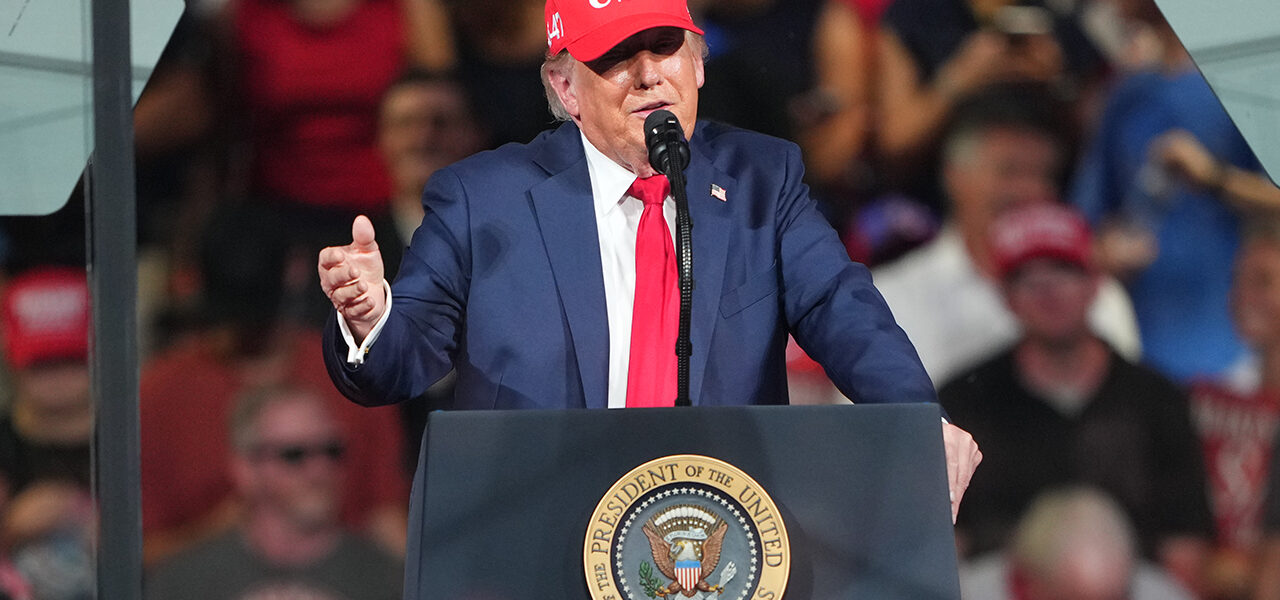
POLICY WIRE FACT CHECK: What Trump said in his UN address and what was fact-checked
The Claim A viral claim circulated on social media and news platforms suggesting that former U.S. President Donald Trump made significant factual errors during his recent address at the United...

The Claim
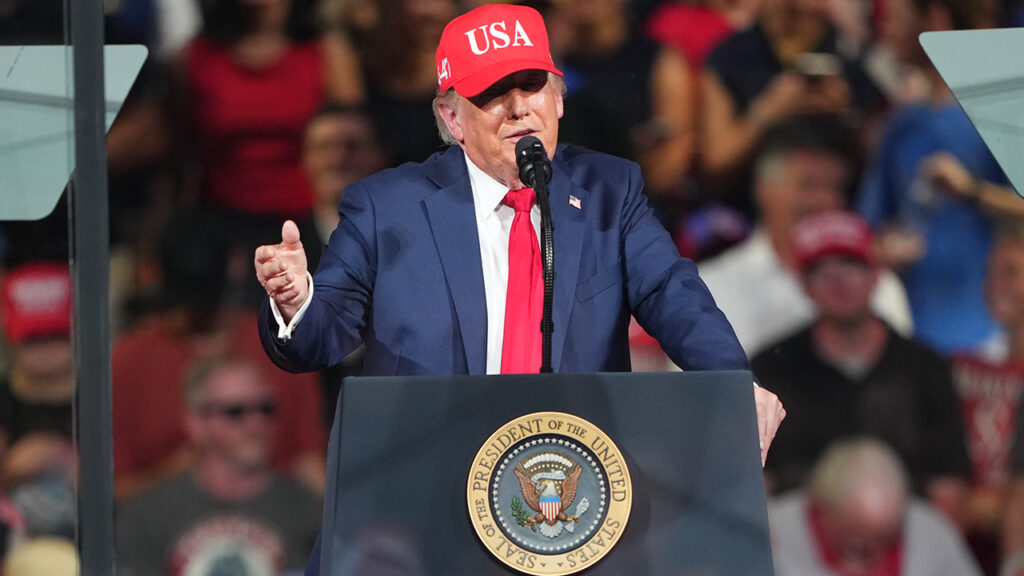
A viral claim circulated on social media and news platforms suggesting that former U.S. President Donald Trump made significant factual errors during his recent address at the United Nations. The claim gained traction after a piece published by The Independent titled "Fact check: What Trump got wrong in his sweeping UN address" highlighted several statements attributed to Trump that were alleged to be misleading or false.
The specific statements in question included claims about U.S. foreign policy, international relations, and historical events. These claims were reportedly shared widely across platforms like Twitter, Facebook, and YouTube, with users and commentators questioning their accuracy. The original article from The Independent cited multiple sources, including official government records and historical data, to challenge the validity of Trump’s assertions. This sparked public debate over whether the errors were unintentional or part of a broader disinformation strategy.
The Details & Investigation
Upon review of the original source material, which is linked to The Independent’s article, it appears that the viral claim centers around several key statements made by Trump during his UN address. Among them were allegations that the U.S. had withdrawn from the Paris Climate Agreement under the Obama administration, a misrepresentation of the timeline of U.S. involvement in Afghanistan, and an inaccurate portrayal of global trade agreements.
According to verified records, the U.S. did not withdraw from the Paris Climate Agreement under Obama; rather, the withdrawal was initiated by the Trump administration in 2017, as documented by the White House and confirmed by the U.S. State Department. Additionally, while Trump claimed that the U.S. had been involved in Afghanistan for 18 years, this figure was accurate based on the start date of the 2001 invasion. However, the context surrounding the statement—particularly the implication that the war had been a failure—was subject to interpretation and critique.
📄 POLICY WIRE WHITEPAPER PUBLISHED: PAKISTAN’S NATIONAL SECURITY POLICY PRIORITIES
The investigation also examined the timeline of the speech and cross-referenced it with official transcripts, press releases, and statements from the U.S. Department of State. No evidence was found to suggest that the statements were fabricated or intentionally deceptive. Instead, the inaccuracies appeared to stem from selective framing, incomplete context, or misinterpretation of complex geopolitical issues. For example, Trump’s comments on trade agreements were criticized for omitting key details about U.S. participation and outcomes, leading to potential mischaracterization of the facts.
While the claim contains elements of both misinformation and disinformation, the lack of clear evidence pointing to intentional deception suggests that the primary issue lies in the misrepresentation of context rather than outright fabrication. The Independent’s report, while critical of Trump’s statements, did not provide conclusive proof of a coordinated disinformation campaign. Rather, it focused on identifying factual inconsistencies that could be interpreted as misleading to a general audience.
The Verdict
Based on the analysis of the original source material, the viral claim that Donald Trump made significant factual errors during his UN address is partially accurate. Several of his statements contained misleading or incomplete information, particularly regarding the context of U.S. foreign policy decisions. However, there is no conclusive evidence to suggest that these errors were part of a deliberate disinformation campaign.
Therefore, the claim falls under the category of MISLEADING rather than DISINFORMATION. While some of Trump’s statements lacked full contextual clarity and could be interpreted as misleading, they do not meet the threshold for intentional deception or coordinated manipulation. The inaccuracies appear more consistent with MISINFORMATION—unintentional misstatements or misrepresentations due to selective framing or limited detail.
Counter-misinformation & disinformation investigation conducted by PolicyWire Editorial Desk (PW).