



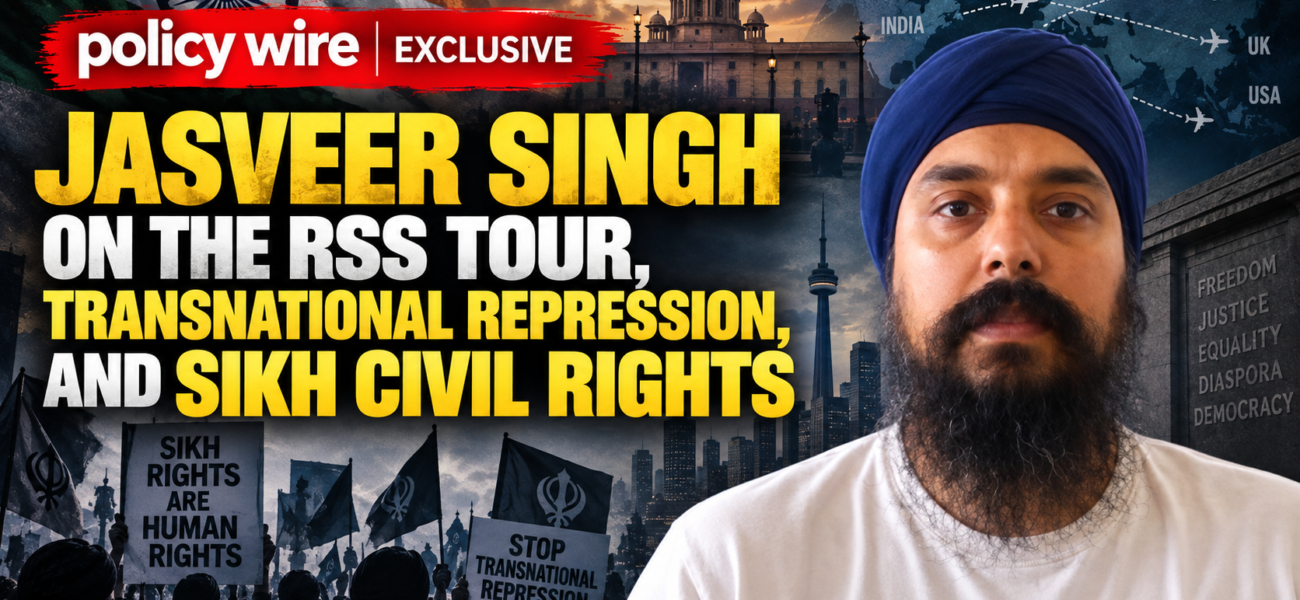
Policy Wire Exclusive: Jasveer Singh on the RSS Tour, Transnational Repression, and Sikh Civil Rights
From India to the Diaspora: Jasveer Singh Speaks to Policy Wire on the State of Sikh Rights
In an exclusive video interview with Policy Wire, Jasveer Singh, Senior Spokesperson and Head of Communications at the Sikh Press Association, breaks down the global Sikh community pushback against...

In an exclusive video interview with Policy Wire, Jasveer Singh, Senior Spokesperson and Head of Communications at the Sikh Press Association, breaks down the global Sikh community pushback against the RSS, systemic human rights challenges in India, transnational repression, and why Western politicians must move beyond empty photo ops in Gurdwaras.
Video Interview and Magazine out on Thursday, September 24, 2026:Executive Overview
As the Rashtriya Swayamsevak Sangh (RSS), the ideological parent of India ruling Bharatiya Janata Party (BJP), expands its international outreach, RSS Chief Mohan Bhagwat global tour has sparked intense debate. Across the United Kingdom, Canada, and the United States, Sikh diaspora organizations have staged prominent protests, calling out what they view as a performative whitewashing campaign.To understand the core grievances, political dynamics, and systemic challenges facing Sikhs both in India and across the diaspora, Policy Wire sat down with Jasveer Singh, Head of Communications at the UK based Sikh Press Association.“We are not sitting here as victims looking for pity; we are making sure the world is fully aware of the plight facing the Sikh community. What we demand from Western governments is simple: fair treatment, equal protection, and an end to empty political pageantry.”Jasveer Singh, Sikh Press Association
The Full Q&A Interview
Policy Wire: To begin with, how has the global Sikh community viewed RSS Chief Mohan Bhagwat recent visits and international engagements?
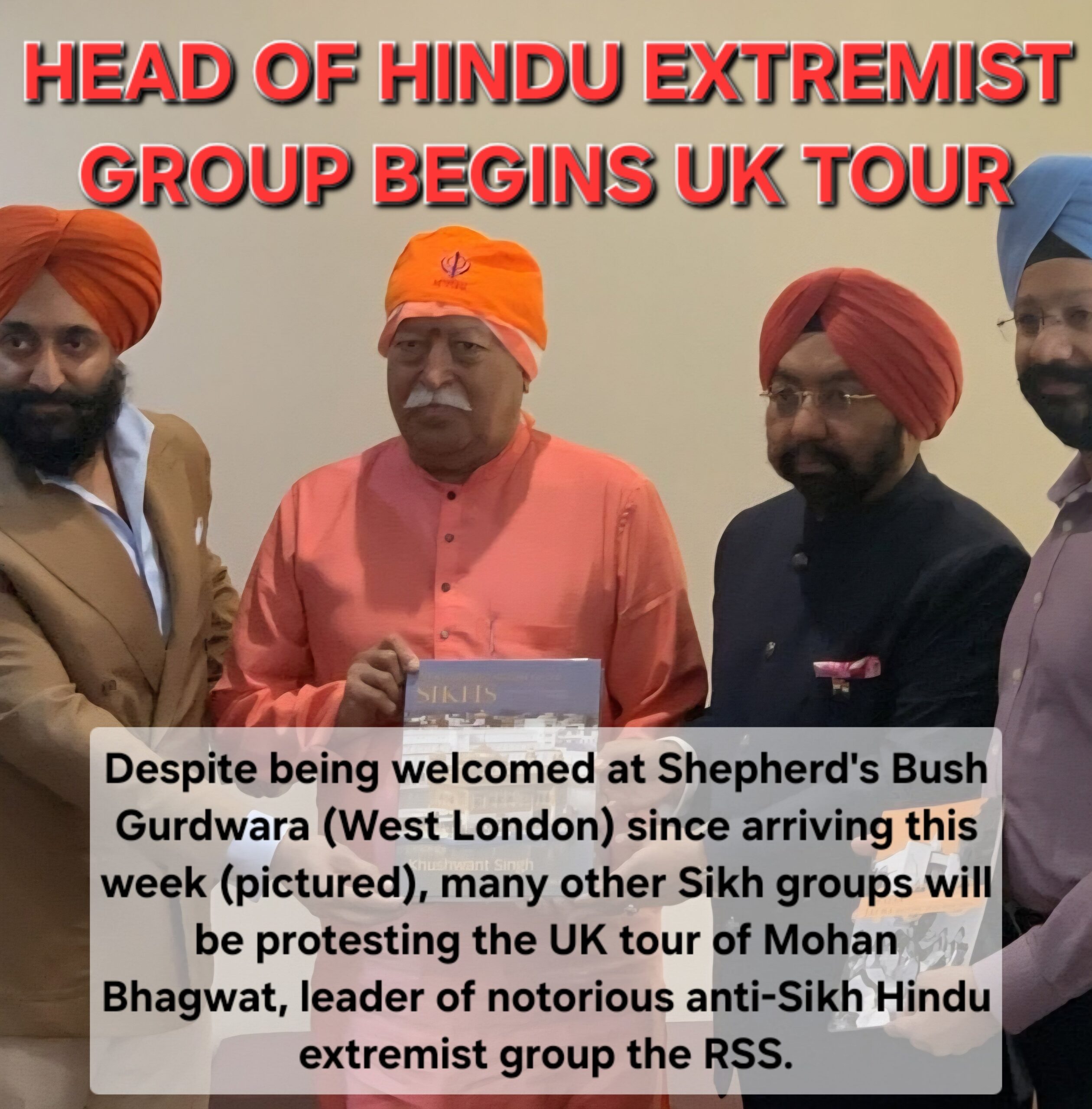
Jasveer Singh: Across the diaspora, whether in Canada, the United States, or the UK, the Sikh community reaction has been overwhelmingly one of strong pushback and protest. Organizations like the World Sikh Organization (WSO) in Canada, Sikhs for Justice in the US, and Dal Khalsa UK have mobilized alongside local congregations (Sangat) to demonstrate against these visits.The reason for this pushback is simple: Mohan Bhagwat tour is recognized for what it truly is, a high visibility PR exercise and whitewashing campaign. It is designed to soften and rehabilitate the RSS global reputation through formal pageantry, carefully staged events, and diplomatic handshakes. Yet, beneath the presentation, there is zero tangible outcome. There is no genuine dialogue, no willingness to address the RSS documented history of anti Sikh rhetoric, and no accountability regarding their role in state backed discrimination.Policy Wire: What are the primary institutional concerns and daily challenges currently facing Sikhs living in India?
Jasveer Singh: Sikhs in India are confronting systematic subjugation on multiple fronts. First is the blatant infringement on fundamental religious rights and personal identity. It has become disturbingly common for Sikh students to be barred from entering academic exam halls simply for wearing their articles of faith, such as the Kirpan or Turban.Second is differential treatment by state authorities and law enforcement. Whenever Sikhs exercise their democratic right to protest, whether during the historic Farmers Movement or university student demonstrations in Punjab, the state response is disproportionately violent and repressive. Sikh led movements are routinely criminalized, heavily policed, and vilified in mainstream Indian media, creating an environment that forces many young Sikhs into seeking asylum abroad.Policy Wire: Beyond direct government policy, what broader social, political, and religious pressures are impacting the Sikh community?
Jasveer Singh: Politically and socially, Sikhs face continuous marginalization and targeted online hate campaigns perpetuated by right wing networks.Religiously, there is a clear distinction between Sikh humanitarian organizations, such as our Langar groups that feed millions globally, and traditional religious governing bodies. While humanitarian groups continue their vital work, there is deep anxiety over external state interference. We see active attempts by the Indian establishment to infiltrate, corrupt, and manipulate traditional Sikh religious representative bodies to dilute Sikh autonomy and subordinate Sikh history into a broader nationalistic narrative.Policy Wire: In light of state censorship inside India, how are diaspora organizations stepping up to support Sikhs on the ground?
Jasveer Singh: The diaspora plays three critical roles:- Bypassing Censorship and Narrative Control: India frequently enforces internet blackouts, social media blocks, and media censorship across Punjab. The diaspora acts as a global loudspeaker, broadcasting state excesses, violent policing, and civil rights violations to the international community.
- Direct Humanitarian Aid: Diaspora communities fund and sustain grassroots aid organizations, like Khalsa Aid and Your Seva, which provide direct relief, legal support, and rehabilitation to victimized families in India.
- Refusing Normalization: We actively challenge the normalization of discrimination. When a Sikh child in India is forced to strip off their Kirpan to take a test, the diaspora speaks up on international platforms to state unequivocally that this is unacceptable.
Policy Wire: What specific actions does the Sikh community expect from Western governments and international institutions?
Jasveer Singh: We are asking for two fundamental things: parity and genuine engagement.- Parity in Protection: Western nations rightfully dedicate significant resources to combat antisemitism and protect Jewish communities from hate crimes. Yet, despite paying taxes and contributing heavily to the social fabric of the UK, US, and Canada, Sikhs receive nowhere near equal protection or state attention when targeted by hate crimes or transnational repression.
- Ending Abandonment of Citizens: Look at the case of Jagtar Singh Johal, a British Sikh who has been arbitrarily detained in India for nearly nine years without a single conviction or fair trial. Would the UK government allow a white British citizen or a member of another community to be held in a foreign jail under torture for nine years without overwhelming diplomatic intervention? We very much doubt it.
- Substance Over Pageantry: We are tired of politicians visiting Gurdwaras solely for election photo ops, shaking hands, putting on a head covering, taking photos, and then completely ignoring Sikh human rights issues the moment they leave. We expect real political dialogue and concrete commitments to address anti Sikh hate crimes and foreign interference.
Policy Wire: Finally, what are the current priorities and future plans for the Sikh Press Association?
Jasveer Singh: The Sikh Press Association functions as an active, two way bridge between the Sikh community and mainstream news outlets. We ensure journalists receive accurate, contextualized information regarding Sikh practices and issues, while simultaneously empowering Sikh grassroots campaigns to access mainstream TV, radio, and print platforms.Our work is becoming increasingly urgent due to a troubling rise in anti Sikh hate crimes globally, such as the recent unprovoked stabbing of a Sikh man in Toronto and deliberate disruptions of Sikh spaces in New Zealand.Our goal is not to pose as passive victims begging for sympathy. Rather, we are focused on educating the global public and newsrooms so that anti Sikh attacks are exposed for what they are: blatant bigotry and hate. Moving forward, we will continue ensuring that the story of the Sikh community is told with accuracy, dignity, and truth.This exclusive Q&A interview was conducted by Policy Wire in collaboration with the Sikh Press Association.
Author


Subscribe
Login
0 Comments
Oldest