

No Middle Ground for Terrorists: Counter-Terrorism Strategy & National Security Operations
No Middle Ground for Terrorists
When Al Arabiya English asked Lieutenant General Ahmed Sharif Chaudhry what Pakistan's military had learned from its war with India, the Director General o...

When Al Arabiya English asked Lieutenant General Ahmed Sharif Chaudhry what Pakistan’s military had learned from its war with India, the Director General of Inter-Services Public Relations turned the question around: “The question is not what we learned. The question should be: what did we teach the Indian Army?” There was no hesitation and no long explanation. The line set the tone for his interview with Tom Burges Watson, aired late on 15 September.
During the four-day conflict of May 2025, Pakistan affirmed it had shot down Indian fighter jets, and New Delhi declined to confirm any losses. Weeks later, India’s Chief of Defence Staff, General Anil Chauhan, admitted on Bloomberg TV that India had lost an unspecified number of aircraft. He disputed Pakistan’s figure of six, yet he also spoke of a “tactical mistake” his forces had to correct. When a rival’s most senior officer describes his own side’s errors at an international forum, Dg ISPR’s question about who taught whom needs no elaboration.
The same confidence ran through his remarks on Afghanistan, and here the evidence is equally strong. He said the Taliban regime is supporting and abetting the Tehreek-e-Taliban Pakistan (TTP). The UN Security Council’s sanctions monitors reached the same conclusion. Their 38th report, covering December 2025 to June 2026, found that the Taliban authorities continued to back the TTP and that this backing contributed to more frequent and more lethal attacks inside Pakistan. It also recorded growing operational links between the TTP, Al-Qaeda, ISIL-K and the Balochistan Liberation Army (BLA). Kabul still denies hosting the group, but the finding comes from an independent body mandated by the Security Council, and it matches what Pakistani forces encounter every day.
This is the setting for his answer on what Pakistan will do if diplomacy with Kabul fails. He cited Article 51 of the UN Charter and the state’s duty to protect “the lives, honor, and property” of every citizen, and said Pakistan will act “irrespective of who is planning it, from where it is being based.” A state facing attacks planned on foreign soil, by a group that UN monitors say enjoys the host government’s support, stands on firm legal ground when it invokes self-defence. Islamabad has framed its warning to the Taliban regime in the language of international law, and the UN’s own findings reinforce that position.
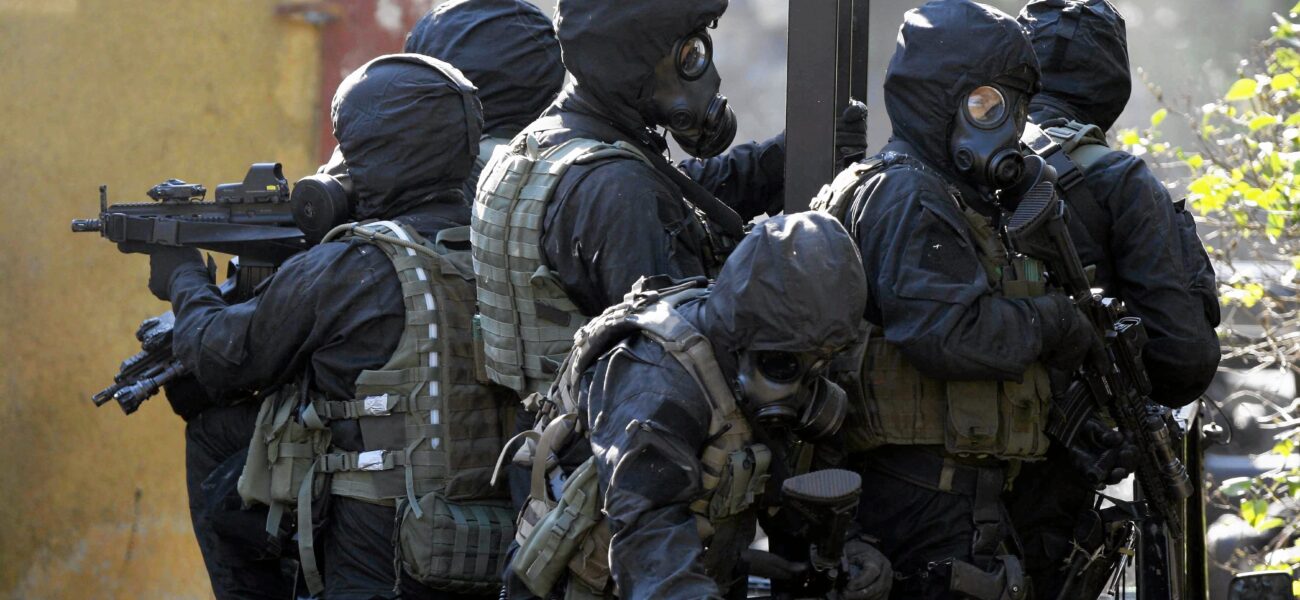
The scale of the campaign is considerable. Pakistani forces have carried out more than 42,000 intelligence-based operations this year and killed more than 2,100 terrorists, with operations under way even as the interview was recorded. DG ISPR called Pakistan a “bulwark state” and described its campaign as the only successful counterterrorism effort in the world. Two decades of continuous operations, sustained at the cost of thousands of soldiers, police officers, intelligence personnel and civilians, give that description weight. Few states have paid such a price and kept fighting.
The most consequential change he identified concerns how Pakistan now sees the enemy. The state and the public, he said, understand that the TTP’s campaign has nothing to do with religion. For years the group used a religious claim to divide opinion and slow the state’s response. He described instead a terror-crime nexus fed by drug money, foreign sponsorship and an “Indian playbook.” The UN findings on TTP cooperation with the BLA, a separatist outfit with a secular nationalist agenda, support his reading. Groups with incompatible ideologies have found common cause in weakening the Pakistani state, which says a great deal about their real motives.
That logic extends to Balochistan, where DG ISPR rejected the word “insurgency” and called the violence what it is: terrorism. An insurgency implies a political movement with a claim to speak for a population, and the BLA has forfeited any such claim through its attacks on civilians. Washington reached the same judgement in August 2025, when the State Department designated the BLA and its Majeed Brigade a Foreign Terrorist Organization. The group’s record includes suicide attacks near Karachi airport and in Gwadar, and the hijacking of the Jaffar Express, in which 31 civilians and security personnel were killed and more than 300 passengers were held hostage. More than 32,000 of this year’s intelligence-based operations took place in the province, which shows where the threat is concentrated and where the state has chosen to meet it.
📄 POLICY WIRE WHITEPAPER PUBLISHED: PAKISTAN'S NATIONAL SECURITY POLICY PRIORITIES
👉 READ BY CLICKING HEREThe strategy in Balochistan also has a civilian track. DG ISPR said operations are paired with public engagement, development, jobs and better governance, and he acknowledged that this work can be improved and accelerated. Military spokespeople seldom concede as much in public, and that candour lends credibility to the rest of his account. Federal and provincial leaders are meeting political figures, students and academics, with particular attention to young Baloch people rather than tribal elites and sardars. For decades the state dealt with the province largely through its sardars. Reaching young people directly, the very constituency that armed groups try to recruit, is the right priority, and its results will depend on jobs and services that residents can see.
He closed that part of the interview with a warning that anyone who takes up arms against the state will be hunted wherever they operate. Set beside the outreach, the message to Baloch youth is clear that the state is offering a place at the table to those who engage, and no refuge to those who join terrorists.
The coming months will test this case. Kabul must decide whether to act on the UN’s findings or keep sheltering the TTP, and in Balochistan the development pledges will be judged by what reaches households. DG ISPR’s message was that Pakistan knows what it is fighting and has no intention of meeting its enemies halfway. On the evidence so far, the country has earned the right to speak with that confidence.
Author