

The Drone War Cuts Both Ways: Asymmetric Warfare & Counter-Drone Air Defense Technology
The Drone War Cuts Both Ways
On 14 September, security forces in the Mastung district of Balochistan destroyed a vehicle carrying militants with a quadcopter, killing three of them, in...

On 14 September, security forces in the Mastung district of Balochistan destroyed a vehicle carrying militants with a quadcopter, killing three of them, including a commander known as Naqeeb. A separate operation the same day in the Pishin and Qila Abdullah districts, a conventional gun battle involving the Counter-Terrorism Department and police near Saranan, killed six more and left four security personnel wounded. The two operations, run hours apart, are easy to read as a single tally of nine militants killed. They are more interesting read as a contrast, because one was fought with the tools the state has always had and the other with a tool it has only recently acquired from its enemy.
For two years the story of drones in Pakistan’s internal conflict has run in one direction. Militants adopted cheap commercial quadcopters and turned them into weapons, striking checkpoints, convoys, and police posts from an angle the state could not easily defend. In Khyber Pakhtunkhwa the tactic became routine, and in Balochistan the Baloch separatist groups added it to a repertoire built around ambushes and roadside bombs. The quadcopter eroded an advantage the state had long taken for granted, which was its near-monopoly on attack from the air.
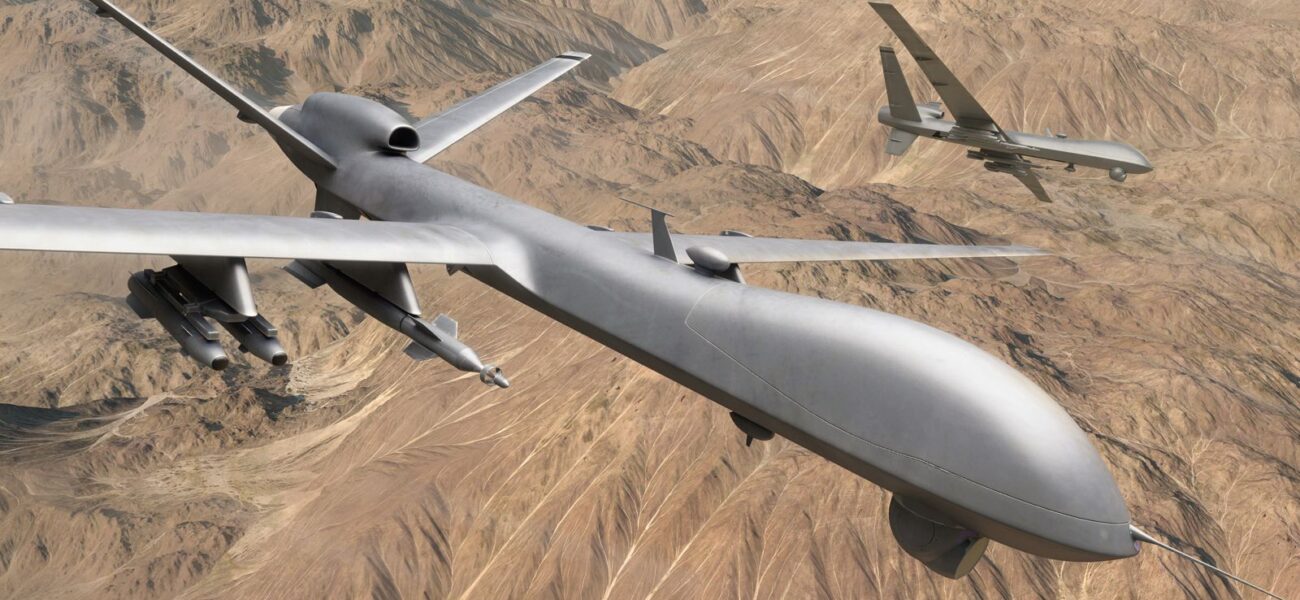
The Mastung strike is a sign that the monopoly is being contested again, this time with the militants’ own innovation. Pakistani security forces have begun using quadcopters offensively in their operations, in the northwest and now visibly in the southwest, and the precision strike on a moving vehicle in Mastung is a clear instance of it. The state did not answer the militant drone with a more expensive machine. It reached for the same cheap one and turned it back on them.
The logic of that adoption is straightforward, because the quadcopter offers the state exactly what it offered the insurgent. It is a low-cost way to hit a mobile target without putting troops in front of it. Against a vehicle moving along a remote road, a quadcopter strike is faster to mount and less costly in risk than a ground assault or a manned aircraft, and it can be held over an area until the moment to strike arrives. For an enemy as mobile and elusive as the Baloch groups, whose strength lies in dispersal rather than in holding ground, the ability to remove a named commander from a moving car is a meaningful tactical gain.
What this produces is a re-levelling of the aerial contest at a lower altitude and a far lower cost than the airpower the state once monopolised. Both sides now operate in the same cheap layer of sky, and the competition has shifted from whether drones are used to who uses them better. That contest turns on the things that make a drone effective, which are the intelligence that identifies the target, the skill that guides the strike, and the counter-drone measures that deny the other side the same freedom. The machine is available to everyone. The advantage now lies in the system built around it.
The spread of these weapons carries a cost that neither side’s tactical gains erase, and an honest account has to name it. Cheap aerial munitions flown over populated districts have killed civilians in this conflict, and because militants and security forces now fly identical machines in the same skies, responsibility for a given strike is often impossible to establish from the ground. A quadcopter attack in Waziristan in 2025 that killed several children from one family could not initially be attributed to either side, precisely because both were known to operate the same drones in the area. The democratisation of aerial attack lowers the threshold for striking, and a lowered threshold, in any hands, finds the wrong target more often than a costlier weapon would. That is the shadow that travels with the tool wherever it goes.
📄 POLICY WIRE WHITEPAPER PUBLISHED: PAKISTAN'S NATIONAL SECURITY POLICY PRIORITIES
👉 READ BY CLICKING HERENone of this is unique to Pakistan. The same dynamic is reshaping conflicts from Ukraine to the Sahel, as the commercial drone collapses the cost of precision violence and puts a capability once reserved for states into the reach of anyone with a few hundred dollars and a grievance. What Balochistan shows is the next stage of that story, in which the state, having lost its monopoly to the insurgent, buys its way back into the same sky rather than pricing itself out of the contest. The result is not a return to the old asymmetry. It is a new symmetry, cheaper and more crowded, in which both sides can see and strike from above.
The Mastung operation will enter the record as one more day in a long campaign, and on its own terms it was a clean strike, a commander removed and no soldiers exposed to do it. Its larger meaning lies in the fact that the tool has changed hands and now belongs to both. An insurgency that reached for the quadcopter to offset its weakness on the ground now meets the same weapon turned back on it from the air. Whether that lowers the violence or simply raises its tempo in a cheaper, busier sky is the question the coming year will settle. What is already settled is that the air over Balochistan belongs to no one by right, and the machines contesting it can be ordered online.
Author