


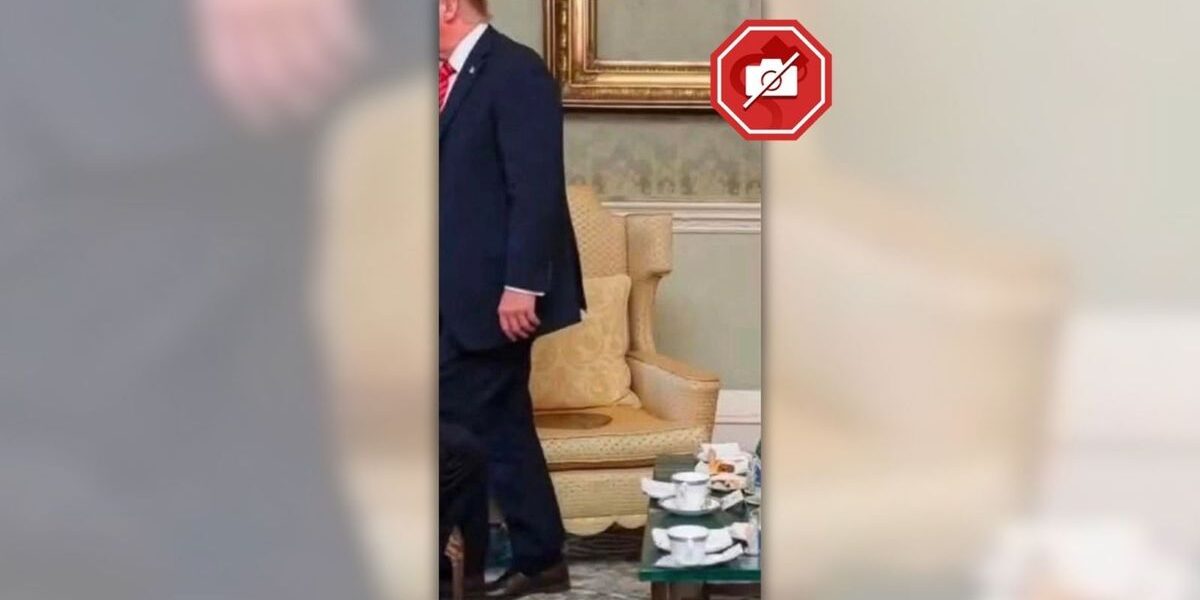
POLICY WIRE FACT CHECK: Is the viral image of Trump leaving a brown stain on a chair in Ireland authentic?
The Claim In September 2026, a viral image circulated across multiple social media platforms, including X (formerly Twitter), Facebook, Threads, TikTok, and YouTube, allegedly showing U.S. President...

The Claim
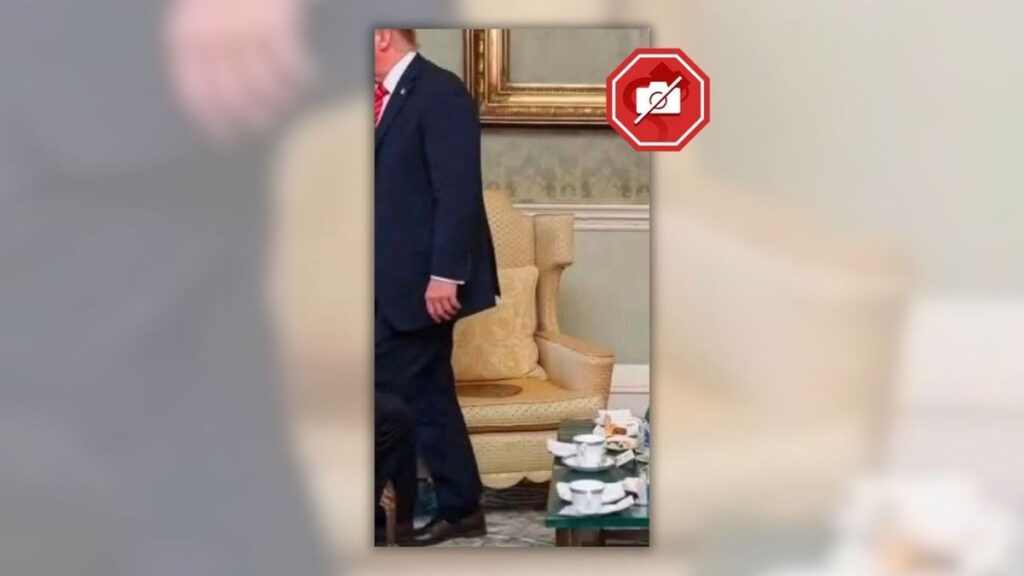
In September 2026, a viral image circulated across multiple social media platforms, including X (formerly Twitter), Facebook, Threads, TikTok, and YouTube, allegedly showing U.S. President Donald Trump leaving a brown stain on a chair during his visit to Ireland. The image, which appeared to depict Trump seated next to Irish President Catherine Connolly, sparked widespread public concern and speculation about the authenticity of the scene.
The claim gained traction after a post on the platform Threads, shared by user @becca_reptile_and_human_momma, featured the image and claimed that artificial intelligence was not used to create it—though it was unclear whether this assertion was sincere or sarcastic. The image spread rapidly, with one X post amassing approximately 4 million views as of the time of writing. Some users expressed genuine confusion over the image’s legitimacy, while others seemed to engage in humor or satire around the topic.
The Details & Investigation
Upon investigation, it became clear that the image was not an authentic photograph but rather an AI-generated video created by content creator Tom Adelsbach. Adelsbach posted the video on Facebook, Instagram, and X on September 12, 2026, the same day as Trump’s meeting with Irish President Catherine Connolly. His caption read, “BREAKING: Donald Trump causes an international incident during his meeting with Ireland President Catherine Connolly.” This immediately raised red flags about the intent behind the content.
Snopes conducted a reverse image search and confirmed that Adelsbach used an authentic photo of Trump and Connolly from the Belfast Telegraph, taken by photographer Tony Maxwell. The original image, published under the caption President Catherine Connolly and President Donald Trump at Áras an Uachtaráin (Tony Maxwell/Maxwells/PA), showed the two leaders seated together inside the Irish president’s residence. However, the AI-generated clip altered this image, adding a fabricated brown stain on Trump’s chair and enhancing the visual to create a misleading narrative.
Adelsbach’s video included a fake depiction of Trump sighing, standing up, and shaking Connolly’s hand before exiting the frame, revealing the stain. The video then showed the stain growing in size and dripping onto the floor, with an AI-generated reaction from Connolly. Notably, the video did not include any of Adelsbach’s usual disclaimers for comedy, parody, or satire, despite Meta’s “AI content” label appearing on Facebook and Instagram. This omission suggests a deliberate attempt to obscure the content’s artificial nature, contributing to its potential for misinterpretation.
📄 POLICY WIRE WHITEPAPER PUBLISHED: PAKISTAN’S NATIONAL SECURITY POLICY PRIORITIES
Furthermore, the original photo used by Adelsbach was not the source of the stain, and no credible evidence supports the claim that Trump left such a mark during his visit. Official reports from the Belfast Telegraph and The Associated Press, which documented the actual events of Trump’s meeting with Connolly, do not mention any such incident. Additionally, Connolly’s official social media accounts feature the authentic photo of her with Trump, without any indication of a stain or controversy.
Given these findings, the viral image clearly falls under the category of DISINFORMATION. It was deliberately crafted using AI technology to deceive audiences, with the intent to generate outrage and spread false narratives about the president. The lack of transparency in labeling the content as AI-generated and the absence of disclaimers further support this conclusion.
The Verdict
The viral image of Donald Trump allegedly leaving a brown stain on a chair during his 2026 visit to Ireland is FALSE. It is an AI-generated fabrication created by Tom Adelsbach, who used an authentic photo of Trump and Irish President Catherine Connolly as a base. The image was manipulated to create a misleading and offensive portrayal of the president, designed to incite public reaction and spread disinformation.
This case exemplifies how AI-generated content can be weaponized to distort reality and manipulate public perception. While the original photo was legitimate, the addition of the fabricated stain and the AI-enhanced reactions were entirely invented. The lack of proper disclosure about the content’s artificial nature further underscores the deliberate intent to deceive. As such, the claim is classified as DISINFORMATION due to its coordinated and deceptive nature.
Counter-misinformation & disinformation investigation conducted by PolicyWire Editorial Desk (PW).