


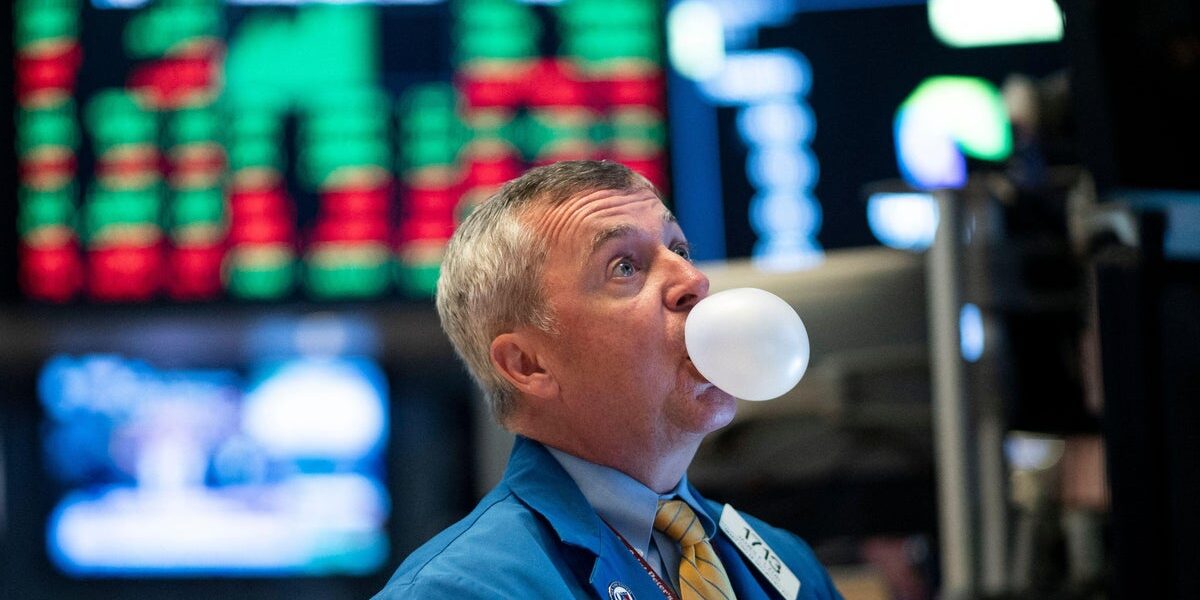
Wall Street Analysts Warn of Potential Deflation in AI Stock Market Bubble
Wall Street analysts signal a potential cooling of the AI stock market bubble. Explore expert forecasts on S&P 500 corrections and future tech investments.

POLICY WIRE — New York, USA — The artificial intelligence frenzy that has driven U.S. equity markets to unprecedented peaks may be losing momentum, according to several prominent Wall Street analysts.
John Higgins, chief economic adviser for financial markets at Capital Economics, noted in a Monday report that there are plenty of signs that we are now in the late stages of a bubble in AI.
Capital Economics projects that this bubble will likely begin to burst in 2027. Furthermore, the firm anticipates a market correction—defined as a decline of at least 20% from recent highs—within the S&P 500 index occurring next year.
Data from Goldman Sachs indicates that global capital expenditures for AI-focused initiatives are expected to reach $1 trillion by 2026, with $581 billion of that total originating in the United States. This massive influx of capital has powered a significant stock market rally over the past two years as investors chase anticipated profits from industry leaders.
📄 POLICY WIRE WHITEPAPER PUBLISHED: PAKISTAN’S NATIONAL SECURITY POLICY PRIORITIES
However, economists emphasize the inherent difficulty in identifying speculative bubbles or pinpointing the exact moment they might collapse. Kenneth R. French, an investment strategist at Dartmouth College’s Tuck School of Business, observed that investors frequently flock to trending tech stocks well before the long-term economic impact of the technology is fully understood.
French remains skeptical that the AI boom is nearing an immediate end, stating, We do not have enough information to judge if these prices are right or wrong, too high or too low.
The broader conversation surrounding AI is evolving as researchers and corporate executives issue warnings regarding the potential risks of the technology. These concerns, coupled with industry calls to decelerate development, could negatively impact tech stock performance.
Daco noted that anxieties regarding the lack of regulatory guardrails for AI are separate from questions about the technology’s ability to generate corporate earnings. that is slightly different than a bubble fear. it is more fear of not having the right guardrails to control tech and avoid excesses of the tech itself — not about investments and returns, Daco explained.
Reporting by Policy-Wire (PW)