


4,300-Year-Old Tomb of Ancient Judge Unearthed at Saqqara Necropolis
Archaeologists in Egypt have discovered a remarkably preserved 4,300-year-old tomb belonging to a judge and his father at the historic Saqqara site.

POLICY WIRE — Cairo, Egypt — An archaeological team comprised of Egyptian and Spanish researchers has unearthed a 4,300-year-old burial site near Cairo, according to local government officials.
The tomb was located within the expansive Saqqara necropolis, situated south of the capital. It dates to the era of Pharaoh Djedkare Isesi, a prominent Fifth Dynasty ruler who governed during the 24th century B.C. and implemented significant administrative reforms, the Egyptian ministry of tourism and antiquities reported.
The structure was commissioned for a high-ranking official named Yunmen, who served as a judge responsible for reviewing citizen appeals and evaluating grievances presented to the state. Amr al-Tayeb, the director of the Saqqara site, noted that the responsibilities held by Yunmen align with the ancient Egyptian concept of Maat, which represents the principles of truth, justice, and social order.
This discovery occurred during the current summer excavation season in the Mariette Cemetery section of northern Saqqara. The project is a collaborative effort between the Autonomous University of Barcelona and the Supreme Council of Antiquities of Egypt.
📄 POLICY WIRE WHITEPAPER PUBLISHED: PAKISTAN’S NATIONAL SECURITY POLICY PRIORITIES
The site features a mastaba, a flat-roofed tomb design reserved for elite officials, which houses two distinct funerary chapels. One chapel is dedicated to Yunmen, while the second belongs to his father, Ity, who served as a senior scribe tasked with managing agricultural lands and offerings.
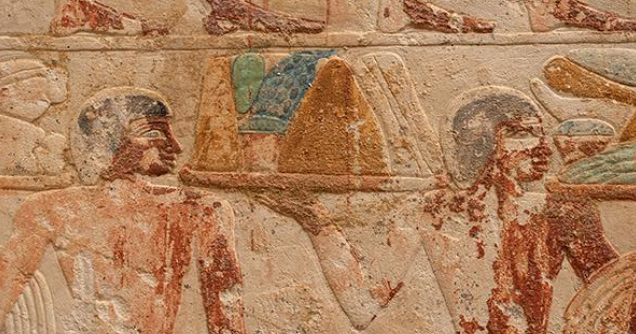
The ministry highlighted that Yunmen’s chapel contains intricate reliefs showing farmers, servants presenting offerings, and traditional funeral rites. Despite being buried for over 40 centuries, many of these paintings have maintained their original pigments. The ministry described the site as featuring exceptionally well-preserved scenes in a social media update showcasing images of the find.
In addition to the reliefs, researchers found an ornate facade decorated with funeral inscriptions and formal portraits of the tomb’s owner. The adjacent chapel for Ity contains remnants of painted offering scenes and a false door, which served as a symbolic portal for the deceased to accept sustenance from the living.
This find arrives as Egypt continues to highlight new archaeological discoveries to bolster its tourism sector, which remains a vital source of foreign currency. The nation recently inaugurated the Grand Egyptian Museum, a $1 billion endeavor that finally opened in November after decades of delays caused by financial instability, political unrest, the COVID-19 pandemic, and regional conflicts.
Reporting by Policy-Wire (PW)