

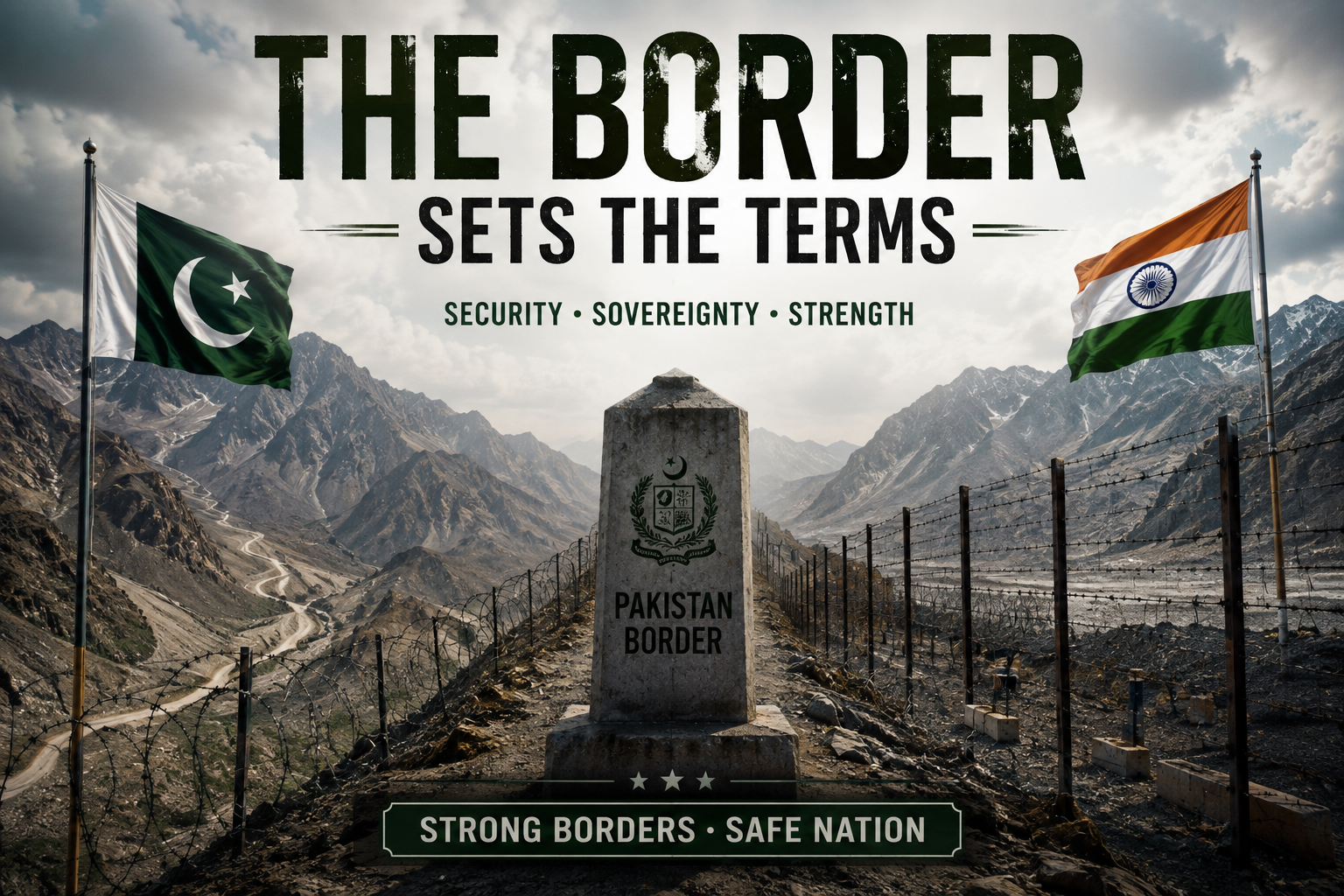
The Border Sets the Terms
Pakistan’s military said on Thursday that its forces had killed fifteen militants attempting to cross into North Waziristan from Afghanistan, in an engagement that began on Tuesday and ran for...

Pakistan’s military said on Thursday that its forces had killed fifteen militants attempting to cross into North Waziristan from Afghanistan, in an engagement that began on Tuesday and ran for some thirty-six hours. The tactical result is one more entry in a long record of border interdictions. The detail that gives it weight is the timing. The infiltration came a day after Pakistan’s Foreign Ministry declared that any improvement in relations with Kabul would depend on verifiable, written assurances that Afghan soil will not be used for terrorism against Pakistan, and it came in the middle of a fresh mediation effort by China. The crossing is, in effect, the answer to why that diplomacy is going nowhere.
The diplomatic picture is quickly told. Fighting erupted along the Pakistan-Afghanistan border in February and left hundreds dead. In April, China convened talks between the two governments in Urumqi to halt it. Since then Pakistan has held no direct negotiations with Kabul, and this week the Chinese special envoy, Yue Xiaoyong, was back in Islamabad meeting his Pakistani counterpart, Mohammad Sadiq, to try to ease the tension again. The shuttle continues. The results do not, and the events of this week show the reason with unusual clarity.
The most revealing element is a single phrase in the Foreign Ministry’s statement. Its spokesman, Tahir Andrabi, did not ask Kabul for assurances. He asked for assurances that are verifiable and written. That shift in wording is itself a diagnosis. A government requests guarantees it can independently check, and insists on having them on paper, only once it has stopped believing the verbal ones. Islamabad has heard the Taliban’s spoken denials for four years, and it has concluded that the border keeps contradicting them. The demand for proof is what remains when trust in promises has run out.
The border does contradict them, and it does so on its own schedule rather than the diplomats’. The military tied Thursday’s operation directly to its central argument, stating that the infiltration reinforced its contention that the Taliban government has consistently failed to ensure effective border management and to honour its international obligations. Whatever one makes of the framing, the underlying fact is not seriously contested even by the Taliban’s sympathisers. Fighters continue to cross. Each crossing is a data point against Kabul’s assurances, and against the worth of any assurance offered verbally.
Beneath the impasse lies a question the diplomacy cannot resolve, which is whether the Taliban will not act against the Tehreek-e-Taliban Pakistan or cannot. The two possibilities lead to the same dead end. If Kabul declines to move against the group out of ideological kinship and a shared history of insurgency, then no document it signs will be honoured once the envoys have gone home. If Kabul lacks the control over its own periphery to police the border even where it wishes to, as the fighting in Badakhshan and along the frontier suggests it may, then even a sincere assurance is undeliverable. Pakistan’s demand for verifiable guarantees exposes exactly this. It is asking Kabul to prove a capability, or a will, that Kabul may not actually possess.
China’s involvement does not dissolve the problem, though it is the most serious external effort to manage it. Beijing has reasons of its own to want the border quiet, from its investments in Pakistan to its wider interest in regional stability, and it holds leverage over the Taliban that Islamabad does not. But even China cannot manufacture border control that the Taliban does not have. Its mediation can produce a signed text. It cannot produce the thing the text would promise, which is a frontier that stays closed to militants after the signing ceremony ends.
This is why the talks have sat frozen since April. The two sides are not haggling over the terms of the same deal. Kabul offers words, and Islamabad now demands verifiable action, and no quantity of shuttle diplomacy closes a gap of that kind, because the ground keeps overruling the table. Every infiltration that Pakistani forces intercept, and presumably some they do not, tells Islamabad that the assurances on offer are not backed by anything it can rely on. The fifteen men killed this week were, in that sense, a message delivered to the negotiators as much as an attempted attack.
The infiltration and the diplomacy are not two separate stories, then. The first is the explanation of the second. For as long as fighters keep crossing from Afghan territory, Pakistan will keep asking for proof rather than promises, and Kabul will keep proving unable or unwilling to supply it. The border, rather than the conference room, is setting the terms of this relationship, and until the crossings stop the negotiations will remain where they have been since the spring, which is stalled. A written assurance is only as good as the frontier behind it, and that frontier spoke again this week.
Author