


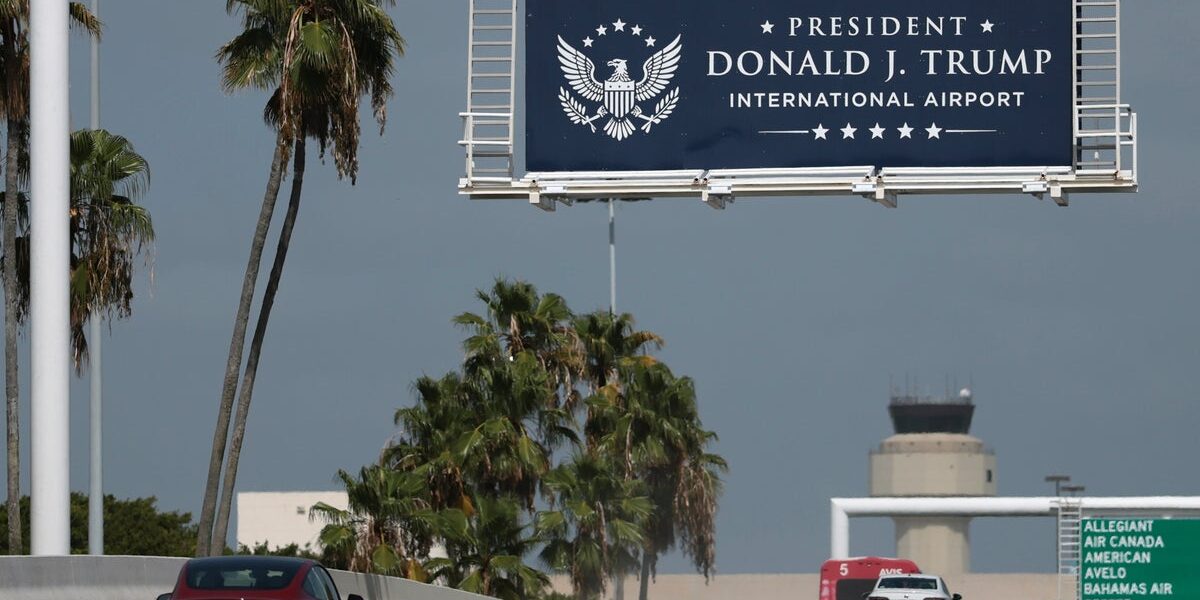
FAA Proposes New Flight Restrictions Near Trump International Airport Over Security Concerns
POLICY WIRE — Palm Beach, Florida — The Federal Aviation Administration (FAA) has announced plans to implement new flight regulations near Trump International Airport, previously known as Palm Beach...

POLICY WIRE — Palm Beach, Florida — The Federal Aviation Administration (FAA) has announced plans to implement new flight regulations near Trump International Airport, previously known as Palm Beach International Airport, in response to heightened security concerns surrounding Mar-a-Lago, the residence of former U.S. President Donald Trump.
The proposed measures include flight restrictions within a one-nautical-mile radius, extending up to 2,000 feet around the property, which is situated close to the airport. These restrictions are in line with a request from the U.S. Secret Service, based on threat intelligence, aimed at enhancing the ability to mitigate risks posed by unauthorized aircraft and unmanned aircraft systems.
Although commercial flights will continue to operate within the designated airspace if they adhere to established procedures, the restrictions will remain in place during Trump’s visits to Mar-a-Lago. Exceptions are made for lifesaving, emergency, and law enforcement aircraft, which must obtain prior authorization and maintain two-way radio communication with air traffic control.
The airport, which was officially renamed in July, ranks third in daily travelers locally, following Miami International Airport and Fort Lauderdale–Hollywood International Airport. Trump expressed his enthusiasm for the renaming on Truth Social, highlighting the significance of the event for Palm Beach.
📄 POLICY WIRE WHITEPAPER PUBLISHED: PAKISTAN’S NATIONAL SECURITY POLICY PRIORITIES
This is not the first time aircraft operations have been restricted around presidential properties. Similar rules were enacted in 2001 near Crawford, Texas, at a ranch owned by former President George W. Bush, and those restrictions remain in effect, albeit with a reduced geographic boundary since 2010.
Reporting by Policy-Wire (PW)