


Notting Hill Carnival’s 60th Anniversary: A Celebration Rooted in Community and Resistance
POLICY WIRE — London, UK — As the Notting Hill Carnival commemorates its 60th anniversary, a segment of residents has fortified their upscale homes and vacated the neighborhood for the weekend....

POLICY WIRE — London, UK — As the Notting Hill Carnival commemorates its 60th anniversary, a segment of residents has fortified their upscale homes and vacated the neighborhood for the weekend. Despite the event’s decline from its heyday, Aaliyah Harry asserts that the carnival’s essence lies in its original location. The jubilance it fosters is more crucial than ever.
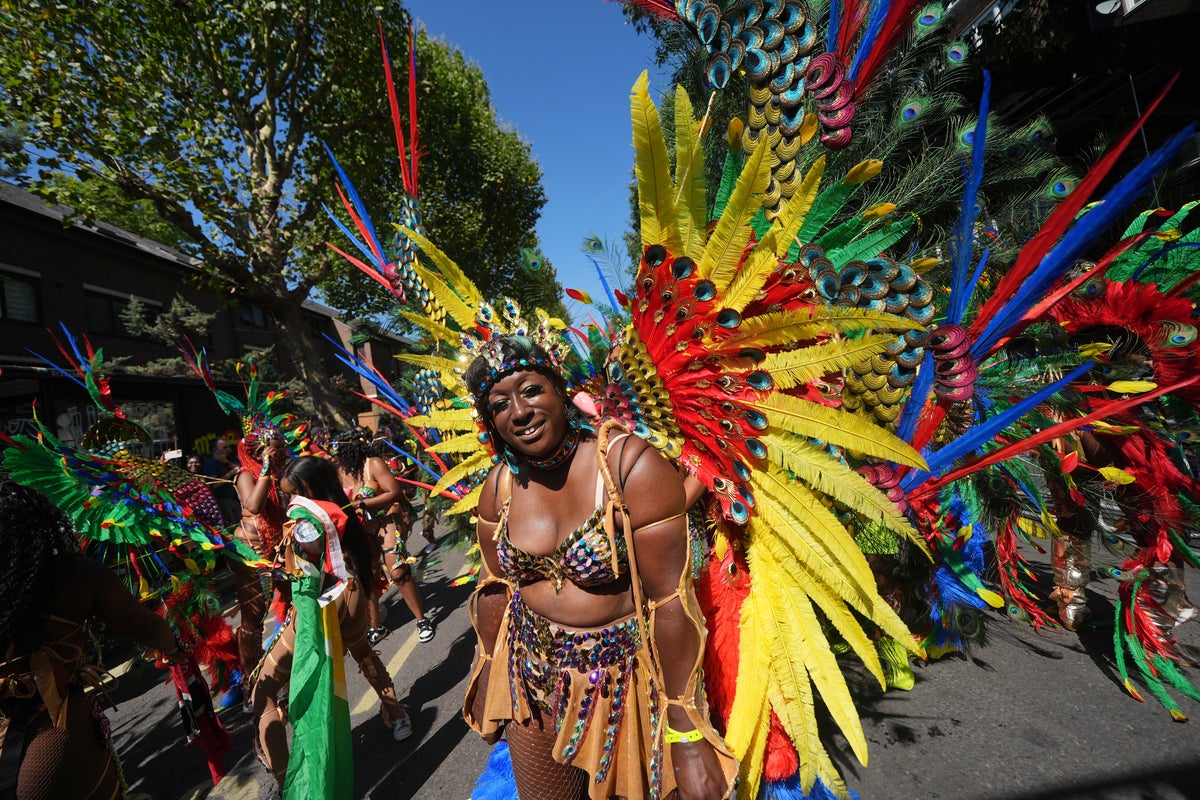
Harry’s earliest memory of the carnival dates back to 2002, when, at the tender age of four, she reveled in the spectacle from her father’s shoulders. The vivid array of colors, feathers, and energetic dance troupes, set against the pulsating rhythm of percussion, left an indelible mark on her.
Over the years, Harry has come to understand that the carnival is more than just the spectacle; it is the anticipation that builds within the Caribbean community in the weeks leading up to the event, through discussions and historical reflections, or on the day itself, when the distant sound of steel pans can be heard from blocks away.
Her connection to the Notting Hill Carnival has strengthened over time, from the exhilaration of participating as a masquerader to delving into the history of her family’s islands, St Lucia and Dominica. Her grandparents, who were influential figures in the British Caribbean community during the carnival’s inception, shared numerous stories about its origins.
Justin Moore JP, MBE, and Theresa Moore, who migrated from Soufrière, St Lucia, to London in 1963, were not only a bus driver and a nurse but also champions of justice and community. Justin, in particular, was vocal about race relations, leading community meetings and advocating for equality.
The carnival emerged as a response to systemic racism and police brutality, following the 1959 murder of Kelso Cochrane in Notting Hill. Claudia Jones, a pioneering figure, established the first indoor carnival in 1959, which later evolved into the street procession we know today, sparked by Rhaune Laslett’s steel band walkabout in 1966.
In 1976, Harry’s grandparents co-founded the Greenlight Youth Club in Bow, aiming to support disadvantaged youth in Tower Hamlets. They would attend the carnival annually, dressed in red as the ‘Red Devils Band’. They reminisce about the 1970s as the carnival’s zenith, despite inflation and overt racism.
The introduction of large sound systems playing Jamaican-inspired reggae and dub, fused with calypso, infused the celebrations with a new vitality. This era, characterized by residents embracing the parade, contrasts with the current scene of boarded-up windows in gentrified neighborhoods.
Last year, a debate arose about relocating the carnival to Hyde Park, proposed by MPs like Victoria Borwick and Susan Hall, citing more space and better crowd management. However, for Harry’s community, this suggestion feels like an eviction, echoing the displacement experienced by Windrush arrivals.
Relocating the carnival could complete the gentrification process, further alienating Black Caribbeans from an area they helped build. Similarly, converting the event into a ticketed, enclosed affair would contradict Claudia Jones’ vision of a free, inclusive celebration.
Even after six decades, the community’s right to exist is questioned. Increased policing and surveillance discussions precede the event, while the contributions of Mas bands, steel pan drummers, and sound systems receive less attention.
The carnival has always intertwined politics with joy, this year including a three-minute silence for Grenfell Fire victims. It remains a platform for the Black community to address issues like racial injustice and institutional inequality.
Despite challenges, the community’s resilience and joy prevail. Harry’s grandfather, battling Alzheimer’s, still remembers the carnival’s date each year. Her excitement for the event remains unchanged since 2002, hoping that future generations will continue this tradition in Notting Hill.
Reporting by Policy-Wire (PW)