


Why the Investment Game Is Changing
A Saudi prince walked into Islamabad this week, and he did not come empty-handed. Prince Mansour bin Mohammad Al Saud led a high-level business delegation into the Prime Minister’s House, then...
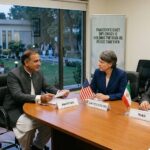
A Saudi prince walked into Islamabad this week, and he did not come empty-handed. Prince Mansour bin Mohammad Al Saud led a high-level business delegation into the Prime Minister’s House, then straight into the Special Investment Facilitation Council (SIFC), carrying serious intent across energy, agriculture, ports, and technology. This was not a courtesy call. This was the latest move in one of the most consequential economic pivots in the region; expand a longstanding financial partnership into a broader investment and economic partnership.
A Relationship That Outgrew Its Old Role
For decades, Saudi Arabia has been one of Pakistan’s most important economic and financial partners. The Kingdom offered loans, cash deposits, and oil on deferred payments providing valuable financial support during periods of economic pressure. That arrangement kept the country stable through hard years but both nations now want more than stability. They want partnership. Since 2023, Islamabad and Saudi Arabia’s evolution from a longstanding financial partner to a major strategic investor in Pakistan, and this week’s visit shows how far that shift has already come.
The Numbers Tell a Growing Story
Momentum has built steadily over the past two years, and the figures back it up. In October 2024, Saudi Investment Minister Khalid Al-Falih brought a delegation to Islamabad, and businesses from both countries signed 27 agreements worth $2.2 billion. Within weeks, that figure climbed to 34 agreements worth $2.8 billion. Saudi Arabia followed this with a separate pledge of a $5 billion investment package for Pakistan. By 2025, Saudi and Pakistani officials had identified around 40 fresh projects worth more than $28 billion across energy, mining, IT, agriculture, and tourism. Each visit has raised the ceiling higher than the last.
This week’s engagement fits squarely into that upward trajectory. SIFC coordinated meetings between the Saudi delegation and senior officials across power, petroleum, privatization, industry, communications, and highways. Talks also covered ports, airport outsourcing, and power distribution, sectors that did not feature prominently in earlier rounds. Pakistan is clearly widening the table, and Saudi Arabia is clearly interested in sitting at more of it.
Two Delegations, One Week, One Message
What makes this moment stand out is the sheer pace of engagement. Just days before Prince Mansour’s visit, Pakistan’s Investment Minister Qaiser Ahmed Sheikh met a separate delegation from the newly unified Saudi Investment Forum, a body that now represents more than 400 Saudi companies after Riyadh and Jeddah networks merged into one platform. Two distinct Saudi business groups engaged Pakistan within the same week. That is not coincidence. That is coordination, and it signals a Kingdom that is organizing its private sector specifically to move into Pakistan at scale.
Institutions Built to Match the Ambition
Pakistan has matched this Saudi momentum with real institutional muscle. SIFC exists precisely to give investors a single, fast-moving platform by streamlining coordination and reducing procedural barriers for investors, and it has become the anchor for nearly every major Saudi engagement since 2023. Both countries have also finalized a bilateral implementation mechanism, designed specifically to track investment commitments at a functional level and turn government-to-government pledges into completed projects on the ground. This is the machinery of a partnership built to last, not a one-time photo opportunity.
The Human Bridge Behind the Numbers
Beyond the balance sheets, one statistic anchors this entire relationship: more than 2.5 million Pakistanis currently live and work in Saudi Arabia. Their remittances form one of Pakistan’s most reliable sources of foreign exchange, month after month. This human connection gives the Saudi-Pakistan relationship a depth that few investment partnerships anywhere in the world can claim. Capital flows because trust already exists, and that trust was built over generations, not over a single delegation visit.
A Partnership Entering Its Most Important Chapter
Pakistan and Saudi Arabia are not starting from zero. They are building on 2.8 billion dollars in agreements, a 5-billion-dollar pledge, and a 28-billion-dollar pipeline of projects already on the table. Prince Mansour’s visit, backed by Prime Minister Shehbaz Sharif’s personal engagement and SIFC’s institutional coordination, adds fresh weight to an already accelerating relationship. Two brotherly nations, connected by history, faith, and 2.5 million working families, are now writing the investment chapter of their partnership. Given the pace of the last two years, that chapter is only getting started.
Author