


The Gulf Opportunity: Why Pakistan-Saudi Economic Ties Matter Beyond Bilateral Trade
For decades, Pakistan–Saudi Arabia relations have been defined by a deep sense of brotherhood, strategic trust and mutual support. Today, that longstanding relationship is entering an increasingly...

For decades, Pakistan–Saudi Arabia relations have been defined by a deep sense of brotherhood, strategic trust and mutual support. Today, that longstanding relationship is entering an increasingly important economic phase.
The latest commitment by Pakistan to strengthen economic and investment ties with Saudi Arabia reflects a broader transformation in bilateral relations: from traditional cooperation toward a partnership increasingly shaped by investment, trade, technology, entrepreneurship and shared economic opportunity.
This evolution carries significance well beyond bilateral commerce. It represents an important example of how economic diplomacy can reinforce strategic relationships and create new avenues for regional cooperation.
On Aug. 21, Pakistan’s Investment Minister Qaiser Ahmed Sheikh met a delegation of the Saudi Investment Forum in Islamabad and reaffirmed Pakistan’s commitment to strengthening the economic and investment dimension of its historic relationship with Saudi Arabia. The delegation highlighted that previously separate forums in Riyadh and Jeddah have been consolidated into a single platform representing a network of more than 400 businesses. (Arab News)
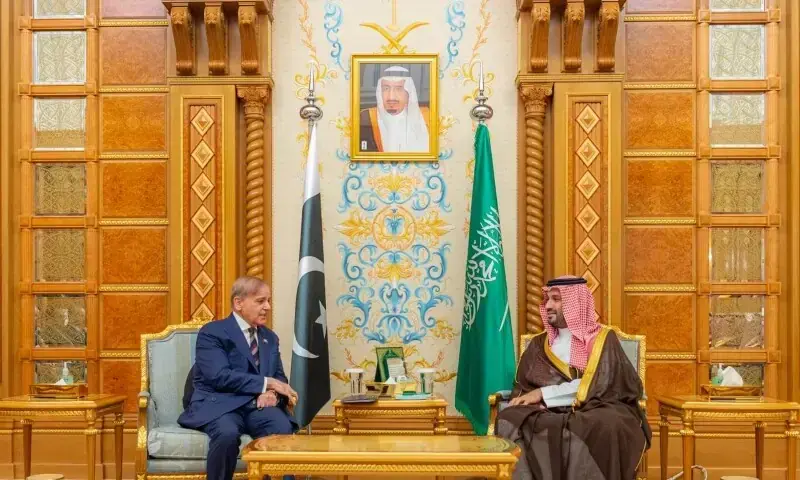
For Pakistan, this expanding business network offers an opportunity to connect domestic economic potential with one of the Middle East’s most dynamic investment ecosystems.
The foundations for this transition are already being established. In October 2025, Pakistan and Saudi Arabia agreed on an Economic Cooperation Framework designed to strengthen trade and investment relations and expand cooperation in areas of shared economic interest. (Ministry of Foreign Affairs)
Earlier, Pakistani and Saudi businesses signed 34 memoranda of understanding valued at $2.8 billion across multiple sectors. These developments demonstrate that economic engagement is becoming an increasingly important pillar of the bilateral relationship. (Arab News)
The opportunity now is to build upon this momentum.
Pakistan possesses considerable potential across agriculture, information technology, mining, energy, manufacturing, infrastructure, logistics, food processing and tourism. The Board of Investment has specifically highlighted these sectors as areas where Saudi investors can explore partnerships and long-term commercial opportunities. (Arab News)
The significance of such investment extends beyond capital.
In information technology, for example, stronger Pakistan–Saudi partnerships could connect Pakistan’s young and increasingly digital workforce with Saudi Arabia’s rapidly expanding technology ecosystem. Cooperation in artificial intelligence, software development, fintech, cybersecurity and digital services could create opportunities for entrepreneurship, skills development and knowledge exchange.
Agriculture presents another promising avenue. Saudi investment in modern farming, food processing, cold-chain infrastructure and agricultural technology could strengthen value-added production while creating opportunities for Pakistani businesses to participate in regional food supply chains.
Mining and energy can similarly become areas of long-term cooperation. Pakistan’s natural-resource potential, combined with Saudi Arabia’s growing investment capabilities and experience in economic diversification, provides scope for partnerships that can contribute to industrial development, infrastructure and technological advancement.
Logistics and infrastructure may be equally significant.
Pakistan’s geographic position gives it potential importance as a bridge connecting South Asia with Central Asia and the Middle East. Greater Saudi economic engagement in logistics, infrastructure and connectivity could therefore contribute not only to bilateral trade but also to wider regional economic integration.
This is where economic diplomacy becomes particularly important.
Modern economic diplomacy is no longer limited to attracting capital. It involves building networks among governments, businesses, universities, investors and skilled professionals. Pakistan’s engagement with Saudi Arabia can increasingly operate across all of these levels.
The growing Saudi business presence creates opportunities for Pakistani entrepreneurs and professionals to develop international partnerships, access new markets and participate in emerging sectors. For young Pakistanis in particular, stronger economic ties can translate into opportunities in technology, engineering, finance, logistics, tourism, agriculture and other knowledge-intensive industries.
Human capital should therefore remain at the centre of the relationship.
Investment and education are increasingly interconnected. Saudi Arabia’s economic transformation is generating demand for skills in areas ranging from digital technologies and artificial intelligence to engineering, management and specialised services. Pakistan’s large and youthful population represents a significant human-capital asset that can contribute to this expanding economic relationship.
Greater university-industry cooperation, professional exchanges, joint training programmes and technology partnerships could consequently become an important dimension of Pakistan–Saudi economic diplomacy.
Such cooperation would give the relationship a people-to-people dimension that complements government-to-government engagement.
Saudi Arabia, meanwhile, is itself undergoing a remarkable economic transformation. Its growing role as a regional hub for business, investment and innovation creates opportunities for Pakistani companies to look beyond traditional markets and develop stronger commercial links with the Gulf and wider international economy.
This makes the relationship increasingly mutually beneficial.
Pakistan brings market potential, human capital, geographic connectivity and expertise across a diverse range of sectors. Saudi Arabia brings investment capacity, an expanding international business network and growing experience in economic diversification. Combining these strengths can create partnerships that extend beyond individual investment projects.
The latest engagement with the Saudi Investment Forum is therefore significant because it brings together precisely the actors required for this next stage: government institutions, investors, companies and business leaders. (Arab News)
Pakistan’s commitment to providing institutional facilitation through the Board of Investment can further help connect Saudi businesses with suitable opportunities and relevant government institutions. (Radio Pakistan)
The broader strategic context also reinforces the importance of the economic relationship. Pakistan and Saudi Arabia have continued to expand cooperation across multiple dimensions, including economic and security relations. This growing breadth gives the bilateral partnership a stronger foundation and greater regional significance.
Yet the most promising aspect of the relationship may be its potential to generate a cycle of investment, innovation and human-capital development.
A Saudi investment in a Pakistani technology venture, for instance, can create more than financial value. It can generate employment, facilitate knowledge transfer, open access to new markets and create professional networks between the two countries. Similar effects can emerge in agriculture, manufacturing, tourism, logistics and energy.
This is how strategic partnerships acquire a lasting economic dimension.
Pakistan’s engagement with Saudi Arabia should therefore be viewed not simply through the lens of bilateral investment figures, but as part of a broader strategy of economic diplomacy. The objective should be to build durable connections between capital, markets, technology and people.
For Pakistan, the emerging opportunity is particularly important at a time when global economic relationships are becoming increasingly interconnected. Countries are competing not only for markets but also for investment, talent, technology and strategic partnerships.
Deepening economic ties with Saudi Arabia can position Pakistan more strongly within this changing regional landscape.
The next chapter of Pakistan–Saudi relations can consequently be defined by a shift from traditional partnership to economic co-creation.
The foundations are already in place: an expanding network of Saudi businesses, an established economic cooperation framework, significant investment commitments and growing institutional engagement. (Arab News)
What comes next is the opportunity to turn these foundations into a wider ecosystem of investment, innovation, employment and shared prosperity.
The enduring strength of Pakistan–Saudi relations has always rested on trust. The emerging economic partnership can give that trust a new expression, one measured not only in diplomatic commitments, but in businesses created, technologies developed, skills shared, markets opened and opportunities generated for future generations.
In that sense, the future of Pakistan–Saudi relations is not simply about strengthening an old friendship.
It is about building a modern economic partnership capable of shaping a more connected and prosperous region.
Author