

Strategic Fusion Takes Flight: Pakistan and China Redefine Air Power in South Asia
China and Pakistan jointly test-flew the J-35A “Gyrfalcon” stealth fighter over Gilgit-Baltistan, ushering in a new era of defence collaboration that goes far beyond conventional military...

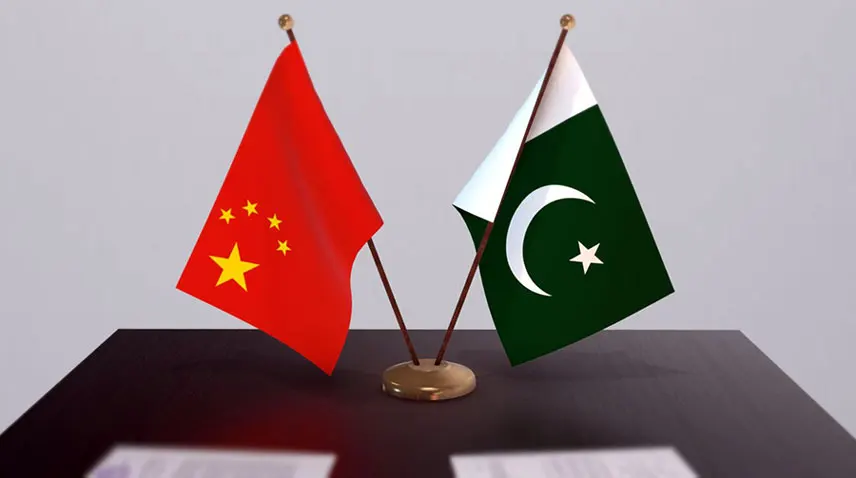
China and Pakistan jointly test-flew the J-35A “Gyrfalcon” stealth fighter over Gilgit-Baltistan, ushering in a new era of defence collaboration that goes far beyond conventional military alliances and radically altering the strategic arithmetic of South Asia. Just a few years ago, such news might have looked fanciful, but the May 2025 development is significant and real. Before they were fully stationed in the Chinese Air Force, Pakistani pilots had the first-ever cockpit sit-in of China’s most advanced stealth aircraft. This was more than just a technological display; it was a potent symbol for operational unity, mutual confidence, and an evolution of regional deterrence.
ded many Indian and Western defence analysts. The joint test was by no means a routine or symbolic event, according to reliable defence publications. Rather, it featured high-fidelity simulations that included tracking exercises that mimicked Indian Rafales with Meteor missiles, real-time satellite-guided targeting, radar suppression drills, and interception of advanced air threats like AWACS and low-observable drones.
This degree of integration shows a level of military collaboration never seen before. “We were aware that the J-35 would eventually be exported,” said a senior European defence attaché in Islamabad. However, the fact that Pakistani pilots are using it to fly combat simulations before to China’s complete deployment is more than mere collaboration. Full spectrum fusion is what it is. In fact, this kind of fusion shows a level of collaboration that positions Pakistan as both a user and a provider to the development of Chinese technology.
Global superpowers have always been hesitant to divulge their most delicate fighting platforms. For example, the United States only permits the F-35 to be flown by NATO allies under stringent license and protocol requirements. Similarly, Russia is working with international partners to co-develop the Su-75 and has exported its Su-35 jets, but it has not granted them access to its basic doctrine. However, China has granted Pakistan a strategic exemption. “Pakistan is not just a customer,” a Chinese defence specialist told the Global Times. It is a companion in doctrine. The phrase has changed from buyer to partner, which says a lot.
This development has an especially big effect on India. It was originally thought that India’s purchase of the Rafale fighter jet, equipped with the long-range Meteor missile, would fundamentally alter the balance of air power in the area. These presumptions are being questioned, though, since the J-35A is being included into Pakistan’s air defence strategy. The PL-15E long-range missile and the J-35’s radar-evading profile eliminate any unilateral edge that India may have previously assumed. Speaking under condition of anonymity to a UK-based website, a former Indian Air Marshal said, “It fundamentally shifts the balance if Chinese and Pakistani pilots are flying J-35As in combat configurations.” We lost the Rafale edge we created. Our boundaries have been breached by stealth.
And the J-35 isn’t flying by itself. It is supported by advanced stealth-tracking denial infrastructure, integrated AWACS uplinks, and China’s Beidou satellite system. To put it simply, this aircraft is coordinated with Pakistani command inputs and is linked to a battlefield cloud that provides real-time information and targeting capabilities. Few countries worldwide can claim to be a part of the future air warfare environment that Pakistan is at the centre of thanks to this integration.
The test flights’ location in Gilgit-Baltistan is noteworthy in and of itself. This region offers a clear view of disputed territory and important Indian installations due to its strategic location close to the Siachen Glacier and the delicate Galwan Valley. The fact that combined stealth drills are currently being held in this area makes it quite evident that China and Pakistan are ready to work together to protect their regional interests by dominating the airspace. This unification is symbolic as well as military. It is comparable to the China-Pakistan Economic Corridor’s (CPEC) continuous strengthening of strategic relations. Now, CPEC is quickly becoming into a geopolitical shield rather than just a system of highways and commerce lines.
📄 POLICY WIRE WHITEPAPER PUBLISHED: PAKISTAN'S NATIONAL SECURITY POLICY PRIORITIES
👉 READ BY CLICKING HEREChina is not the only country investing in Pakistan’s aerial capabilities. Pakistan has also made significant investments in simulation technology and electronic warfare training over the last five years, as well as modernising its air command infrastructure. Pakistan has raised its defence R&D expenditure by 18% since 2021, with an emphasis on joint operations training, aerospace engineering, and cyber defence, according to new statistics released in the South Asia Defence Journal. This offers the technological foundation required to efficiently run cutting-edge platforms like the J-35A.
“This isn’t just about receiving jets,” a retired air commander in the Pakistan Air Force said, summarising the change. Being within the operating system is the key. We are flying with China, in China’s future, not with Chinese aircraft anymore. Despite its audacity, such a declaration demonstrates the strategic assurance currently being spoken in defence circles. Through this alliance, Pakistan has progressed from defence procurement to defence co-development and, more recently, to the highest degree of defence cooperation.
Furthermore, the world powers are not seeing this progress in a vacuum. Discussions on the implications of this for regional security and alliance recalibration have already started at Western think tanks like the International Institute for Strategic Studies (IISS). Future collaborations in drone warfare, space-based ISR (Intelligence, Surveillance, Reconnaissance), and possibly hypersonic glide vehicle coordination are probably anticipated as a result of this partnership, according to analysts at the Stockholm International Peace Research Institute (SIPRI).
Instead of a traditional alliance, a strategic fusion is evolving as the regional dynamics change. This partnership is founded on a common military goal rather than commercial weapons transactions. It is a reflection of decades of trust that have been put to the test in both peacetime development and wartime collaboration. This is a significant advancement for Pakistan in terms of both military might and geopolitical significance. The country is contributing to the development of future air defence concepts rather than only protecting its borders.
In conclusion, a significant development in South Asia’s security architecture is the J-35A test fly over Gilgit-Baltistan. It is a statement of solidarity, might, and technical maturity rather than just a military move. One thing is clear as China joins Pakistan in a new era of aviation: strategic fusion has taken off and is soaring well beyond the previous power dynamics.
Author