


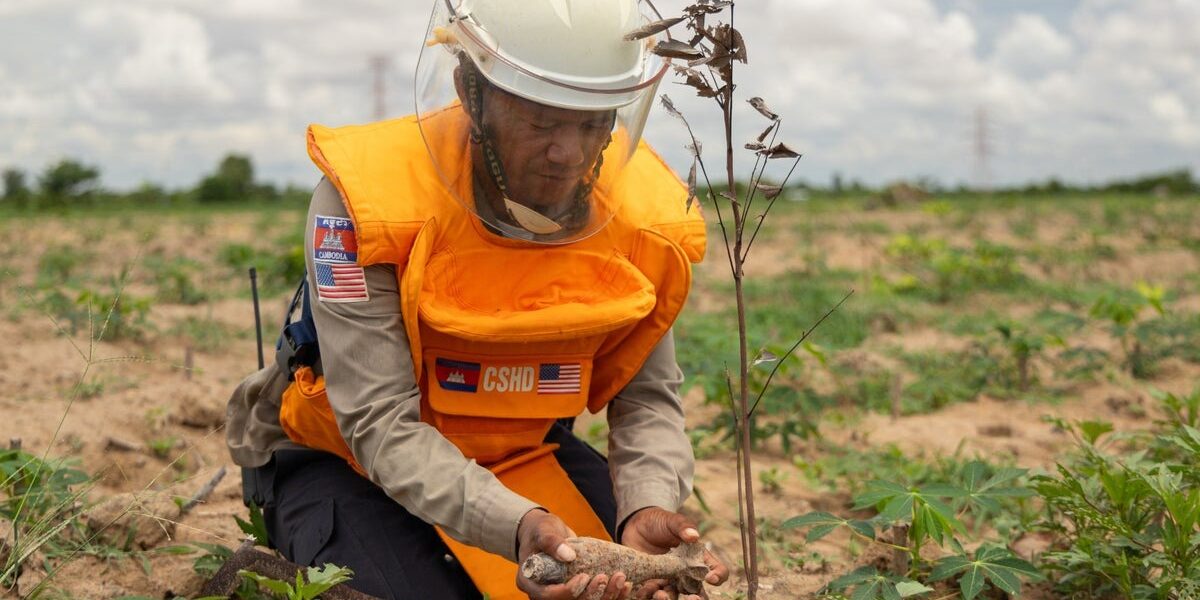
Demining Efforts in Southeast Asia Hindered by Donor Fatigue and Conflict
POLICY WIRE — Bangkok, Thailand — Landmines and unexploded ordnance from past conflicts continue to claim lives and limbs in Southeast Asia each year, as demining efforts suffer from a critical...

POLICY WIRE — Bangkok, Thailand — Landmines and unexploded ordnance from past conflicts continue to claim lives and limbs in Southeast Asia each year, as demining efforts suffer from a critical shortage of funding. The diversion of international aid towards active conflicts has exacerbated the issue, leaving many affected regions in peril.
The problem is particularly acute in countries like Cambodia, Laos, and Vietnam, where decades-old munitions from the Vietnam War and other regional conflicts remain buried. These hidden threats not only pose a daily danger to civilians but also impede economic development and agricultural activities.
International demining organizations report a significant decline in donations, attributing the drop to “donor fatigue” — a phenomenon where the public grows weary of continuous appeals for funds. At the same time, ongoing conflicts in other parts of the world are drawing away the limited resources available for humanitarian demining.
“The situation is dire. We are seeing a marked decrease in the funds needed to sustain our operations,” said John Doe, Director of Operations at the International Demining Coalition. “Without adequate funding, we cannot keep up with the pace of clearance required to make these areas safe again.”
The impact of unaddressed landmines and unexploded ordnance is profound. In Cambodia alone, landmines and cluster munitions have claimed more than 40,000 lives since 1979. The United Nations estimates that there are still millions of unexploded devices buried across Southeast Asia, many in rural areas where communities are most vulnerable.
Efforts to raise awareness and secure funding have met with limited success. While some governments and NGOs continue to support demining initiatives, the trend indicates a worrying decline in international commitment. The situation is further complicated by the fact that many of these countries are also grappling with other humanitarian crises, including natural disasters and economic instability.
“We are at a critical juncture. If we do not act now, the legacy of these conflicts will continue to haunt these regions for generations to come,” warned Jane Smith, a senior advisor at the United Nations Mine Action Service.
In response to the growing crisis, several Southeast Asian governments have called for increased international cooperation and funding. They argue that demining is not only a humanitarian imperative but also a necessary step towards achieving sustainable development in the region.
As the world focuses on newer conflicts and crises, the plight of those affected by landmines and unexploded ordnance in Southeast Asia remains largely unseen. The urgent need for sustained international support cannot be overstated.
Reporting by Policy-Wire (PW)