

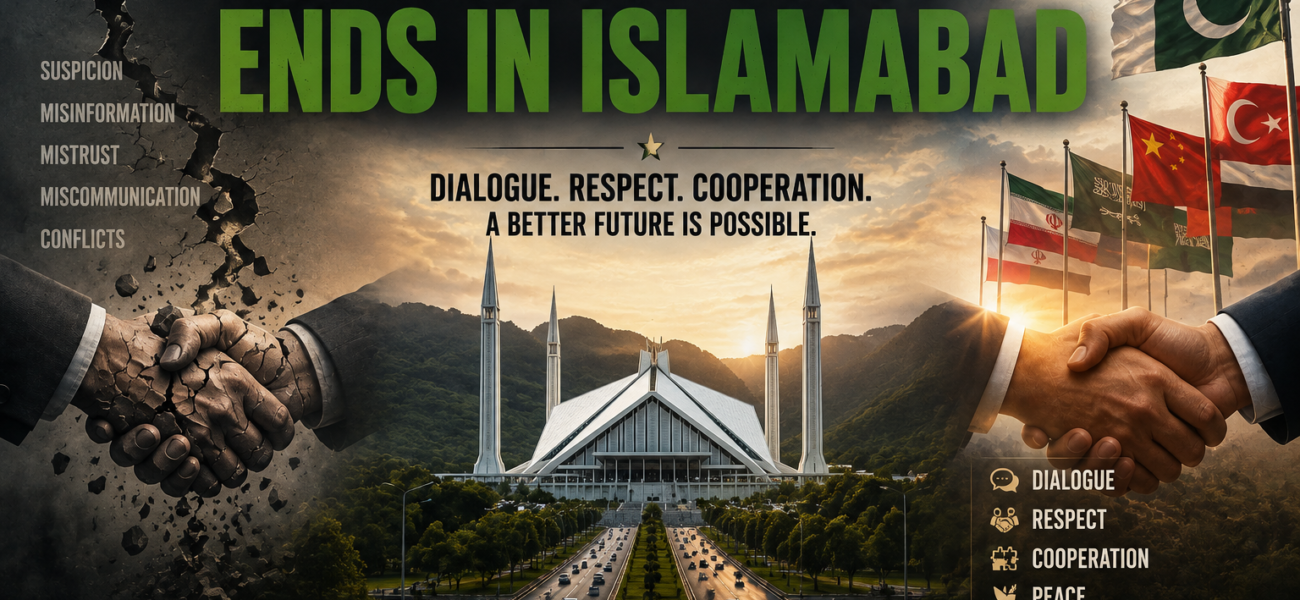
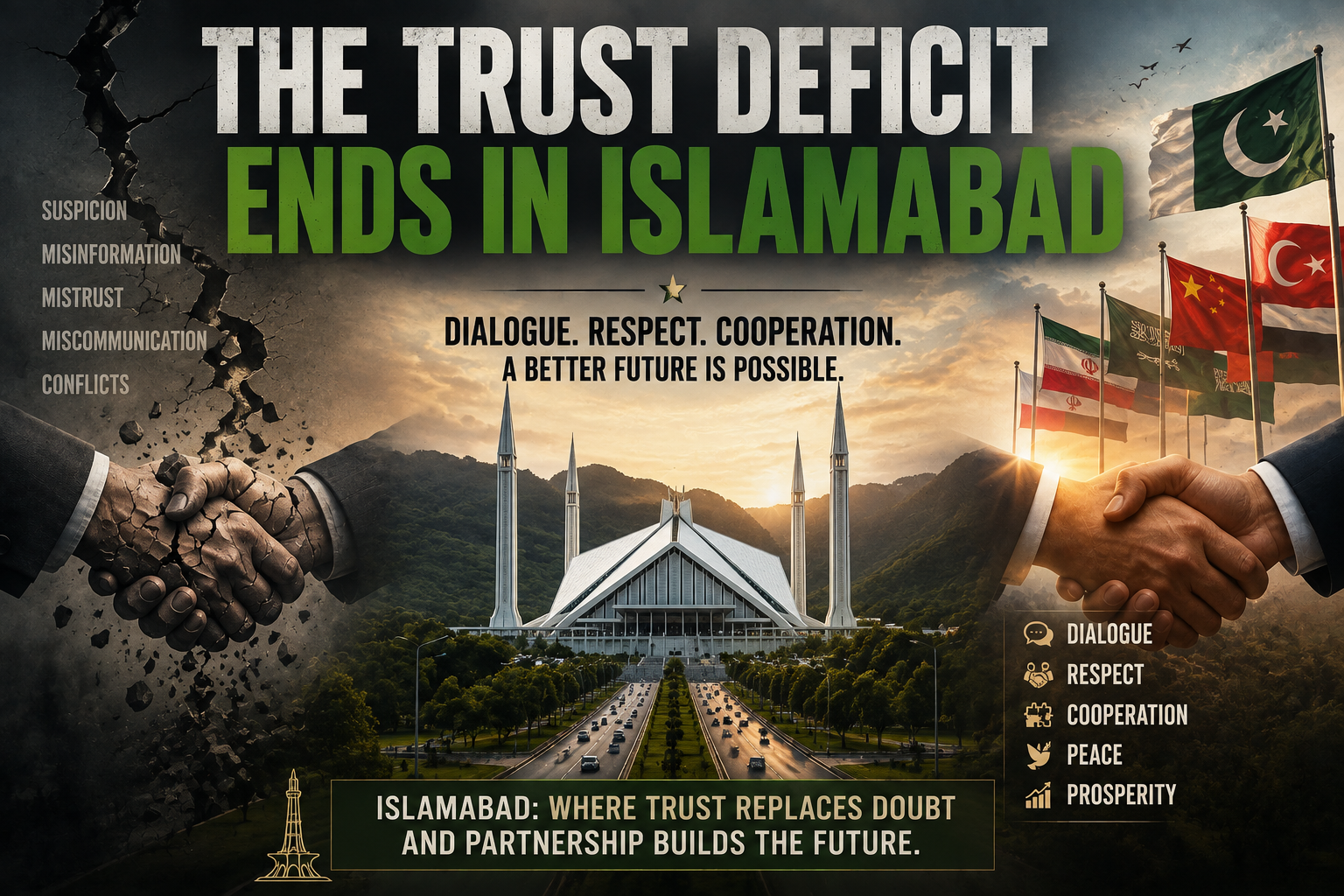
The Trust Deficit Ends in Islamabad
A single briefing delivered quietly in Tehran this week reveals something Western capitals still struggle to grasp; Pakistan has emerged as one of the few countries trusted by Iran to facilitate...
A single briefing delivered quietly in Tehran this week reveals something Western capitals still struggle to grasp; Pakistan has emerged as one of the few countries trusted by Iran to facilitate sensitive diplomatic engagement.
Interior Minister Mohsin Naqvi’s visit to Tehran on Tuesday, followed by Iranian state media confirming he carried a personal message from Prime Minister Shehbaz Sharif alongside Field Marshal Syed Asim Munir, marks something far larger than routine diplomacy. It signals a partnership built on decades of trust, tested repeatedly since February 2026, when US-Israeli strikes killed Iran’s leadership tier, ignited a war along a shared 900-kilometer frontier, plunged the region into its most dangerous confrontation in a generation.
A Bond Forged Through Crisis
Take the time-line into account. Pakistan played a central role in facilitating the April 8 ceasefire, followed by the first round of talks in the days thereafter, only to see Washington and Tehran ink a memorandum of understanding of 60 days duration on June 17. This latest agreement runs out on August 17, with reports from Pakistani sources indicating that both sides have already informally extended the deadline for another 60 to 90 days. Few countries can maintain such trust-based relations through a five-month period of broken negotiations, violations and near-collapse on Strait of Hormuz navigational rights. Pakistan did this because Iran sees Pakistan as a genuine mediator and not just an extension of some other rival country’s policy.
Transparency Over Suspicion
Contrary to any possible widening of the distance between Islamabad and Tehran, the Makkah Joint Defense Agreement has revealed the maturity and strength of Pakistan-Iran ties. Right after the signing of the agreement on August 7 by Prime Minister Shehbaz Sharif, Saudi Crown Prince Mohammed bin Salman, and Turkish President Recep Tayyip Erdogan, Islamabad did not waste any time to explain the nature of the agreement to the Iranian leaders through diplomatic channels. The visit to Tehran by Interior Minister Mohsin Naqvi demonstrated the readiness of Pakistan to clarify all its intentions regarding the agreement to Iran. As explained by Foreign Minister Ishaq Dar, the agreement is “purely defensive in nature” and still open for any country “which wants peace and stability.” Through direct contacts with Tehran instead of letting speculations shape perceptions, Islamabad showed its willingness to maintain good ties with Iran based on confidence and clear communications. This episode demonstrated a simple fact: Islamabad’s efforts to develop new relationships with the region are not aimed at Tehran but exist along with strong ties with its western neighbor.
Ten Billion Reasons for Peace
The clearest evidence of genuine partnership sits not in defense communiqués yet in trade ledgers. Formal Pakistan-Iran commerce, strangled for years by sanctions, collapsed to virtually zero by 2020, down from a peak of $1.3 billion in 2009. Since 2023, both sides have kept economic ties alive through a barter mechanism now estimated at roughly $3 billion annually. Earlier this month, Commerce Minister Jam Kamal Khan met his Iranian counterpart in Islamabad for the first Joint Trade Committee session since 2021, agreeing on an ambitious target: raise bilateral trade to $10 billion. Both governments committed to keeping border crossings open 24 hours a day, opening a new Chadgai-Kohak border market, accelerating a long-delayed Free Trade Agreement. Countries planning war against each other rarely negotiate round-the-clock customs corridors. Countries planning peace do exactly this.
A Friendship Tested, Not Broken
President Masoud Pezeshkian’s response confirms the relationship remains genuinely warm. He told Mohsin Naqvi that Iran stands ready to deepen cooperation with Pakistan “in all areas of interest to the two countries,” spanning political, economic, trade, cultural, security domains. Foreign Minister Abbas Araghchi’s separate meeting with Mohsin Naqvi, described by Iranian state media as covering “key diplomatic issues and bilateral relations,” reinforces that this trust operates at every institutional level, not merely between heads of state.
Self-Interest Meets Solidarity
Pakistan’s calculation here reflects strategic maturity rarely credited to Global South mediators. Field Marshal Asim Munir has kept open channels simultaneously with Gulf capitals, Iranian leadership, senior US officials, a feat requiring credibility that cannot be manufactured overnight. Preventing escalation serves the regional peace.
A Model Worth Following
The coming days matter enormously. If the deadline of August 17 is not extended by Islamabad, then any progress made over many months will become undone. The efforts of Mohsin Naqvi in his briefings in Tehran, combined with the continued efforts to make contact with the Gulf countries and US officials, indicates that Islamabad is determined to make use of every avenue during the process of transition.
Regional peace is never achieved with big announcements but through such unglamorous and painstaking efforts. Pakistan provides an example to be studied, rather than criticized, of creating defense relationships with its neighbors, explaining those relationships, remaining open diplomatically, and supporting all with billions of dollars in trade. The region’s stability may depend on more capitals learning to follow it.
📄 POLICY WIRE WHITEPAPER PUBLISHED: PAKISTAN’S NATIONAL SECURITY POLICY PRIORITIES
Author