


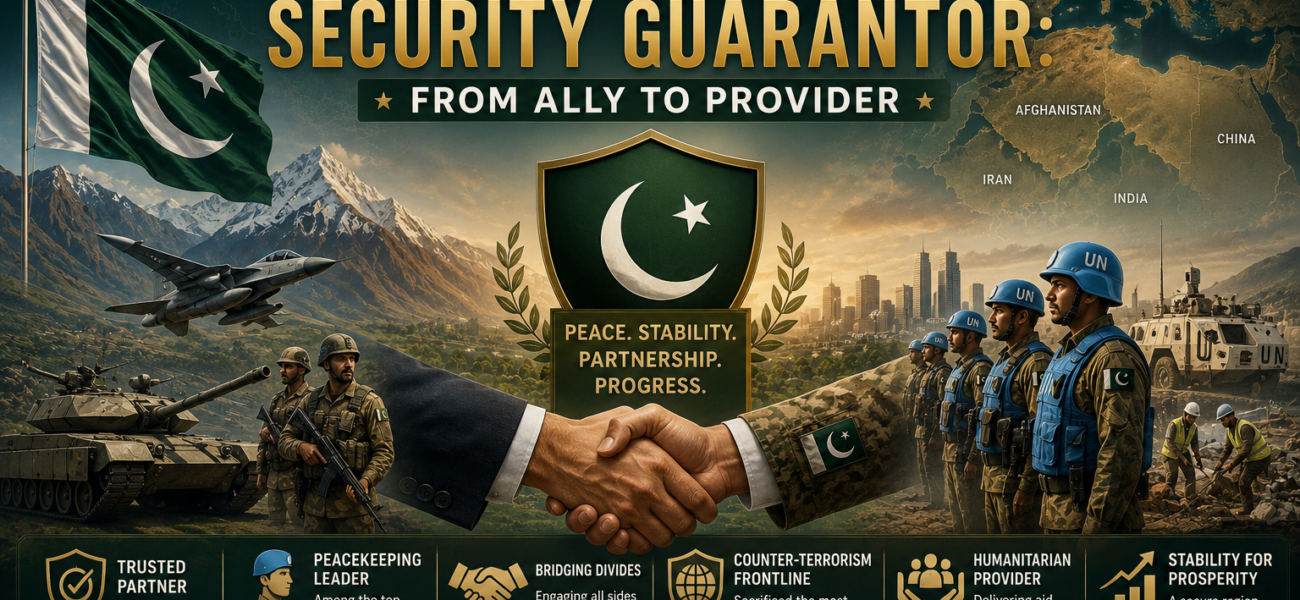
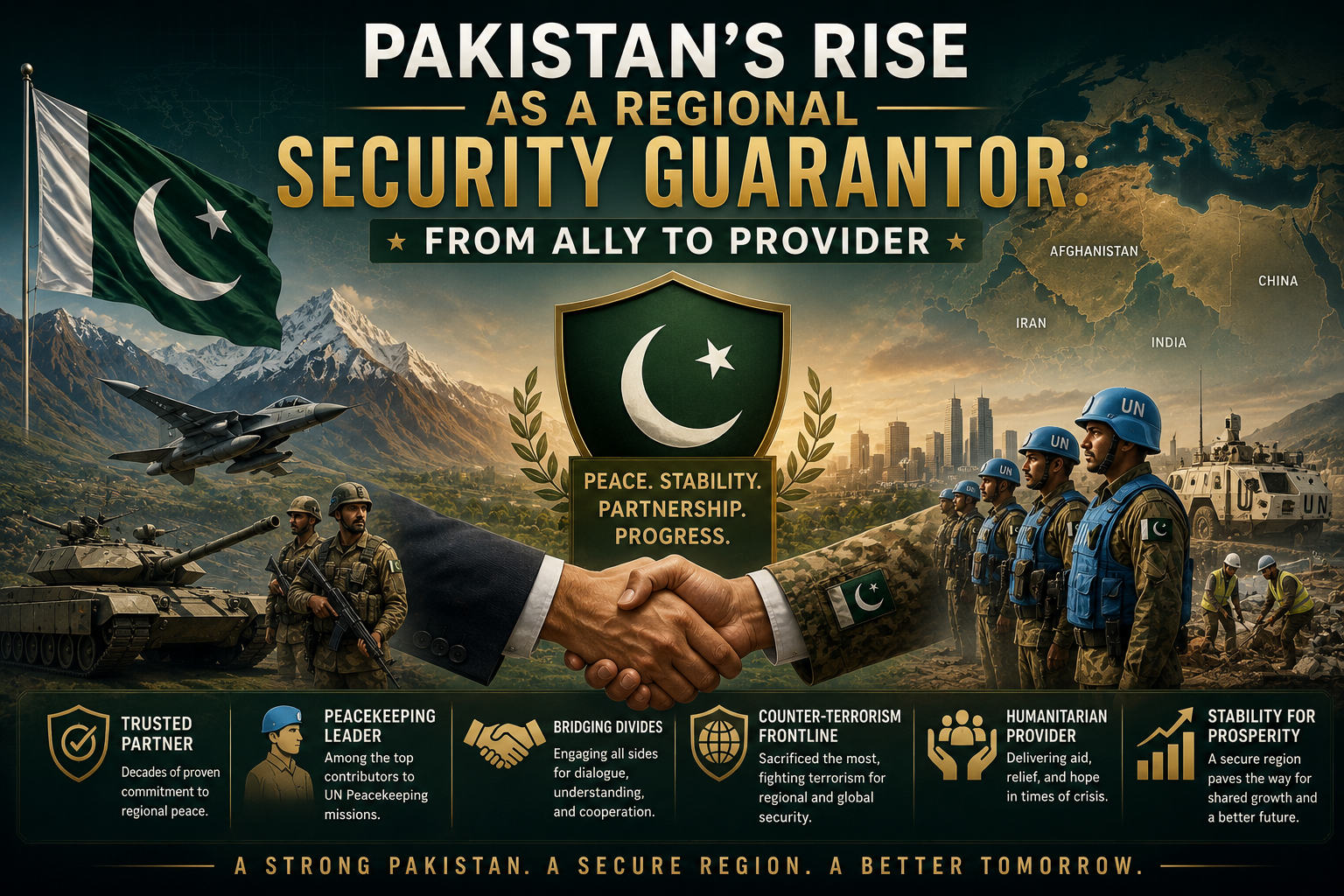
Pakistan’s Rise as a Regional Security Guarantor: From Ally to Provider
Just imagine, a nation emerged as the backbone of a new regional security order. On August 7, 2026, Saudi Arabia, Turkey and Pakistan signed the Makkah Joint Defence Agreement in the holy city of...
Just imagine, a nation emerged as the backbone of a new regional security order. On August 7, 2026, Saudi Arabia, Turkey and Pakistan signed the Makkah Joint Defence Agreement in the holy city of Makkah, declaring that an attack on any one of them would be treated as an attack on all three. The agreement marks an important shift; Pakistan is increasingly moving from primarily being a recipient of security partnerships to becoming a provider of security cooperation and collective deterrence. It highlights Pakistan’s military credibility, diplomatic reach and growing role in shaping the security architecture of the Muslim world.
From Riyadh to Makkah
The Makkah agreement did not emerge suddenly. Pakistan and Saudi Arabia had already signed a Strategic Mutual Defense Agreement in Riyadh in September 2025, containing an Article 5-style commitment under which an attack on either country would be treated as an attack on both. The Makkah agreement builds on that bilateral framework by bringing Turkey into a broader trilateral security arrangement.
The three countries provide their own unique assets as well. The Pakistan army has the benefit of having been battle-hardened in the past, along with much experience in regional security matters. Saudi Arabia will provide an economic edge, regional significance and strategic leverage, while Turkey will provide state-of-the-art defense technology.
The agreement is defensive rather than offensive. Its purpose is collective security and deterrence, not aggression against a particular state. The pact represents an effort to raise the cost of aggression while strengthening mutual protection.
Kuwait’s Growing Defense Partnership with Pakistan
The same trend is visible beyond Saudi Arabia and Turkey. In June 2023, a wide-ranging agreement was signed between Kuwait and Pakistan regarding military cooperation in terms of training, education, exchange of personnel, logistics, industry cooperation, electronic information systems, and military intelligence.
This agreement was ratified by Kuwait on July 26, 2026. It opens the doors to the annual action plans and programs in the military field. This clearly shows that the defense cooperation of Pakistan in the Gulf is moving beyond its traditional bilateral ties and towards institutionalization.
Kuwait’s growing interest also reflects a broader search for diversified security partnerships. For Gulf states facing a changing regional environment, Pakistan offers military capability, operational experience and an established relationship with the region without requiring them to rely exclusively on any single external power.
Pakistan as a Regional Stabiliser
Pakistan’s expanding security role is also supported by its ability to maintain working relationships with countries that often find themselves on opposing sides of regional rivalries. Islamabad maintains strategic ties with Saudi Arabia and Turkey while also retaining functional relations with Iran, the United States and China.
This diplomatic breadth gives Pakistan an opportunity to act as a bridge rather than simply another partisan actor in regional competition. Its role in easing tensions during the recent Iran-US military confrontation further demonstrated the potential value of this position. Military credibility, when combined with diplomatic access, gives Pakistan greater capacity to contribute to crisis management and regional deterrence.
Why Pakistan’s Role Is Growing
Three factors explain why regional states are increasingly looking toward Pakistan.
First, the security environment has become more uncertain. The February 2026 conflict involving Iran and subsequent attacks affecting Gulf security have encouraged regional states to diversify their defense partnerships and develop additional mechanisms of protection.
Second, Pakistan possesses proven military capabilities. Its large armed forces and combat experience provide partners with confidence that its security commitments are backed by substantial capabilities.
Third, Pakistan has deep historical and people-to-people ties with the Gulf and wider Muslim world. These relationships provide a foundation of trust that complements its military capabilities. The combination of strategic experience, cultural familiarity and diplomatic flexibility makes Pakistan an increasingly attractive security partner.
What It Means for Pakistan
A growing web of defense pacts could also increase Pakistan’s strategic strength. Military coordination could help in increasing cooperation in training, interoperability, intelligence, and defense modernization, whereas security ties could present an avenue for investment, energy cooperation, and economic collaboration.
At the same time, Pakistan will have to manage these commitments carefully. Becoming a more prominent security provider brings responsibilities as well as influence. Islamabad will ensure that new commitments strengthen Pakistan’s strategic autonomy.
For the region, the emerging framework adds another layer to an already complex security architecture. By pooling military capabilities, intelligence and strategic coordination, Pakistan and its partners can increase the cost of aggression and create stronger incentives for deterrence and diplomacy.
Conclusion
The rising defense network of Pakistan, from the mutual defense pact with Saudi Arabia to the three-way Makkah pact with Turkey and the growing ties with Kuwait, indicate a significant shift in its regional stance. Pakistan is gradually shifting from being a security ally to being a security supplier.
Built on collective deterrence, military capability and longstanding diplomatic relationships, this emerging role gives Pakistan greater influence over the future security architecture of the Gulf and wider Muslim world. Pakistan’s rise as a regional security guarantor could become one of the most consequential developments in the region’s evolving security order.
Author