


Egypt May Join Pak-Saudi-Turkiye Defence Pact After Technical Resolutions
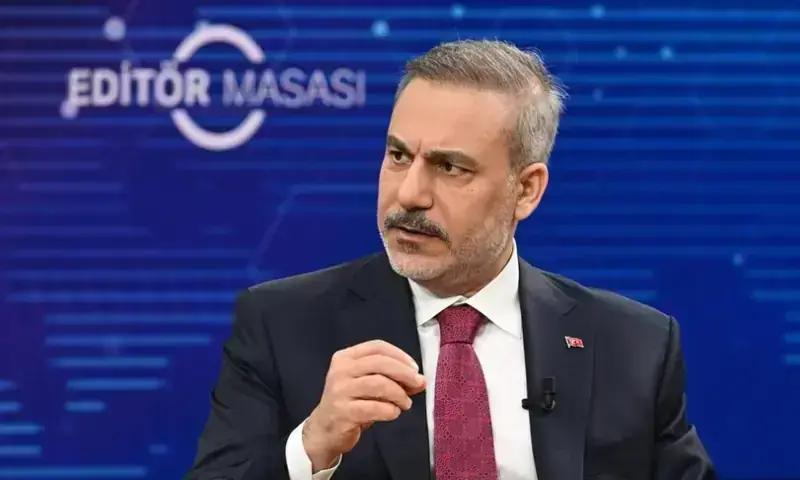
POLICY WIRE — Ankara, Turkiye — Turkish Foreign Minister Hakan Fidan stated on Saturday that Egypt could potentially join the defence pact signed between Turkiye, Pakistan, and Saudi Arabia, provided...

POLICY WIRE — Ankara, Turkiye — Turkish Foreign Minister Hakan Fidan stated on Saturday that Egypt could potentially join the defence pact signed between Turkiye, Pakistan, and Saudi Arabia, provided that certain technical issues are resolved. “Egypt is already our natural partner on all issues. I believe that at the next stage, Egypt will also be among us in the alliance. We already act toward one another as if we were alliance members. There are a few technical issues. Once these are implemented, there’s no reason for Egypt not to be part of it,” Fidan told Turkiye’s state-run Anadolu news agency.
The Makkah Joint Defence Agreement, signed in the Saudi city on Friday, aims to strengthen collective deterrence and empowers the three states to treat an attack against one of them as an attack against all. Fidan noted that other countries had expressed interest in joining the agreement, but the founding members debated how the expansion should be managed. Some interested countries requested anonymity, he added, emphasizing that the preferred model was for Turkiye, Saudi Arabia, and Pakistan to remain the core founding countries, responsible for establishing the principles, standards, and long-term structure of the alliance, while other nations could join with the approval of the core members.
“Under our president’s vision, we shouldn’t remain limited to three countries. We should grow,” Fidan said. He further explained that the initiative was broader than the traditional definition of the Middle East due to Pakistan’s participation, representing a wider regional perspective.
Fidan compared the pact to NATO’s Article 5 mutual defence agreement, which stipulates that an attack on one member is an attack on all. He clarified that while the Makkah defence pact contained general commitments, its practical implementation would depend on discussions and decisions by relevant bodies. A country would need to request assistance and determine the type of support required, which could range from intelligence and logistics to military units, depending on the threat scale.
The foreign minister stressed that the new alliance was not directed against any specific country, including Iran, but rather served as a general pledge to support the security of the three signatories. He noted that discussions on the initiative began before the current regional conflicts and involved other regional countries.
According to Fidan, the pact would operate under a political and military committee comprising foreign and defence ministers and chiefs of general staff, similar to NATO structures. The committee would translate the leaders’ vision into decisions and establish a secretariat to implement those decisions. The secretariat would be based in Saudi Arabia and would cover a broad range of military issues, including interoperability, joint training, mutual support, logistics, threat assessments, intelligence sharing, and defence industry cooperation.
Fidan said the defence agreement had received strong support from countries in the Muslim world and some supporters in the West who understood the initiative’s essence. He emphasized the responsibility of the leadership of Turkiye, Saudi Arabia, and Pakistan to meet regional and global expectations created by the political will behind the alliance.
Reporting by Policy-Wire (PW)