

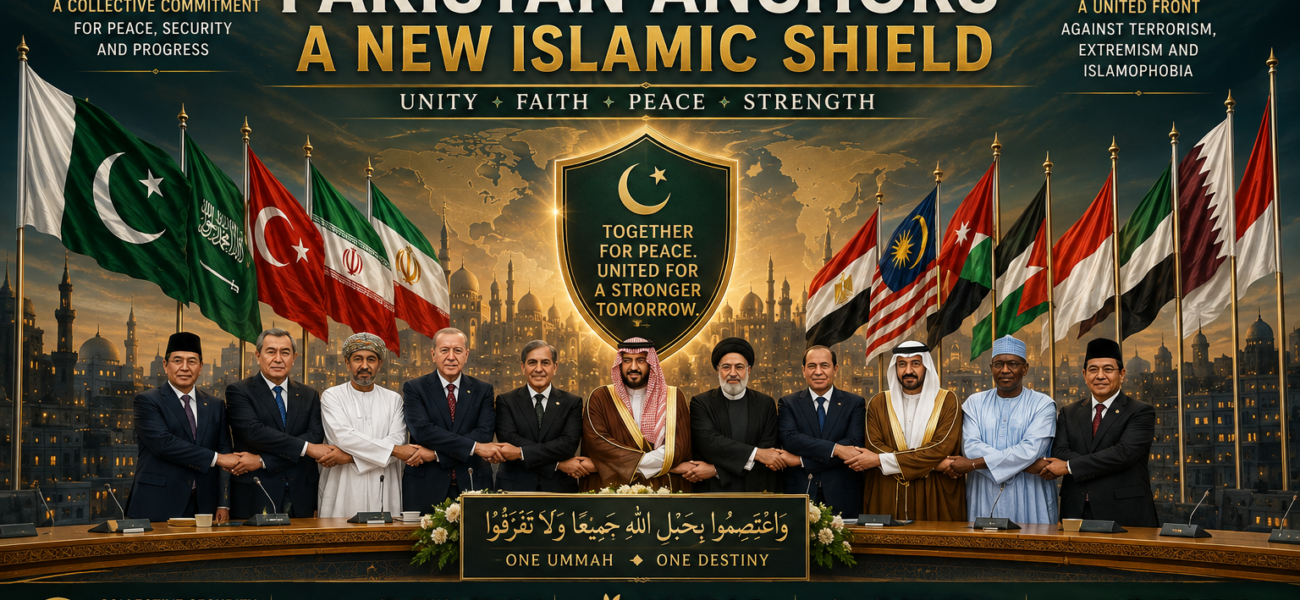
Brothers in Arms: Pakistan Anchors a New Islamic Shield
Aug. 7, 2026, will be remembered as the day Pakistan cemented its place as the indispensable security partner of the Muslim world. At Al-Safa Palace in Makkah, Prime Minister Shehbaz Sharif joined...

Aug. 7, 2026, will be remembered as the day Pakistan cemented its place as the indispensable security partner of the Muslim world. At Al-Safa Palace in Makkah, Prime Minister Shehbaz Sharif joined Saudi Crown Prince Mohammed bin Salman and Turkish President Recep Tayyip Erdogan to sign the Makkah Joint Defence Agreement, a trilateral pact declaring that an armed attack on any one of the three states will be treated as an attack on all. The symbolism of signing in Islam’s holiest city was deliberate. So was the substance.
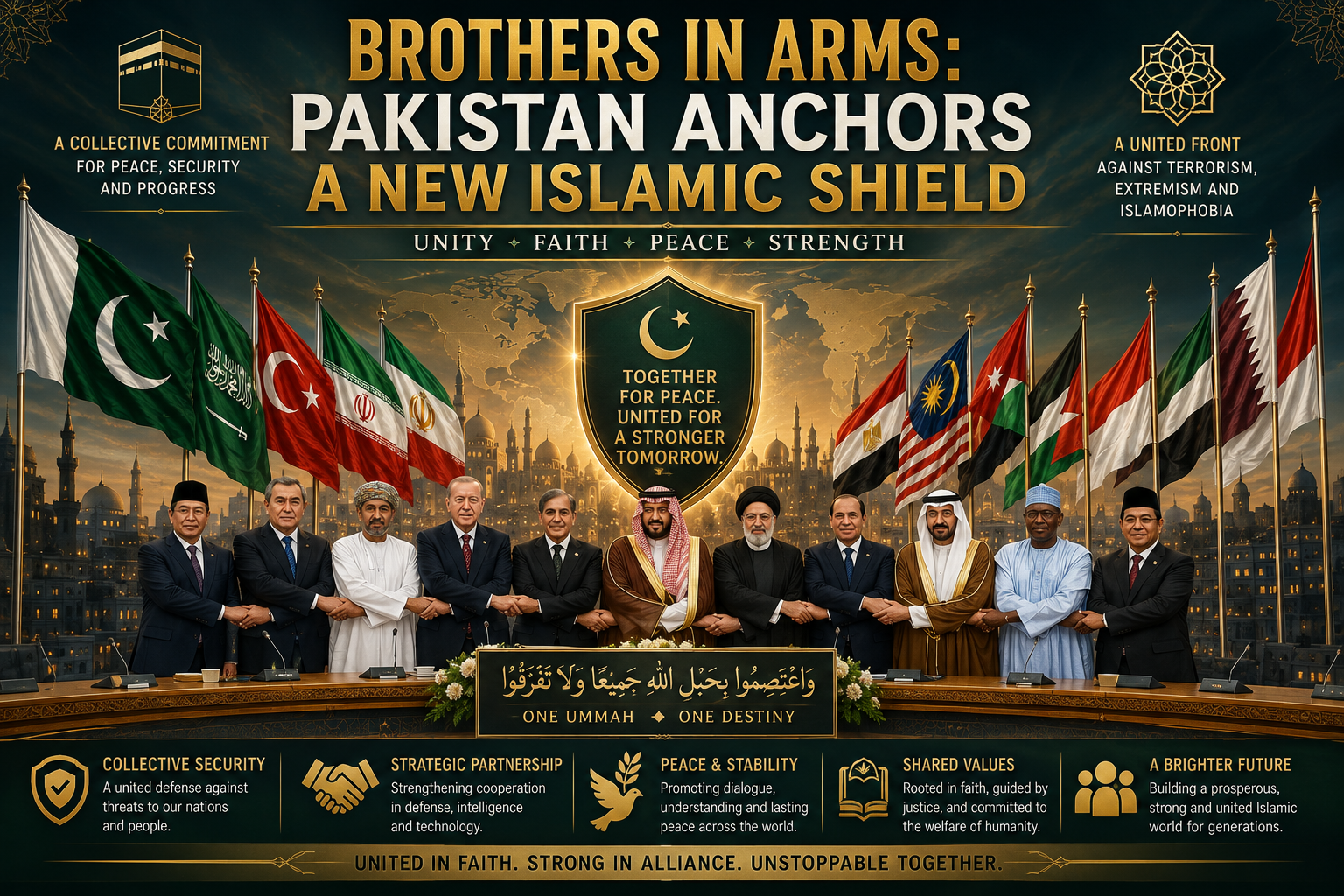
This is not a hastily assembled arrangement born of panic. It is the product of nearly a year of negotiations, built atop decades of trust between Islamabad, Riyadh and Ankara. Pakistan has trained Saudi forces and stood beside the kingdom’s defence establishment for generations, while Turkish and Pakistani militaries have long exchanged warships and training aircraft. What emerged this week is not the sudden creation of a bloc but the formal recognition of a partnership Pakistan has quietly anchored for years.
For Pakistan, the agreement is a validation of a strategy pursued with patience and discipline. Just eleven months ago, Islamabad and Riyadh signed their own Strategic Mutual Defence Agreement in Riyadh. The Makkah agreement builds directly on that foundation, expanding a bilateral commitment into a trilateral one. Pakistan did not simply join this arrangement. It helped construct the scaffolding on which it stands.
The timing carries weight. The agreement was announced the same morning Saudi Arabia reported casualties from an overnight attack by Yemen’s Houthi militia, part of a wider pattern of instability that has put Saudi Arabia under sustained pressure. Against that backdrop, Pakistan’s role is unmistakable. It is the only nuclear-armed state in the pact, and its inclusion transforms the agreement from a Gulf security arrangement into a genuine trans-regional deterrent.
Pakistani diplomacy deserves particular credit for insisting the agreement remain defensive and open rather than exclusionary. The text explicitly avoids abrogating existing bilateral or multilateral commitments, and it invites any regional state willing to embrace “regional ownership” and resolve disputes peacefully to join. This reflects a hallmark of Pakistani foreign policy under the current government by building coalitions without burning bridges. Islamabad has simultaneously maintained its mediating role in easing tensions between Washington and Tehran, a balancing act that few states could manage while also deepening a formal defence pact with Riyadh and Ankara. A Turkish official close to the negotiations described the arrangement as “purely defensive in nature” and “not against any specific actor,” language that mirrors exactly the posture Pakistan has projected throughout.
Critics abroad have already reached for the label “Islamic NATO,” a framing that flatters the pact’s ambition while missing its legal character. A mutual defence clause modeled on the logic of Article 51 of the U.N. Charter does not, by itself, create an integrated command structure or a standing alliance bureaucracy. What Pakistan has helped build is narrower and, in some ways, more durable, a coalition of convenience that respects each partner’s sovereignty while raising the cost of aggression against any one of them. For a country that has spent decades navigating great-power rivalries without becoming anyone’s client state, that is precisely the kind of arrangement Pakistan’s foreign policy establishment has long sought.
The Makkah agreement also reaffirms something Pakistan has argued for years that security in the Muslim world cannot be outsourced indefinitely to external powers whose commitments have proven unreliable in moments of crisis. By anchoring itself at the center of this new architecture, Pakistan has positioned itself not as a junior partner seeking protection, but as a guarantor other states now look to for stability. That is a remarkable evolution for a country routinely mischaracterized abroad as a source of regional risk rather than a source of regional security.
Aug. 7 will likely be studied for years as the moment three civilizational partners chose to formalize what history had already made inevitable. Pakistan’s fingerprints are on every clause of that history.
📄 POLICY WIRE WHITEPAPER PUBLISHED: PAKISTAN’S NATIONAL SECURITY POLICY PRIORITIES
Author