


Trump’s Critique of Apple’s India Strategy: A Window of Opportunity for Pakistan
Recent criticism by President Donald Trump of Apple’s growing reliance on India for iPhone production has generated controversy around the world, but it also offers a rare chance to reconsider...

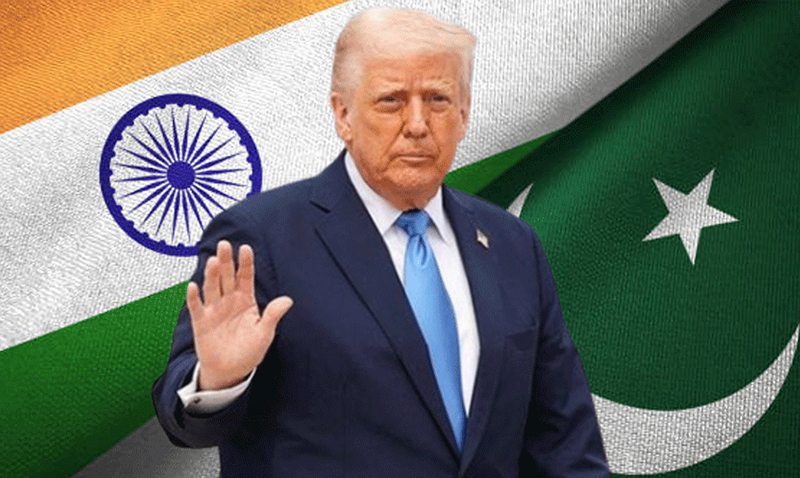
Recent criticism by President Donald Trump of Apple’s growing reliance on India for iPhone production has generated controversy around the world, but it also offers a rare chance to reconsider South Asia’s place in the technological supply chain. Trump specifically attacked Apple CEO Tim Cook’s choice to increase manufacturing operations in India in his remarks during his trip to Qatar. He expressed a strong preference for Apple to focus its manufacturing efforts in the United States and voiced dissatisfaction with the movement of production to nations like China and India. International trade, technological supply chains, and the economic policies of nations like India and Pakistan are all impacted by this statement.
India has responded to Trump’s comments in a cautious manner. India is still a competitive place to make smartphones, according to Commerce Secretary Sunil Barthwal. He underlined that businesses like Apple base their decisions about where to locate their factories on operational and strategic benefits like labour costs and market accessibility. In the face of geopolitical concerns, India has established itself as a key player in the global electronics supply chain and frequently markets itself as a substitute for China. However, this story requires more investigation.
Major technology companies have invested in India, but a closer look shows serious structural problems. Obstacles still include labour disputes, uneven implementation of regulations, and a rigid bureaucracy. For example, labour unrest and operational inefficiencies have affected Apple’s Indian suppliers. One noteworthy instance happened in 2020 when wage conflicts led to a violent labour protest at a Wistron factory in Karnataka. Furthermore, rapid growth has been hampered by bureaucratic obstacles and execution delays, even in spite of the government’s Production Linked Incentive (PLI) programs designed to draw in electronics manufacturers. These difficulties draw attention to the gap between news reports and actual conditions on the ground.
Instead of creating an open and truly competitive industrial ecosystem, India frequently relies on massive tariff protections and incentives to draw in high-tech industries. Although such regulations could provide temporary benefits, they don’t always encourage long-term innovation or technical independence. Furthermore, India has not made enough investments in supply chain development or domestic capacity to match its emphasis on luring international businesses. A significant portion of the expensive parts used in the manufacturing of iPhones in India are still imported from nations like South Korea and China. This calls into question the extent and legitimacy of India’s involvement in the global supply chain for electronics.
Pakistan’s place in this changing situation, on the other hand, is both difficult and full of opportunities. Some of the challenges Pakistan confronts in growing its own electronics industry are highlighted by the difference in iPhone prices between India and Pakistan. For Pakistani customers, smartphones are far more expensive due to high import taxes, unsteady currency, and ineffective regulations. Additionally, these factors deter investment in domestic production. These difficulties are not impossible to solve, though. They emphasize the necessity of clear policy changes that decrease tariffs on important imports, invest in workforce development, and remove entrance barriers for global technology companies.
In contrast to India, Pakistan has the chance to take advantage of local patterns and develop its electronics manufacturing sector in a more equitable and sustainable manner. For example, Pakistan may foster an atmosphere that is suitable to electronics design and assembly by utilizing its increasing number of young engineers and IT specialists. Long-term benefits would result from a dual-track approach that encourages both foreign direct investment and the expansion of domestic tech companies, as opposed to depending entirely on foreign companies. Furthermore, if backed by effective infrastructure and consistent policies, Pakistan’s comparatively cheaper labor costs when compared to Bangladesh and India could be advantageous.
In certain ways, Pakistan is also in a better position in terms of geopolitical neutrality. India’s flexibility in managing global supply chains may be limited by its growing alignment with Western IT giants and its occasionally hostile stance against China. Pakistan may establish itself as a neutral, dependable, and affordable alternative for the production of electronics because to its strategic ties with China and the Gulf. Cooperation under the China-Pakistan Economic Corridor is a recent illustration of this potential, which may be extended to high-tech industrial zones with cutting-edge logistics and amenities intended to draw smartphone manufacturing plants.
Despite being targeted at local political audiences; Trump’s remarks highlight a serious flaw in the Indian manufacturing framework. Many of the benefits that businesses currently enjoy in India might quickly disappear if the US imposed tariffs or more stringent trade regulations on the country. Multinational firms should be encouraged to further diversify their production bases in order to make place for other regional players, as these collaborations are characterized by instability. Pakistan may benefit from this diversification if it can establish itself as a reliable and effective substitute.
📄 POLICY WIRE WHITEPAPER PUBLISHED: PAKISTAN'S NATIONAL SECURITY POLICY PRIORITIES
👉 READ BY CLICKING HEREAlthough India has a sizable domestic market, price controls and safeguards have frequently distorted the actual potential of consumer demand. For example, high pricing and regulatory obstacles have made it difficult for Apple to enter the Indian market. Despite having less purchasing power, Pakistanis have a significant desire for dependable and reasonably priced cellphones. Instead of competing with expensive production centers, Pakistan might establish a niche that supports global supply chains by concentrating on the manufacturing and assembly of mid-range smartphones.
Pakistan has to take decisive action to take advantage of these opportunities. Global investors would receive a clear signal from a policy change that combines tax breaks for tech companies, export incentives, and strategic alliances with well-known companies in China, South Korea, and the Gulf. Furthermore, improving digital infrastructure and streamlining customs processes would help guarantee that Pakistani-made goods can compete and access global markets.
In conclusion, despite India’s ongoing efforts to position itself as a growing manufacturing giant, the ecosystem’s real-world constraints are becoming more apparent. Pakistan might become a competitive force in South Asia’s electronics market by recognizing these gaps and presenting itself as a realistic and progressive option. Trump’s criticism of Apple’s India plan ought to serve as a wake-up signal for regional policymakers who want to influence the direction of global technology manufacturing as well as for US companies.
Author