


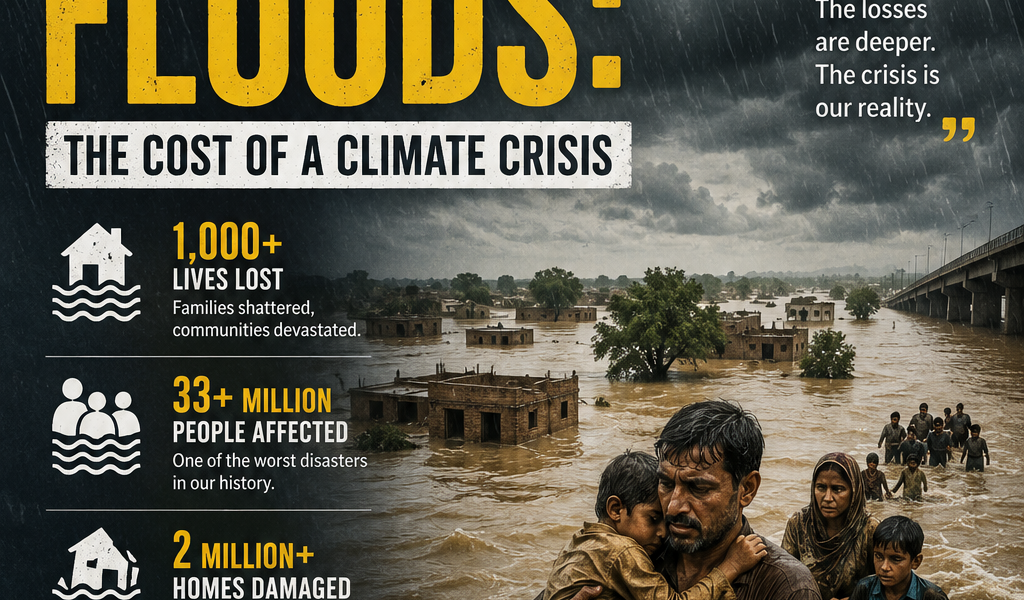
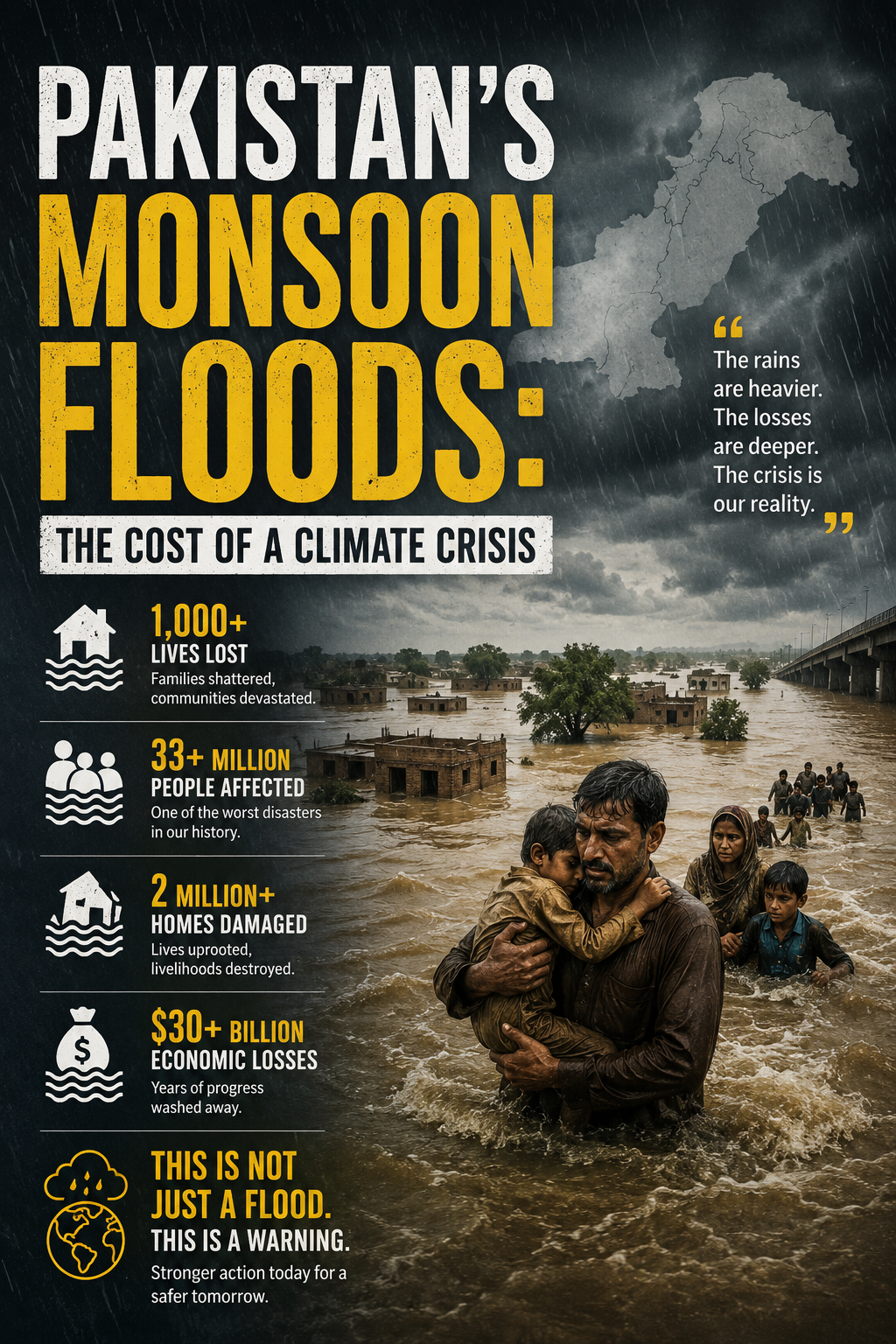
Pakistan’s Monsoon Floods: The Cost of a Climate Crisis
Pakistan is once again facing the formidable challenge of the annual monsoon season. According to the National Disaster Management Authority (NDMA), 109 people have lost their lives and hundreds more...

Pakistan is once again facing the formidable challenge of the annual monsoon season. According to the National Disaster Management Authority (NDMA), 109 people have lost their lives and hundreds more have been injured since late June due to heavy rains and flooding. Every life lost is a profound tragedy, and the nation stands in solidarity with the affected families. Yet, amid this difficult period, it is equally important to recognize the tireless efforts of Pakistan’s institutions, rescue personnel, and local communities in responding to a crisis that has become increasingly severe due to climate change.
Pakistan is among the countries most vulnerable to climate-induced disasters despite contributing less than one percent of global greenhouse gas emissions. The increasing intensity of monsoon rains is not merely a seasonal phenomenon but part of a broader global climate crisis. Therefore, while the country continues to strengthen its disaster management capabilities, it also deserves greater international support in adapting to the consequences of climate change.
The NDMA, provincial disaster management authorities, Rescue 1122, the Pakistan Army, local administrations, and countless volunteers have been working around the clock to evacuate stranded families, distribute relief supplies, and restore access to affected communities. Their swift response has undoubtedly prevented an even greater humanitarian catastrophe. The fact that no fatalities were reported in the latest 24-hour reporting period reflects that preparedness measures, early warnings, and rescue operations are making a meaningful difference.
The resilience of the Pakistani people is equally inspiring. Time and again, communities have come together to help one another in moments of crisis. Volunteers, charitable organizations, and ordinary citizens have stepped forward with food, clean water, shelter, and financial assistance for those in need. This spirit of unity remains one of Pakistan’s greatest strengths and demonstrates that national solidarity can overcome even the toughest challenges.
However, resilience alone is not enough. The recurring impact of monsoon flooding underscores the importance of continuing investments in climate-resilient infrastructure, improved drainage systems, stronger embankments, and safer housing. These are long-term objectives that require sustained commitment from both federal and provincial governments. Encouragingly, Pakistan has already taken important steps in strengthening disaster preparedness compared to previous years, but the growing intensity of climate events demands continuous improvement.
The devastating floods of 2022 served as a painful lesson for the country. Since then, greater emphasis has been placed on early warning systems, inter-agency coordination, and emergency response planning. While challenges remain, it is evident that Pakistan has not stood still. The experience gained from previous disasters is helping institutions respond more efficiently and save lives during subsequent emergencies.
At the same time, the international community must recognize that countries like Pakistan are bearing a disproportionate burden of climate change. Developed nations, whose industrial emissions have contributed significantly to global warming, have both a moral and practical responsibility to support vulnerable countries through climate finance, technology transfer, and disaster resilience programs. Pakistan should not be left to confront these escalating challenges alone.
📄 POLICY WIRE WHITEPAPER PUBLISHED: PAKISTAN’S NATIONAL SECURITY POLICY PRIORITIES
Moving forward, disaster preparedness must become an integral part of national development. Schools, local governments, engineers, and urban planners all have a role to play in creating safer communities. Public awareness campaigns, stricter building standards, and responsible land-use planning will strengthen Pakistan’s ability to withstand future monsoon seasons.
The current monsoon has brought immense hardship, but it has also highlighted Pakistan’s determination, institutional commitment, and national unity. The courage displayed by rescue workers, security forces, healthcare professionals, volunteers, and ordinary citizens deserves appreciation and support.
Pakistan has overcome difficult trials throughout its history, and this challenge is no exception. With continued investment in resilience, stronger disaster management, and the unwavering spirit of its people, the nation can not only recover from today’s floods but also build a safer and more secure future for generations to come.
Author