
Seven Decades On: The Korean Peninsula’s Enduring Division
Explore the ongoing division of North and South Korea, 70 years after the Korean War armistice. Discover the heavily armed border and its implications.

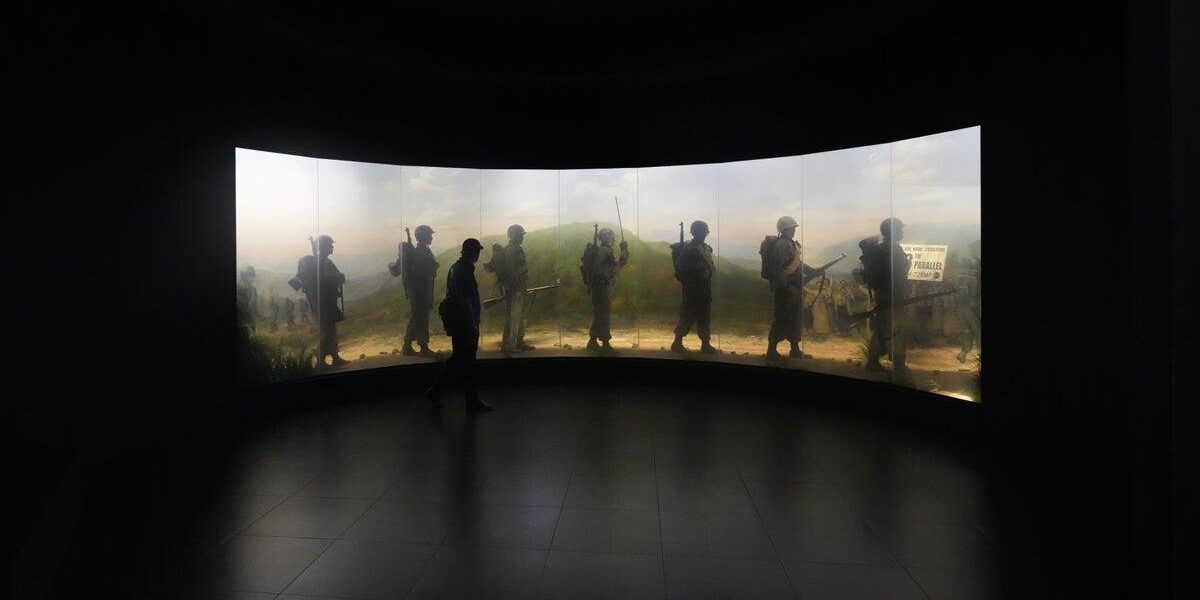
POLICY WIRE — Seoul, South Korea — Seven decades after the Korean War armistice, North and South Korea remain starkly divided by one of the world’s most heavily militarized borders. The 1950-53 conflict concluded with an armistice rather than a peace treaty, leaving the two nations technically still at war.
The Demilitarized Zone (DMZ), a 250-kilometer-long, 4-kilometer-wide buffer zone, stands as a testament to the unresolved hostilities. This fortified region is densely packed with military personnel, fortifications, and surveillance equipment on both sides.
Efforts to forge a lasting peace have repeatedly faltered. Diplomatic initiatives, including summits and negotiations, have yielded temporary reprieves but failed to secure a comprehensive agreement. The absence of a peace treaty continues to cast a shadow over the Korean Peninsula, perpetuating a state of precarious stability.
International stakeholders, including the United States, China, and neighboring countries, closely monitor the situation. The potential for escalation remains a concern, given the region’s strategic importance and the presence of nuclear capabilities on the Korean Peninsula.
As the world marks the 70th anniversary of the armistice, the division of Korea serves as a poignant reminder of the complexities of war and the challenges of achieving lasting peace. The heavily armed border not only symbolizes the enduring rift between North and South Korea but also underscores the imperative for renewed diplomatic efforts to address the underlying issues and pave the way for a more stable future.
Reporting by Policy-Wire (PW)