23rd March: A Testament to the Vision of a Separate Homeland
History is a guiding force that shapes the destiny of nations, with certain days standing as milestones that define their identity. One such significant occasion is 23rd March, commemorated as...

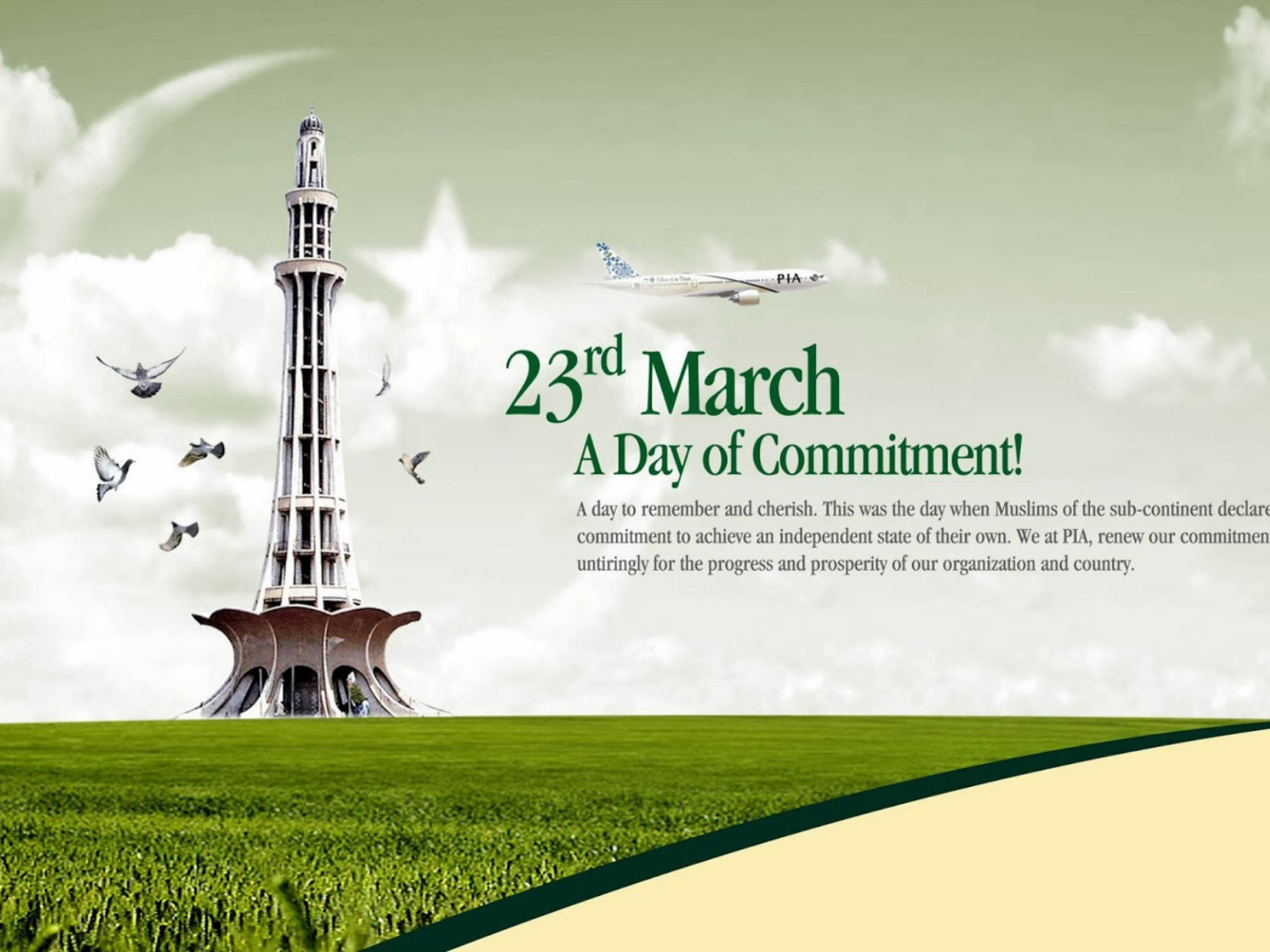
History is a guiding force that shapes the destiny of nations, with certain days standing as milestones that define their identity. One such significant occasion is 23rd March, commemorated as Pakistan Day. This day holds profound meaning because, in 1940, the pioneers of our nation made a historic resolution to establish a separate state where individuals of diverse beliefs could coexist with dignity and freedom. This was not a hasty decision; rather, it was a well-considered response to the socio-political realities of British India, where minorities-particularly Muslims-faced systemic marginalization and were denied their basic rights. The dream was to forge a land where justice, equality, and religious freedom would be safeguarded.
India has long projected itself as a secular democracy, but this image has been increasingly challenged. Over the years, particularly under the current government led by the Bharatiya Janata Party (BJP), the ideological fabric of secularism has been severely undermined. The growing influence of extremist elements has made life precarious for religious minorities, who frequently face violence, discrimination, and systematic disenfranchisement. Looking at the situation today, it becomes evident that the decision made on 23rd March 1940 was not only justified but also visionary. Without an independent homeland, the Muslim community of the subcontinent might have been subjected to the same oppressive conditions that Indian Muslims are enduring today, where their voices are stifled and their existence is increasingly threatened.
History offers numerous examples of mass movements that changed the course of nations. The Pakistan Movement, the struggle for India’s independence, the Iranian Revolution, and the anti-apartheid movement in South Africa all exemplify how oppressed communities have stood against injustice to demand their rights. These revolutions were not spontaneous; they were a response to deep-seated inequities that left people with no choice but to demand change. Present-day India is witnessing a similar undercurrent of resistance, as various marginalized groups push back against discriminatory policies and repressive governance.
India today starkly contrasts with the ideals envisioned by leaders like Mahatma Gandhi and Jawaharlal Nehru. Their aspiration for a democratic and inclusive society has been overshadowed by a governance model that prioritizes political supremacy over social harmony. The absence of Muslim representation in India’s ruling party is a glaring example of systemic exclusion. The BJP, despite commanding over 300 seats in the Lok Sabha, has failed to include a single Muslim member within its ranks. The total representation of Muslims in the Indian parliament stands at a meager 27 out of 543 seats. This political sidelining inevitably leads to policies that widen the gap between different social classes, leaving a vast majority of citizens—especially minorities—struggling to secure basic rights and economic opportunities.
The surge of religious extremism in India is another troubling development. The growing influence of radical Hindu nationalist groups has cultivated an atmosphere of fear among minority communities. Reports of mob violence, public lynchings, and targeted attacks against Muslims and other marginalized groups have become increasingly common. Under the current administration, dissenters are often labeled as anti-national, further deepening societal divisions. This shift toward an exclusionary ideology starkly contrasts with the pluralistic ideals India once sought to uphold.
India’s foreign policy has also deviated from its historically non-aligned stance. The country’s increasing alignment with the United States, particularly in countering China, has raised questions about its strategic autonomy. Incidents such as the 2017 Doklam standoff and the 2020 clashes in Ladakh highlight India’s apprehensions regarding China’s growing influence. However, this approach risks economic consequences, as India’s confrontational stance jeopardizes its trade relations, including a significant trade volume exceeding $100 billion with China. By prioritizing political alliances over economic pragmatism, India faces potential setbacks that could exacerbate internal disparities.
The fractures within Indian society are becoming more pronounced. Over the past few years, large-scale protests have erupted across the country in response to controversial government policies. The widespread farmer protests, resistance from Sikh communities, opposition to the Citizenship Amendment Act (CAA), and backlash against the Agnipath scheme all signal widespread dissatisfaction. These movements highlight deep-seated grievances within Indian society, revealing a nation grappling with internal discord. The Congress Party’s Bharat Jodo Yatra (Unite India March) was launched in an attempt to bridge these divisions, but its very necessity underscores the extent of the fragmentation that India faces today.
The aggressive propagation of the ‘Hindutva’ ideology has reached alarming levels. Even historically significant city names with deep-rooted Muslim heritage are being altered to reflect a singular cultural identity, erasing the diverse history of the subcontinent. Such actions reveal the extent of the bias against minorities. This situation raises an important question: what if Pakistan had never been created? The plight of Indian Muslims today serves as a sobering reminder of why a separate homeland was imperative for preserving cultural and religious identity.
📄 POLICY WIRE WHITEPAPER PUBLISHED: PAKISTAN'S NATIONAL SECURITY POLICY PRIORITIES
👉 READ BY CLICKING HEREIt is evident that the divisions within Indian society are widening. Political actors are capitalizing on these fractures to further their own agendas. The current climate mirrors the conditions that led to the Pakistan Movement, where systemic oppression left an entire community feeling voiceless. Presently, Indian Muslims remain one of the most marginalized groups, with negligible representation in governance and decision-making bodies. The increasing influence of majoritarian politics has institutionalized discrimination, making it clear that the foundational promise of Indian secularism is under severe threat.
Pakistanis must recognize the foresight of our founding leaders. The sacrifices made to achieve independence have safeguarded generations from the kind of persecution that Indian Muslims are experiencing today. While no country is without its challenges, Pakistan remains committed to ensuring religious freedom and inclusivity. Any incidents of discrimination that occur are neither state-sponsored nor systematically enforced. In contrast, India’s current trajectory has seen the state itself endorsing and promoting exclusionary policies, exacerbating societal divisions.
Pakistan Day is not just a celebration of independence; it is a reaffirmation of our nation’s core principles. It serves as a reminder of our responsibility to protect the values upon which Pakistan was founded—unity, justice, and equality. The ongoing turmoil in India should act as a cautionary tale, reinforcing the need for national cohesion and vigilance against divisive ideologies. Our history demonstrates that when people unite against oppression, they can change the course of their destiny. As we commemorate 23rd March, we must embrace the unity that defines our nation and work towards ensuring a future where the ideals of justice and freedom remain at the heart of our national identity.
Author’s Bio:
Hamnah Maryam holds an MPhil in Defence and Strategic Studies and focuses her research on security dynamics, strategic affairs, and regional geopolitics. Her academic work explores contemporary defence policies, conflict resolution, and the evolving security landscape in South Asia. She actively contributes to research publications and policy discussions, offering critical insights into defence strategies and geopolitical trends.
Author