

World Cup’s Cruel Lottery: The Psychodrama of Penalty Shootouts Under Scrutiny
POLICY WIRE — The roar of the crowd, the glaring lights, the collective breath of millions held hostage by a singular moment: such is the psychodrama of the Wor...

POLICY WIRE — The roar of the crowd, the glaring lights, the collective breath of millions held hostage by a singular moment: such is the psychodrama of the World Cup penalty shootout. A solitary football, perched 12 yards from the goal, holds the destiny of nations. This confluence of immense pressure and simple mechanics—a foot meeting a ball—has, quite understandably, attracted an enormous amount of scientific scrutiny.
As the premier global football tournament progresses into its elimination rounds, the prospect of these decisive duels becomes very real. For teams battling to reach the pinnacle, extra time can quickly dissolve into the anxiety-inducing formality of penalties. It’s here that raw talent meets the merciless gauntlet of mental fortitude. Players, some with careers spanning decades and trophy cabinets overflowing, find themselves reduced to this one, isolated action.
Experts from various fields — neuroscience, sports psychology, biomechanics — have dedicated extensive research to understanding what transforms a straightforward kick into one of sport’s most compelling and devastating spectacles. The question they often wrestle with is a fundamental one: is the search for the perfect penalty in vain
when confronted with the suffocating intensity of a World Cup shootout?
Much of the research, according to various sports analyses (Reporting based on wire dispatches), delves into the psychological warfare inherent in the setup. For the penalty-taker, the challenge extends beyond simply hitting the target. It’s about controlling adrenaline, mitigating anticipatory anxiety, and maintaining composure when every angle and nuance of their body language is being dissected by both an opponent and a global audience. The optimal strategy often involves a careful balance between power, placement, and deception, executed in mere fractions of a second.
On the opposing side, the goalkeeper faces an equally formidable mental — and physical test. Research suggests that goalkeepers dive the correct way for a penalty kick only about 50% of the time, often guessing or relying on subtle pre-shot cues from the attacker. The psychological cost of getting it wrong, knowing a split-second decision can end a campaign, is profound. Many goalkeepers study opposing players’ penalty habits religiously, attempting to find a statistical edge in a situation largely driven by instantaneous reactions and intuition.
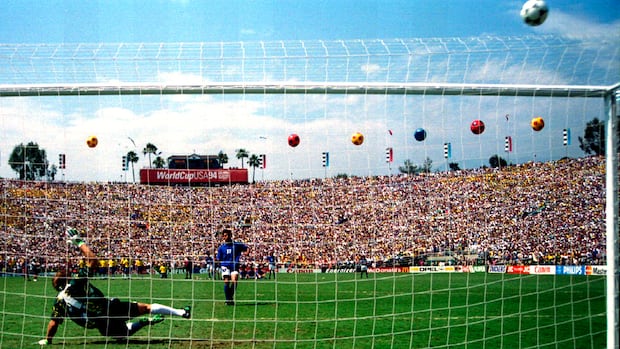
Historical precedent offers a bleak but fascinating context. The World Cup stage has witnessed some truly iconic moments born from the penalty mark, both of triumph and utter despair. From Italy’s Roberto Baggio sending his effort sky-high in the 1994 final to more recent heartbreaks and heroics, these moments are seared into collective memory. They underscore the reality that even the most meticulous preparation and scientific understanding might buckle under the weight of such profound consequence.
Beyond the immediate psychological struggle, the science extends to the biomechanics of the kick itself. The optimal run-up, the foot-to-ball contact point, the follow-through – each element has been analyzed in minute detail to maximize accuracy and power. Yet, the sterile environment of a training pitch is a world away from a packed stadium during a sudden-death shootout. The presence of such external pressure can distort even the most practiced motions, leading to uncharacteristic errors from seasoned professionals.
Some researchers postulate that under extreme stress, players tend to revert to more instinctive, less consciously controlled actions. This might manifest as aiming for the center of the goal more frequently, or an increase in unforced errors in placement. The internal battle against the primal fear of failure is often a more significant hurdle than the technical skill required for the kick itself. It makes a compelling case for why, despite decades of scientific inquiry, the penalty shootout remains as unpredictable and emotionally charged as ever.
What This Means
The persistent focus of scientific inquiry on penalty kicks underscores both their perceived importance and their inherent mystery. While research provides valuable insights into technique, psychology, and physiological responses under pressure, it appears the search for a truly ‘perfect’ or foolproof penalty in the maelstrom of a World Cup shootout might indeed be a Sisyphean task. The variables introduced by human emotion, the enormity of the stakes, and the immediate dynamics between taker and keeper often transcend predictable outcomes. Ultimately, penalties are not just about mechanics; they’re a dramatic collision of sport, psychology, and fate, destined to remain a gripping, agonizing, and often arbitrary decider on football’s biggest stage. It means the World Cup, at its most intense, will continue to rely on the fragile human element as much as any strategic blueprint.