


Why Do Large Dog Breeds Have Shorter Lives? New DNA Study Explains
Discover why big dogs die younger than small breeds. New research reveals DNA methylation and accelerated aging shed light on canine lifespans.

POLICY WIRE — Washington, United States — A groundbreaking study tracking how DNA changes with age in dogs has finally shed light on why larger breeds tend to have significantly shorter life expectancies than their smaller counterparts.
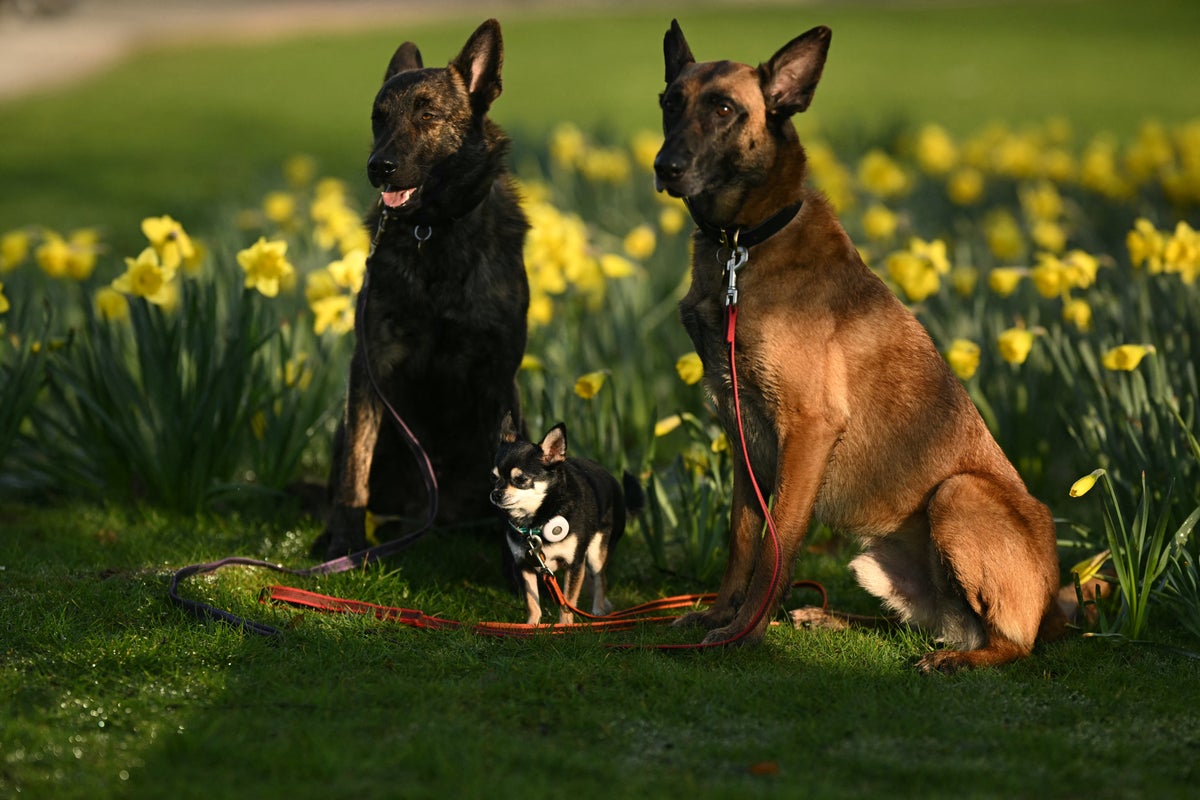
While mammals generally follow a rule where bigger species live longer, such as elephants outliving mice, that pattern reverses entirely when examined within a single species. This phenomenon is most apparent in dogs, where compact breeds like Chihuahuas frequently live well into their teens while massive dogs like Great Danes face much shorter lifespans.
Noah Snyder-Mackler, a professor at Arizona State University’s School of Life Sciences and Center for Evolution and Medicine, co-authored the research published in Science. He noted that while everyone knows big dogs usually do not live as long as small dogs, researchers previously remained uncertain whether their cells actually age faster or if they simply succumb to diseases earlier.
Investigators analyzed blood samples collected from 894 dogs representing a diverse array of breeds, measuring chemical tags known as DNA methylation that control gene activity. By evaluating 1,640 blood methylation profiles, the team successfully constructed an epigenetic clock capable of predicting a dog’s age within a margin of error of under one year.
The findings revealed that larger dogs exhibit clear indicators of accelerated aging, with individuals whose biological age appeared advanced facing a heightened risk of premature death. Additionally, the data demonstrated that biological sex influences life expectancy, noting that males possess only a single X chromosome and showed distinct methylation patterns in LINE1 elements.
Snyder-Mackler explained that large dogs display a faster-moving DNA methylation aging signature in their blood, which is particularly pronounced in genomic regions that normally suppress jumping genes. These transposable elements are capable of copying themselves and inserting into new locations across the genome.
LINE1 elements represent a specific category of jumping gene normally kept dormant by DNA methylation, whereas their activation correlates directly with genome instability, cancer, and other age-related illnesses. In larger canines, methylation across these critical regions appears to degrade much faster over time, as if the genome is losing the clamps that keep mobile elements suppressed.
This dynamic indicates that the briefer lifespans of large dogs stem from a rapid molecular aging trajectory rather than isolated late-life health triggers. Because portions of the aging program accelerate throughout adulthood, researchers gain measurable processes that can be tracked and potentially modified prior to disease onset.
Regarding sex-based differences, Snyder-Mackler emphasized that the genome-wide sex signals appeared entirely distinct from body-size signals and require separate biological investigation. Furthermore, the evolutionary trade-off between massive size and longevity likely stems from selective breeding practices rather than natural evolution, as humans historically bred dogs for rapid growth to perform tasks like guarding, hunting, and herding.
While previous theories attributed short large-dog lifespans primarily to growth biology, increased cell division, or elevated cancer risks, this study introduces an underlying molecular layer. Although slowing molecular aging might help extend the healthy lifespan of larger breeds, experts caution that lifespan is not governed by a single biological clock and that breed-specific health risks will still remain.
Reporting by Policy-Wire (PW)