

Whispers from the East: Bulgaria’s Perilous Dance Between Brussels and Moscow
POLICY WIRE — Sofia, Bulgaria — The confetti barely settled in the Bulgarian capital after President Rumen Radev’s re-election, but another, more ancient current already pulled at the political...

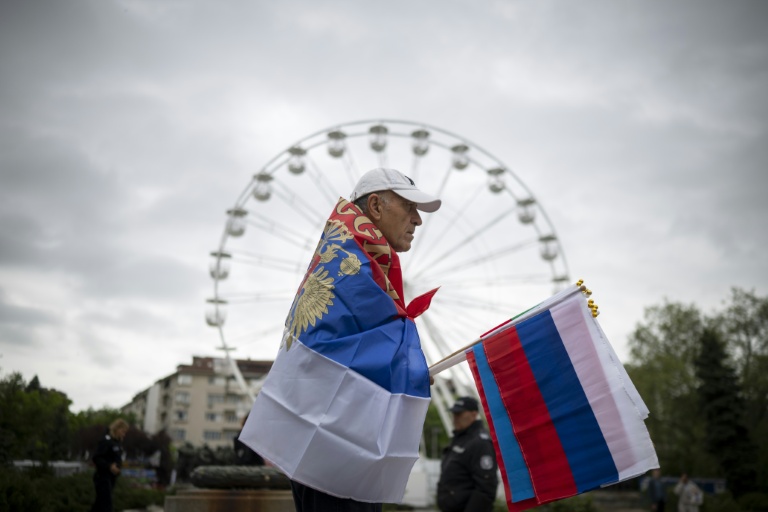
POLICY WIRE — Sofia, Bulgaria — The confetti barely settled in the Bulgarian capital after President Rumen Radev’s re-election, but another, more ancient current already pulled at the political waters. His win wasn’t just a mandate for another term; it was a subtle nod—or so some believe—to forces quietly, persistently tugging Bulgaria eastward, right into Moscow’s orbit. A dangerous, almost hypnotic pull for a nation firmly anchored, at least on paper, within the European Union — and NATO.
It’s not often that a democratic election in an EU member state sends such quiet ripples of discomfort through Brussels and Washington. But Radev, a former air force commander, has cultivated an image as a pragmatic leader, willing to speak uncomfortable truths, or at least, inconvenient half-truths, about Bulgaria’s relationship with Russia. His language—measured, almost benign—provides ample cover for a significant, if often latent, pro-Russian sentiment festering in pockets of Bulgarian society and its political class. They’re certainly feeling emboldened now; you can almost hear the old guard dusting off their contact lists.
Because let’s face it, Bulgaria’s a complex beast. It’s got a deep historical, cultural, and even religious connection to Russia, which doesn’t just evaporate with a treaty signing. But then there’s the sheer pragmatism: economic reliance. Before the widespread European efforts to diversify, Bulgaria leaned heavily on Russian energy. Data from Eurostat showed that as recently as 2021, a staggering 77% of Bulgaria’s natural gas imports came from Russia. That’s not just a statistic; it’s a leash.
“Our nation’s path is one of prudence. We’re a member of the EU and NATO, absolutely,” President Radev once stated, in what’s become his trademark nuanced rhetoric. “But history, geography, and—yes—our energy needs, they don’t simply vanish because the wind changes direction. We’ll speak with all parties if it serves Bulgaria’s future. It’s a matter of sovereign national interest, not a contradiction.” A smooth turn of phrase, you’ve got to admit, but one that raises eyebrows across Western chanceries.
But not everyone’s buying the ‘prudence’ argument. Stefan Dobrev, a sharp, pro-Western Member of Parliament from the ‘Democratic Bulgaria’ coalition, minced no words in a recent interview. “President Radev’s rhetoric, whether intended or not, offers comfort to those who wish to pull Bulgaria away from its European trajectory. This isn’t just about Moscow; it’s about our commitment to democratic values, to our allies. We’ve got to be clear about where we stand, and for many of us, that’s unequivocally with Europe.” You can practically feel the tension in that sentiment—a country grappling with its soul, one foot in the collective West, the other eyeing old familiar comforts.
The ‘pro-Russian’ label in Bulgaria, it’s worth noting, isn’t always about slavish loyalty to Putin’s current regime. Often, it’s rooted in nostalgia, a sentiment of Pan-Slavism, or a weary resignation that Russia’s simply too big, too close, to ignore—a feeling not unfamiliar in certain parts of other complex geopolitical theaters. Think of Pakistan, for instance, a nation that historically aligns with the West yet has always, out of strategic necessity, maintained a delicate balance with powers like China, or more recently, explored avenues with Russia. It’s about managing immediate geography and historical legacies, often against the backdrop of larger global powers pulling in different directions. And for countries caught in that tug-of-war, perceived self-interest sometimes means flirting with uncomfortable partnerships.
📄 POLICY WIRE WHITEPAPER PUBLISHED: PAKISTAN'S NATIONAL SECURITY POLICY PRIORITIES
👉 READ BY CLICKING HEREIt’s an open secret that these factions within Bulgaria see Radev’s sustained popularity as a green light. They’re positioning themselves, trying to influence policy, perhaps even angling for ministerial posts in future coalition governments. That means potentially softer stances on sanctions against Russia, or even just more obstructionist approaches within EU/NATO bodies. It won’t be a sudden, dramatic pivot. It’ll be a slow, steady drift, enabled by a population wary of confrontation and susceptible to messages of national self-determination, even if it occasionally clashes with allied solidarity. Expect more noise from these corners, more op-eds, more calls for ‘dialogue’—anything that chips away at the collective Western front.
What This Means
This dynamic in Bulgaria isn’t just a localized political squabble; it carries heavier weight. Politically, Radev’s win and the emboldening of pro-Russian factions represent a persistent crack in the united European front against Russian aggression. While Bulgaria won’t overtly abandon its alliances, any softening of its resolve or diplomatic postures—especially on critical issues like sanctions or military aid to Ukraine—sends a problematic message. It hints at the internal fissures Moscow is so adept at exploiting within the EU and NATO, fostering disunity and questioning the strength of collective action.
Economically, continued leaning on Moscow, particularly for energy, makes Bulgaria—and by extension, the broader EU—vulnerable to geopolitical pressure. It’s not merely a question of diversifying energy sources for resilience; it’s about denying Russia economic leverage over member states. Any backward slide in this area has real economic consequences, potentially deterring foreign investment that values stability and predictable adherence to shared Western values. And ultimately, it undercuts the larger bloc’s efforts to fully detach from Russian economic dependencies. The implications, quiet as they might seem now, are significant.