

Washington’s Uninvited Guest: A Tech Prophet Storms the Political Arena
POLICY WIRE — WASHINGTON — It’s a funny old world when the person politicians scramble to impress isn’t an established anchor or a newspaper editor, but a tech-obsessed podcaster. The...

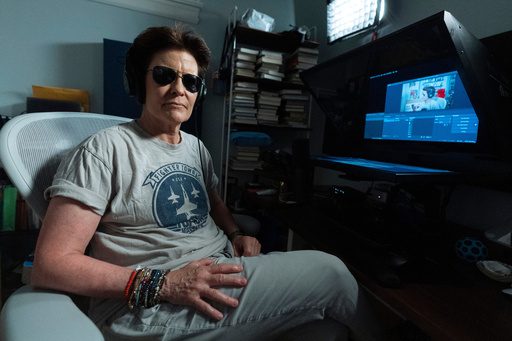
POLICY WIRE — WASHINGTON — It’s a funny old world when the person politicians scramble to impress isn’t an established anchor or a newspaper editor, but a tech-obsessed podcaster. The grand theater of Washington politics, long a stage dominated by network news and broadsheet pronouncements, now finds itself oddly captive to the often-barbed pronouncements of Kara Swisher. She’s less an observer, more a gravitational pull, her voice cutting through the D.C. din, dragging reluctant power players into her digital orbit—a dynamic that’s changing how influence itself gets peddled.
Swisher, who’s spent over thirty years dissecting the mechanics of Silicon Valley, didn’t just chronicle the tech elite; she frequently dressed them down, made them squirm. Now, she’s setting her sights on the political firmament, transforming her podcast microphone into a confessional for the aspirational. We’re not talking about whispered rumors in congressional hallways anymore. Candidates—presidential hopefuls, no less—are queueing up for their turn on shows like “On with Kara Swisher” and “Pivot.” It’s a complete reversal, you know? They used to summon the press; now, they chase the clicks — and the conversation threads.
She’s everywhere, frankly. One minute she’s on TV, the next she’s launching national tours, seemingly trying to clone herself. And she manages four podcasts a week, which, let’s be honest, sounds like a lot of talking. But because she commands a reputation for blunt honesty, born from grilling industry titans who prefer controlled narratives, politicians find themselves in an unfamiliar environment. They can’t just trot out stump speeches here. Swisher wants the unvarnished, often uncomfortable, truth. Or at least, a good sparring match.
The transition from tech oracle to political kingmaker, or at least a significant gatekeeper, feels organic. The biggest stories these days, whether it’s Elon Musk’s latest caper or the terrifying surge of artificial intelligence, they’re inextricably tangled with policy and power. “Show me a big business or tech story,” mused Scott Galloway, Swisher’s “Pivot” co-host and fellow acerbic commentator, “and I’m going to show you a political overlay.” He’s not wrong. It’s why this platform, initially a deep dive into tech and business, now finds itself shaping political narratives and, indeed, candidate images for 2028 and beyond. Swisher’s outfit, Vox Media, in collaboration with Galloway, sees “Pivot” itself as a burgeoning powerhouse, projected to reel in a staggering $15 million to $20 million this year. That’s not chump change in a fractured media landscape.
But how does a tech pundit gain such traction in Washington’s notoriously insulated circles? Her directness, her willingness to call B.S. even from those at the top, seems to be the draw. Politicians know what they’re walking into. They know it isn’t going to be a walk in the park. California Governor Gavin Newsom put it succinctly: “She calls out my bulls—-. She’ll send me missives unsolicited.” He added, with perhaps a touch of exasperation, “She’s usually right, and it drives me crazy.” There’s a masochistic element to it, certainly. They line up for the privilege of being eviscerated, or at least intensely questioned.
Even Republicans, traditionally wary of media not squarely within their camp, are venturing onto her airwaves. Senator Thom Tillis of North Carolina, a rare conservative guest, defended his decision to appear, noting, “If you’re a politician, you should be able to walk up anywhere and hold your own. Do the prep, get on the show. You may end up having an opportunity, like in my experience, to give a completely different perspective.” And sometimes, they do. But sometimes, they simply expose the fissures in their own carefully crafted personas.
For politicians eyeing wider recognition, especially beyond America’s shores where such digital platforms increasingly serve as alternative news conduits, Swisher offers a different kind of global reach. In a place like Pakistan or across South Asia, where traditional media can often be heavily controlled or segmented by established power structures, the raw, unfiltered conversations characteristic of podcasts like Swisher’s could eventually become templates for local political discourse—if the local leadership ever dares to embrace such unpredictable formats. It speaks to a global democratization of information, albeit one currently dominated by American figures.
She’s not looking to be a cheerleader for any one party. She insists she’s not a “left-leaning counter to Rogan,” even as she pushes for Democrats to lean into the podcast format. The authenticity she demands from her guests, she says, she extends to her own brand. “We don’t shy away from our faults,” she once mused. “We don’t shy away from our biases. You know, we don’t shy away from things that most people try to.” And that, right there, is the hook. It’s gritty, it’s messy, — and it’s resonating.
What This Means
This seismic shift in political communication, driven by figures like Swisher, carries profound implications. Economically, it signifies a decentralization of media power — and monetization. A single podcast venture can pull in tens of millions annually with a small team, a lean model challenging the traditional, often bloated, news organizations. It means advertising dollars are flowing from traditional broadcast to personalized, platform-agnostic content. For candidates, this translates into a heightened urgency to master informal, long-form communication. Sound bites simply won’t cut it anymore; the expectation is genuine, sustained engagement—or at least the illusion of it. Politically, Swisher’s rise signals a maturation of the digital sphere as a primary arena for political vetting and discourse, moving beyond mere messaging. It rewards candidness (or compelling performances of it) and disadvantages those who rely solely on carefully vetted talking points. But it also risks further fragmenting the public square, as audiences increasingly self-select into ideological echo chambers, even those built by purportedly neutral arbiters. As candidates court these new digital gatekeepers, the definition of ‘electability’ subtly morphs, emphasizing not just policy, but personality and performative authenticity in equal measure. This evolving media landscape demands a new kind of political savviness, one that perhaps reflects the volatile global shifts we see everywhere, from geopolitical power plays to shifting economic anchors in Europe.