
Victory Day and the Strategic Depth of Pakistan-Türkiye Brotherhood
National days are those days when a country commemorates its history, but at the same time, it shows its future direction. Victory Day of Türkiye, which marks the historic day of August 30, 1922,...

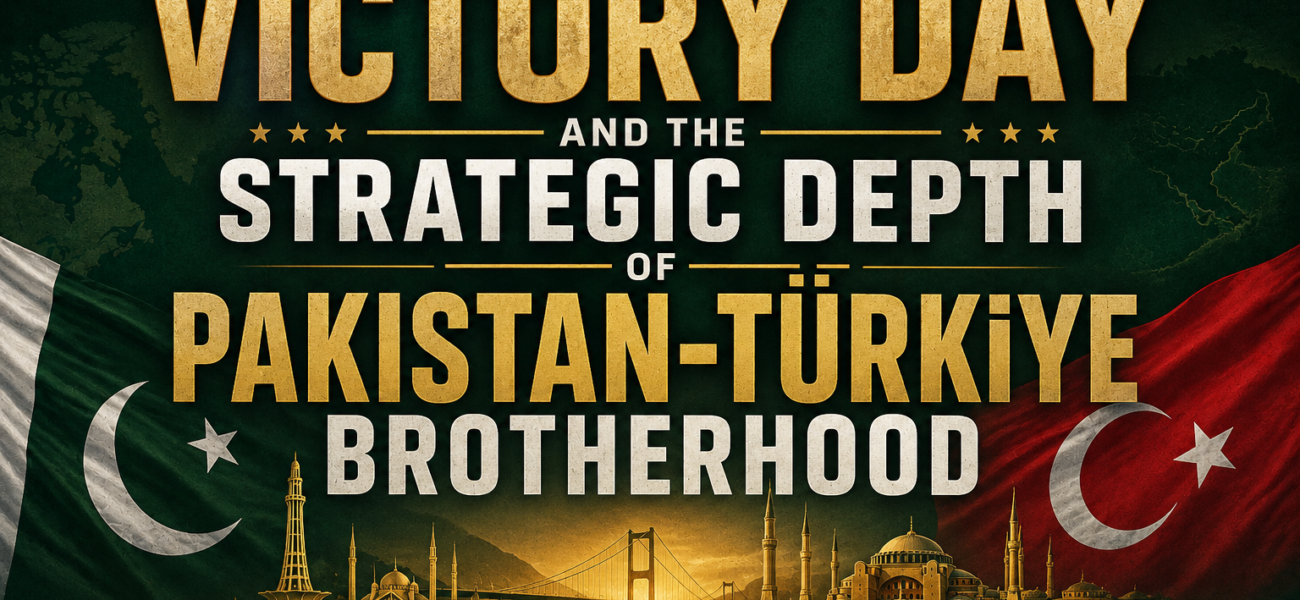
National days are those days when a country commemorates its history, but at the same time, it shows its future direction. Victory Day of Türkiye, which marks the historic day of August 30, 1922, becomes significant not just because of its symbolic value. For Pakistan, the day has become another chance to highlight the connection that has transformed from mere emotional solidarity into a meaningful strategic partnership.
The message that President Asif Ali Zardari, Prime Minister Shehbaz Sharif and Foreign Minister Ishaq Dar have sent to President Recep Tayyip Erdogan and the Turkish people has been characterized by the special warmth of relations between Pakistan and Türkiye. The expression of Prime Minister Shehbaz Sharif that Pakistan and Türkiye are connected by “bonds of the heart” has highlighted the essence of their relations, which have remained strong despite changing administrations, crises, and transformations in the international system.
The Victory Day itself possesses a symbolism that is very meaningful for Pakistan. The Great Victory of Türkiye in 1922 symbolized the nation’s will, sovereignty, and its struggle for independence. The founding of the Turkish Republic proved later that victory in the military arena can bring political achievements and the rebuilding of the state. Pakistan’s acknowledgment of the heritage of Turkey shows respect to the concepts of sovereignty and national resilience which play a vital role in its foreign policy.
However, it was not the only message for this year. It was the reference to the Makkah Joint Defence Agreement between Pakistan, Türkiye, and Saudi Arabia. The agreement adds another layer to an already developing cooperation and needs to be analyzed against the backdrop of the changing regional security environment.
The importance of this initiative is not so much in forming yet another alliance but rather in the provision of a mechanism that would enable regional states to improve their security capacities. In an era of growing uncertainty in the international security environment, states are looking for ways to increase their strategic resilience and diversify their partnerships. Cooperation between Pakistan, Türkiye, and Saudi Arabia is part of this broader trend.
Notably, such cooperation does not mean forming an exclusive bloc. There are specific relations of the three states with key global powers and unique foreign policy agendas of their own. It is rather the result of their understanding of the need for increasing regional capacity, interoperability, and consultations among trusted partners. Indeed, the regional capacity for deterrence could serve to promote stability as it can minimize the possibilities of coercion and misjudgment.
Pakistan and Türkiye already have quite a strong basis for such cooperation. The defense cooperation has been extended from naval cooperation, military training and exercises, to aerospace and defense production. The rapidly expanding defense industry of Türkiye and the well-established experience in defense production in Pakistan provide great opportunities for technological cooperation. Such cooperation could increase defense-industrial autonomy of the two states.
The economic dimension, however, should not be overlooked either. It must be admitted that politically, Pakistan and Türkiye have had a much more close and stable relationship than was indicated by the level of bilateral trade. This disproportion is, at once, a problem and an opportunity. Greater investments, industry cooperation, connectivity and technology cooperation can provide the relationship with a more solid economic base. Strategic trust becomes sustainable when it yields economic dividends, in addition to political ones, to citizens.
From the diplomatic perspective, the relationship shows reciprocity. It must be noted that Pakistan’s position on Kashmir issue, backed up by Türkiye’s support, is highly appreciated in Pakistan, while Türkiye has always enjoyed Pakistan’s diplomatic solidarity on issues connected with its sovereignty. Such mutual understanding builds a certain level of diplomatic confidence which cannot be achieved through purely pragmatic relations.
Finally, there is the developing trilateral cooperation with Saudi Arabia. In turn, each country has unique potential: Pakistan possesses significant military experience and military expertise; Türkiye has a well-developed defence and technology sectors; and Saudi Arabia has huge economic potential and strategic diversification goals. All these complementary features, if institutionalized, may yield cooperation going far beyond military realm into such areas as technologies, maritime security, training, logistics and strategic industries.
Yet, the long-term viability of the partnership will rely on institutional substance rather than political symbolism. Regular strategic dialogues, joint military exercises, defense-industrial projects, economic initiatives and crisis management systems are indispensable. The ultimate goal is to create a system which can reinforce deterrence yet continue being focused on peace and regional stability.
This is precisely what the lessons of Victory Day can help in understanding. The Turkish experience shows that national power and sovereignty is not only based on military power. It needs political durability, institutional capacity and sound partnerships. Now is the time for Pakistan and Turkey to learn from this experience in the context of evolving strategic environment.
Pakistan’s messages regarding the Victory Day of 104th anniversary of Turkey are thus not limited to traditional diplomatic symbolism. These messages confirm a historical partnership which is becoming increasingly strategic in nature. While Ankara and Islamabad are strengthening their cooperation, the main challenge is to transform their unique political partnership into economic, technological and institutional partnership.
Pakistan-Turkey relationship in the future shall ultimately be judged not only by the friendliness of statements made, but also by the level of cooperation that results. Victory Day is a suitable occasion to remind us that long-standing relationships can only be established based on common history and common goals.
Author