

US Sailors’ Struggles: Coping with Prolonged Deployments and Deteriorating Conditions
POLICY WIRE — Washington, D.C. — As President Trump announces the deployment of another warship to the conflict with Iran, alarming reports have surfaced about the dire conditions and declining...

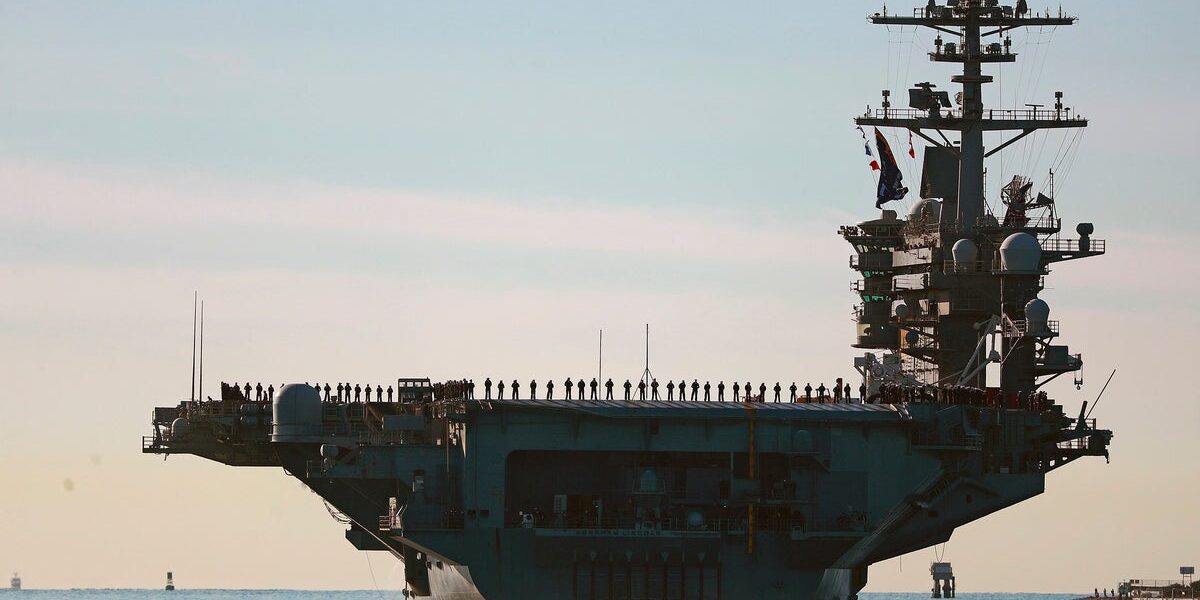
POLICY WIRE — Washington, D.C. — As President Trump announces the deployment of another warship to the conflict with Iran, alarming reports have surfaced about the dire conditions and declining morale among the crew of the USS Abraham Lincoln. After spending over 260 days at sea, the 5,000 sailors aboard the nuclear-powered warship are said to be experiencing a living nightmare.
The USS Abraham Lincoln departed San Diego in November and has been stationed in the Middle East to support the U.S. war against Iran. Despite leaving the Middle East on August 22 for a planned stop in Thailand, the ship has set a record for time spent at sea without a port visit. Numerous accounts describe poor food, inadequate hygiene, blocked toilets, intermittent showers, and severe mental health issues. Reports indicate that some sailors attempted to jump overboard due to the prolonged deployment.
Despite official denials, including President Trump’s assertion that the deployment ‘should have been longer!’, numerous accounts from families of those on board paint a grim picture. An emergency town hall meeting in San Diego saw desperate relatives confronting Navy leadership over the prolonged deployment and worsening conditions. One sailor’s wife tearfully described the ship as a’metal prison’ with ‘prison-like food’ and ‘tiny, cramped beds’.
Acting Navy Secretary Hung Cao acknowledged the sailors’ hardships, stating that they had been ‘pushed to their limits’ but had not been broken. He emphasized the resilience and strength of the sailors and their families.
The USS Abraham Lincoln’s deployment has been marked by over 10,000 sorties and the dropping of 1.5 million lbs. of bombs and explosives on Iranian military positions. The relentless operations have confined most crew members below deck, leading to a troglodyte existence beneath the waterline.
Comparing the experiences of the USS Abraham Lincoln to the Royal Navy’s HMS Queen Elizabeth, which faced similar challenges during a seven-month deployment to the South China Sea, highlights differences in how the two navies manage prolonged deployments. The Royal Navy’s approach, characterized by a more intimate and socially integrated ship’s company, ‘relaxed professionalism’, and ‘egalitarian camaraderie’, appears to foster greater resilience among its sailors.
📄 POLICY WIRE WHITEPAPER PUBLISHED: PAKISTAN’S NATIONAL SECURITY POLICY PRIORITIES
The US Navy’s strict adherence to rank and rigid protocol contrasts with the Royal Navy’s more flexible command style based on mutual respect and leading by consent. Additionally, the Royal Navy’s more socially integrated environment, including shared mess squares and a ‘wet’ policy allowing alcohol in designated areas, contributes to a less rigid social structure that helps sailors cope with the deprivations of life at sea.
As the USS Abraham Lincoln heads home, relieved by the USS George Washington, the conflict with Iran shows no signs of ending. Another carrier, the USS Theodore Roosevelt, is expected to be deployed for at least seven months. The prolonged deployments and deteriorating conditions have prompted calls for an independent strategic review into quality-of-life issues aboard US Navy ships.
Reporting by Policy-Wire (PW)