


US-Iran War: Inside the Islamabad Process and Middle East Mediation
Pakistan hosted the largest delegation, drafted the foundational ceasefire text, and kept returning after the process collapsed. That is what the Islamabad Process actually achieved and what it did...

Pakistan hosted the largest delegation, drafted the foundational ceasefire text, and kept returning after the process collapsed. That is what the Islamabad Process actually achieved and what it did not.
By mid-2026, the United States and Iran had been at war for months. The conflict triggered by a joint US-Israeli air campaign against Iran’s nuclear and military infrastructure in February had killed hundreds of soldiers on multiple sides, drawn Israeli air power into sustained exchanges with Iranian missile batteries, and pushed the Strait of Hormuz, through which roughly 20 percent of the world’s seaborne oil passes, to the edge of closure. Washington and Tehran were not talking. Three countries decided they would.
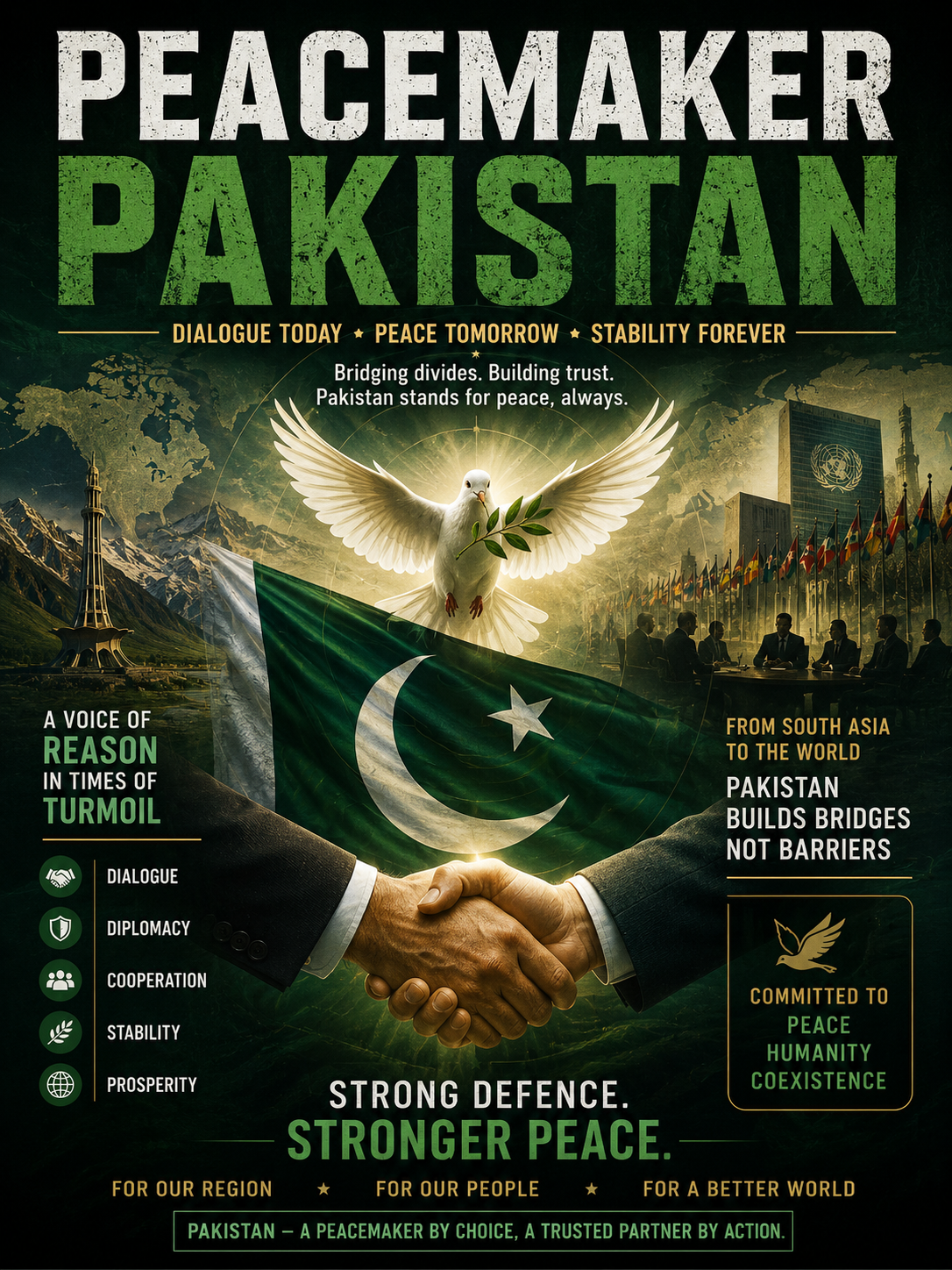
Pakistan, Qatar, and Oman each brought something the others could not provide. What follows is an account of what they actually did, what it cost them, and why the ceasefire they produced did not hold.
Why These Three and Not Anyone Else
The logic of each mediator’s position was geographic and relational rather than ideological. Pakistan shares an 900-kilometre land border with Iran and has maintained working diplomatic channels with Tehran through repeated cycles of US-Pakistan tension. It simultaneously holds a US security relationship built on decades of counterterrorism cooperation and renewed at the highest level during a September 2025 White House meeting between Prime Minister Shehbaz Sharif and COAS Field Marshal Asim Munir, who was elevated to that rank in recognition of his role in the May 2025 India-Pakistan crisis and President Trump, Vice President Vance, and Secretary Rubio. That combination of relationships, one foot in each camp, was precisely what the crisis required.
Qatar’s value was financial and institutional. Doha held tens of billions of dollars in frozen Iranian assets and had previously brokered the 2020 Taliban-US talks in Doha and facilitated hostage exchanges between Washington and Tehran. When Iranian missile strikes hit infrastructure near Doha in March, a strike Qatar protested formally but absorbed without breaking contact, its government made a deliberate choice to treat the incident as a reason to accelerate diplomacy rather than join the conflict. That decision was not costless. It produced domestic political pressure inside Qatar and complicated its relationship with other Gulf Cooperation Council members watching from the sidelines.
Oman’s contribution was geographic and reputational. Muscat had hosted the back-channel US-Iran nuclear talks that preceded the 2015 JCPOA and maintained formal diplomatic relations with Tehran throughout the period when most Arab states had severed or downgraded them. Its position on the Strait of Hormuz gave it practical leverage over the waterway’s status that neither Pakistan nor Qatar possessed.
What Pakistan Had To Offer And What It Had To Promise
Mediation is not neutral. A country that puts itself between two belligerents makes commitments to both sides, and those commitments have costs. Pakistan’s position required it to offer Washington something and Tehran something, and those two offers were not identical.
To Washington, Pakistan offered its airspace and logistical corridors access that US military operations in the region depended on and that Islamabad had leverage over. Pakistani officials communicated, through back-channels, that continued Pakistani cooperation with US regional logistics was contingent on Washington engaging the ceasefire process in good faith. That is not a small card to play. It is the kind of leverage that gets a delegation on a plane.
To Tehran, Pakistan offered something different: economic continuity. The bilateral trade framework between Iran and Pakistan, which both sides had been expanding since early 2025, represented real economic value to an Iran under intensified sanctions. Pakistan signalled that this framework, and Pakistan’s willingness to absorb international pressure to maintain it, depended on Iran remaining engaged in the Islamabad talks. The combination produced movement where none had existed.
Pakistan did not succeed because it was neutral. It succeeded because it was constrained by its border with Iran, by its dependence on US goodwill, by its need for Gulf energy financing. Those constraints, usually read as vulnerabilities, became the source of its credibility with both sides.
The Islamabad Process: What It Produced
By April 8, after roughly 40 days of sustained fighting, an initial ceasefire took hold. The mechanism was Pakistani: Islamabad transmitted proposals between Washington and Tehran, each of which was unwilling to be seen initiating direct contact. The ceasefire was fragile and both sides knew it.
What followed was more substantial. Pakistan hosted three rounds of direct negotiations between American and Iranian delegations approximately 35 to 45 officials per side across sessions totalling 21 hours. The talks were moderated by Pakistani officials and produced, on June 17 and 18, the 14-point Islamabad Memorandum of Understanding. The MOU called for an immediate ceasefire, the gradual reopening of the Strait of Hormuz, a framework for sanctions relief discussions, and 60 days of further negotiations. Pakistan and Qatar co-signed as guarantors. Israel, whose air campaign had initiated the conflict, was not a party to the MOU, an omission that several analysts identified at the time as the document’s most significant structural weakness.
The Israel Gap
The Islamabad MOU was signed by the United States and Iran, with Pakistan and Qatar as guarantors. Israel, which conducted the initial air strikes alongside US forces in February, was not included in the framework. Iranian officials made clear in subsequent statements that any durable agreement would require Israeli commitments the MOU did not address. That gap was not resolved in the Swiss follow-up talks and remained an open fault line when fighting resumed in July.
Follow-up talks convened in Switzerland, where Prime Minister Sharif and Qatar’s prime minister jointly chaired sessions between senior American and Iranian officials. The sessions produced new protocols for maritime incident prevention in the Strait but did not resolve the underlying disagreements over Iran’s nuclear programme or the terms of sanctions relief. Those issues, the ones that had produced the conflict in the first place, remained unaddressed when the ceasefire broke down in early July.
When The Ceasefire Collapsed
The fighting resumed in early July. The immediate trigger was an exchange of strikes in the Gulf, but the structural cause was the Israel gap, Iran’s stated position that no ceasefire could be durable without Israeli commitments the MOU had not secured. The Islamabad Process had produced a pause, not a settlement.
The three mediators did not withdraw. Pakistan’s foreign minister maintained contact across the region. Qatar kept its financial leverage active. Oman continued working the Strait’s practical dimensions. By late July, renewed pauses in fighting had again created negotiating space. Whether that space produces something more durable than June’s MOU depends on whether the Israel question can be brought into the framework, a question that neither Pakistan, Qatar, nor Oman controls.
The Islamabad Process produced the only signed agreement of the conflict. It also produced a ceasefire that did not hold. Both things are true, and neither cancels the other.
What This Episode Actually Demonstrates
The standard reading of the Islamabad Process that Pakistan’s diplomatic emergence represents a historic shift in its international standing is not wrong, but it requires precision. Pakistan did not resolve the US-Iran conflict. It created the conditions under which both sides agreed to a temporary halt, drafted the framework that both sides signed, and maintained the process after that framework collapsed. That is a meaningful contribution. It is also a bounded one.
What the episode demonstrates more durably is the value of structural position over ideological alignment in contemporary mediation. Pakistan was not trusted because it was neutral, it was not neutral. It was trusted because its constraints were visible to both parties. Washington knew Pakistan needed the relationship. Tehran knew Pakistan needed the border. That mutual knowledge of mutual need created the conditions for trust that pure neutrality cannot produce.
Pakistan, Qatar, and Oman proved in 2026 that middle powers with the right combination of relationships and vulnerabilities can do what great powers, locked into their own alliance commitments, cannot. The war has not ended. The process they built is the only framework under which it might.
Author