

Unlocking Pakistan’s Blue Economy: A National Mission for Maritime Growth
Pakistan is now marching confidently towards a future in which its seas are not merely limits, but avenues of opportunity. The Prime Minister Shehbaz Sharif, in a significant policy change, has...

Pakistan is now marching confidently towards a future in which its seas are not merely limits, but avenues of opportunity. The Prime Minister Shehbaz Sharif, in a significant policy change, has appealed for united national efforts and robust public-private collaborations to make Pakistan’s maritime sector a proponent of inclusive economic development. Addressing the soft launch of the second Pakistan International Maritime Expo and Conference (PIMEC) 2025, the prime minister articulated a vision of great ambition that identifies the blue economy as Pakistan’s “new economic frontier.” It has more than 1,000 kilometers of coastline, access to crucial sea routes, and strategic maritime geography, making Pakistan well placed to realize the vast potential of its maritime economy. The proposal seeks not only to increase country revenue but also to generate jobs, build trade capacity, and enhance regional integration.
The prime minister is absolutely correct in stating that present coastal trade of Pakistan contributes about $7 billion every year. This is only a small portion of the potential of the sector. With better planning, investment, and innovation, the figure could grow many times over. The blue economy that comprises shipping, fisheries, maritime tourism, energy production, and exploitation of resources is valued at trillions of dollars worldwide. Even securing a fraction of the estimate could be game-changing for Pakistan’s economy. Under this scenario, the government is now making a push with strategic intent to mainstream maritime development as a national agenda.
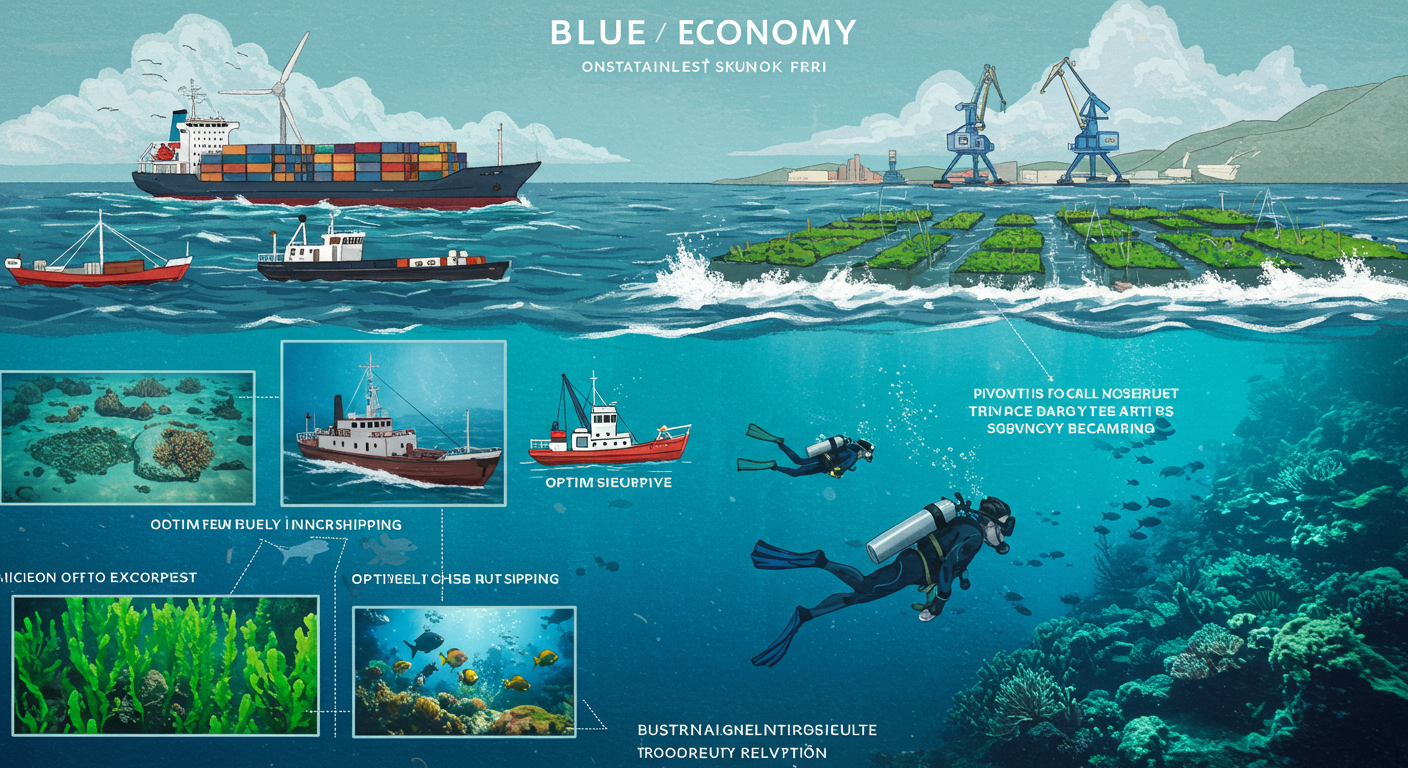
Underpinning this drive is a new long-term strategy presented by Maritime Affairs Minister Muhammad Junaid Anwar Chaudhry. The “Maritime at 100” vision presents a blueprint to develop the maritime economy into a $100 billion force by 2047, marking the country’s centenary. The vision does not only focus on trade and logistics but also the hidden power of marine tourism, aquaculture, and ocean-based renewable energy. It understands oceans not just as bodies of water, but as economic arteries-full of resources, full of job potential, and essential to sustainability in the environment.
The Pakistan Navy has an important role of formulating and supporting this strategy. During the launch ceremony, the Assistant Chief of the Naval Staff Commodore Ahsan Ali Khan gave special attention to the way oceans world-wide are being used to tap clean energy, mine precious minerals, and establish ocean-based agriculture. He spoke about the significance of developing Pakistan’s coastline and seas as per global standards. From wind farms to ports complexes, and from the protection of marine biodiversity to offshore hydrocarbon exploration, the opportunities are extensive and promising. The involvement of the Navy ensures that all these developments would be executed with utmost sense of security, sovereignty, and strategic direction-a matter very important to national success in any seaborne endeavor.
Pakistan’s strategic location, connecting the Middle East, Central Asia, and South Asia, is well-suited to position Pakistan as a regional seaport hub. The development of Gwadar Port in the China-Pakistan Economic Corridor (CPEC) has already paved the way for this vision. With greater maritime integration, Pakistan can offer efficient trade corridors, reduce logistics costs, and become a transshipment hub for the region. Better port facilities, enhanced shipbuilding capacity, and seafarers’ education and training investment will also boost this role further.
In regional geopolitics, Pakistan’s engaged diplomatic efforts are evident as well. During the PIMEC-2025 session, Prime Minister Shehbaz Sharif welcomed the Iranian Ambassador to Pakistan, Reza Amiri Moghadam, and expressed strong solidarity with Iran on the ongoing missile exchange between Iran and Israel. Pakistan condemned the aggression from the Israel as she violated UN Charter and reaffirmed its principled stance on international law. The prime minister mentioned his recent telephonic conversation with Iran’s President Dr. Masoud Pezeshkian and asserted that Pakistan had demonstrated its solidarity at the United Nations Security Council. Such diplomatic openness not only marks Pakistan’s moral high ground but also enhances its credibility as a responsible regional actor-something critical in securing long-term international maritime cooperation and investment.
As the global economy is in the process of gravitating towards ocean-based industries, the timing of Pakistan’s push towards the maritime sector is strategic and imperative. Other nations such as Norway, Singapore, and South Korea have established strong components of their economies upon the sea with the help of sophisticated port infrastructure, maritime technology, and export-led policies. Similarly, Pakistan has an equivalent potential if it invests its resources astutely. It needs to build a trained maritime human resource base, invest in coastal communities, and update its shipping and logistics system. Public campaigns, benefits to the maritime startups, and better regulatory mechanisms can speed this revolution.
It has already become apparent that Pakistan’s blue economy is catching on. Fisheries exports have increased, interest in maritime tourism is picking up, and ventures such as the Pakistan Maritime Science and Technology Park are attracting investors and researchers alike. With proper investment, even conservative estimates suggest that the maritime sector could create over a million direct and indirect jobs in the next two decades. Additionally, the environmental benefits of focusing on sustainable marine practices-such as reducing ocean pollution, conserving coral reefs, and managing fish stocks-could help Pakistan meet its global climate commitments under frameworks like the Paris Agreement.
At last, the soft launch of PIMEC-2025 represents a watershed moment in the way Pakistan perceives and leverages its maritime riches. It heralds the transition from land-based development thinking towards an economic model that is well-balanced and ocean-based. With government leadership, Navy strategic backing, and active participation of the private sector, Pakistan’s vision for emerging as a maritime power is no longer far away. Blue economy is not a dream-nor is it merely an idea-it is an image of hope, resilience, and prosperity for Pakistanis in millions, particularly those along the coastal belt. With concerted effort and vision-based planning, the sea can well prove to be Pakistan’s next grand economic frontier.
Author