


USMNT’s Dramatic Win: World Cup Last 16 Berth Secured
The USMNT secured a dramatic 2-0 victory over Bosnia-Herzegovina, advancing to the World Cup Round of 16. Relive the stunning goals, red card drama, and the broader global significance of this...

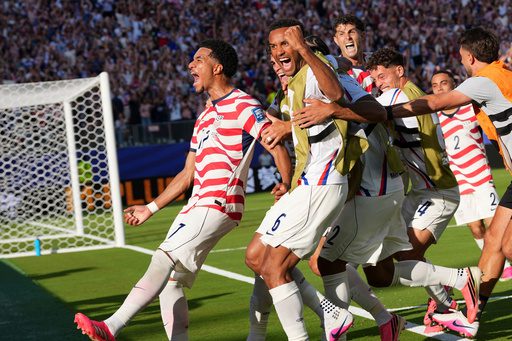
POLICY WIRE — SANTA CLARA, Calif. — On a Wednesday night when sporting narratives usually favor the smooth, well-oiled machine, American soccer opted for something decidedly more frayed. A dramatic free kick from a player sporting a bloody sock and a new right boot — talk about a headline — secured passage for the U.S. Men’s National Team into the World Cup’s Round of 16. It wasn’t pretty, you see, but it was a win. And after twenty years on the beat, I’ve learned that wins—especially ugly ones—are sometimes the best stories.
It sounds almost ridiculous, doesn’t it? A single boot, a gash, a desperate 2-0 victory over Bosnia-Herzegovina while playing down a man. But that’s precisely what transpired. Malik Tillman, nursing an injury from being stepped on earlier, curled a ball over the wall from outside the box in the 82nd minute. The ball, a thing of precise agony — and beauty, slipped past goalkeeper Nikola Vasilj’s outstretched right hand. That strike, following an earlier 45th-minute opener from Folarin Balogun, sealed the deal. Consider this: Tillman confessed, I’ve been dreaming about maybe taking a free kick — and scoring a free kick. For players like him, sometimes dreams do play out under stadium lights.
And yes, the Americans had a man sent off. Folarin Balogun, the very fellow who’d put them ahead, was red-carded in the 64th minute for an awkward step on Tarik Muharemovic. It created an immediate crisis. Think of the tension—that scramble. But captain Tim Ream didn’t flinch. It felt so comfortable, even down to 10 men, he claimed, which either speaks to their unshakeable belief or a remarkable level of post-match composure. You don’t want to have that panic set in. You want have that calm — and focus and we had that.
This win isn’t just about making headlines; it shattered a rather dismal streak for the U.S. in international play. The Associated Press reports that this marks their first victory against a European team since drawing against England in the 2022 World Cup, ending a 10-game losing streak that included seven losses and six ties against European nations since the 2002 opener against Portugal. That’s a significant psychological hump overcome, don’t you think? But it wasn’t easy. Bosnia actually had the better early chances, with Matt Freese needing to make two critical saves.
U.S. coach Mauricio Pochettino, now the first U.S. coach to record three World Cup victories, certainly enjoyed it. He was heard belting out “Take Me Home, Country Roads” as it played over the public-address system. Sentimental, perhaps. He then declared, In football all is possible if you believe. A tidy mantra, especially when you’re preparing for a Monday showdown in Seattle against Belgium—a team that eliminated them back in 2014. Balogun will unfortunately miss that match, courtesy of his red card. It’s an automatic suspension, something midfielder Weston McKennie felt was questionable, especially given other incidents throughout the tournament.
📄 POLICY WIRE WHITEPAPER PUBLISHED: PAKISTAN'S NATIONAL SECURITY POLICY PRIORITIES
👉 READ BY CLICKING HEREWhat This Means
Beyond the celebratory chants and the immediate glow of victory, this particular match against Bosnia-Herzegovina carries subtle, yet detectable, ripples on a larger global canvas. Bosnia, a nation with a Muslim majority population, frequently finds its identity navigated between its European aspirations and its distinct cultural heritage. For many across the Muslim world—from Karachi to Cairo—sporting events involving nations like Bosnia become unlikely moments of identification, even pride. When Bosnia advanced to the knockout round, drawing against Canada and beating Qatar, it wasn’t just a sports story; it was a narrative of resilience, an echo of aspirations that often transcend the pitch. (It’s a phenomenon you often see with Senegal’s sporting heartbreaks, too, how they resonate globally.)
The U.S. victory, then, isn’t simply about American athletic prowess. It’s a moment in the perpetual push-and-pull of soft power. A strong showing on the world stage—any stage—can serve as a momentary salve, an outward projection of national vitality that policy wonks so rarely discuss. It feeds national pride, generates global interest, and sometimes, just sometimes, even distracts from less favorable headlines back home. Think of the internal unity a successful national team can foster, the temporary truce in partisan bickering. It’s almost a foreign policy tool, albeit one that works on emotion more than memoranda. And for the Bosnian players and their supporters, this defeat—Vasilj noted, We had our moments after the red card. You could feel that there was something. The only thing that was missing was a goal—leaves a tangible mark. It’s a dashed hope, an ‘almost’ that will linger. They’ll have to consider what comes next, both on the field and off, as they navigate their national aspirations in a world increasingly attentive to performance on every level.