


Under Siege: Judicial Absences Stoke Israel’s Deepening Political Rift Amidst Crisis
POLICY WIRE — Jerusalem, Israel — Even as the dust settled – or, rather, continued to swirl in a tragic vortex – after the October 7 attacks, the illusion of national unity in Israel fractured,...

POLICY WIRE — Jerusalem, Israel — Even as the dust settled – or, rather, continued to swirl in a tragic vortex – after the October 7 attacks, the illusion of national unity in Israel fractured, perhaps predictably. The grand narrative of a unified front, of a country suddenly pulling together in the face of unprecedented terror, couldn’t hold. Not really. Because underneath, the familiar gears of political contention kept grinding, their dissonance amplified by the very crisis they should have been working to overcome. Enter Simcha Rothman, a prominent Knesset member and architect of the contentious judicial reform efforts, whose recent outburst lays bare the persistent, venomous divide.
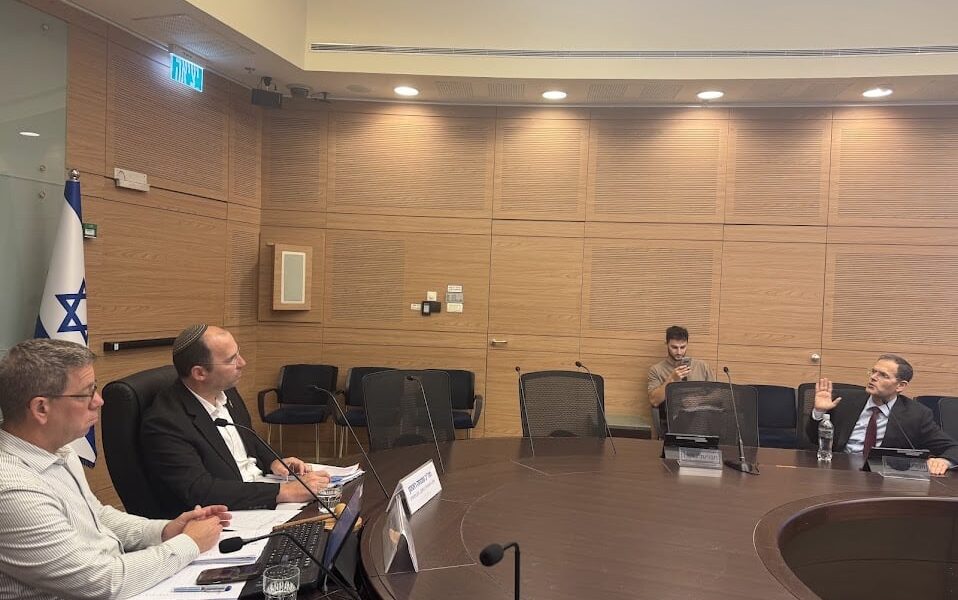
Rothman, of the Religious Zionism party, didn’t hold back. He’d convened an oversight meeting, one dedicated to scrutinizing the security failures that preceded the massacre. An essential, agonizing discussion, you’d think. Yet, conspicuously absent were representatives from the state prosecutor’s office, the judicial administration, and the Supreme Court. That didn’t sit well. Not one bit. His frustration, boiling over into public statements, signaled far more than a scheduling dispute. It spoke to a deep-seated suspicion, a conviction among government loyalists that parts of the state establishment simply don’t play by their rules, especially not when the stakes are existential.
“It’s astounding, isn’t it?” Rothman declared, his voice tight with incredulity to local press. “When the nation bleeds, when we try to understand how our defenses collapsed, some institutions prefer to stay in their ivory towers. They simply don’t show up. It shows a profound disregard for public accountability, for the victims, and for the security of this nation.” He wasn’t just miffed; he was seething, framing their absence not as an oversight, but as an indictment. A dereliction, perhaps, of duty itself.
The judiciary, predictably, wasn’t rushing to embrace his critique. For years, the political right, led by Prime Minister Benjamin Netanyahu’s coalition, has viewed Israel’s Supreme Court as an activist, liberal bastion, routinely overstepping its bounds and frustrating the will of the elected government. The fight over judicial reform before October 7 had nearly ripped the country apart. This latest episode, therefore, isn’t an anomaly. It’s a fresh scar on an old wound. A spokesperson for the Supreme Court, speaking off the record (because, let’s be honest, who wants to directly poke that particular bear right now?), hinted at procedural matters, perhaps even claiming an attempt to maintain institutional independence from overtly political inquiries. “Our role,” the spokesperson suggested, maintaining an air of detached civility, “is to interpret law, not to participate in politically charged investigations that might preempt our future legal duties.” But they didn’t just *not* attend; they also didn’t issue any robust public defense of their absence, which many took as a tacit admission of… well, something.
Because, really, when a country is reeling, when its citizens are still burying their dead and reeling from unconscionable acts, you’d think that everyone, every single corner of the state, would rush to the table. This isn’t about legal nitpicking; it’s about the basic fabric of a functioning nation. And what we’re seeing instead is a hardening of pre-existing divisions, a grim political theater unfolding while the very foundations of the state wobble. It’s reminiscent of periods in countries like Pakistan, for instance, where military and judicial establishments frequently clash with elected governments, often exacerbating national crises rather than alleviating them. Trust erodes; legitimacy fractures.
📄 POLICY WIRE WHITEPAPER PUBLISHED: PAKISTAN'S NATIONAL SECURITY POLICY PRIORITIES
👉 READ BY CLICKING HEREWhat This Means
This episode, seemingly minor in the grand scheme of a war, holds disproportionate weight. Politically, it deepens the schism between Israel’s conservative government and its traditionally more liberal judiciary. It reinforces Rothman’s camp’s narrative that the judicial branch is an unelected elite, indifferent or even hostile to the concerns of the popular majority, especially when security issues come to the fore. For the judiciary, however, Rothman’s grandstanding simply confirms their view of an executive branch attempting to sideline independent oversight. Economically, such deep-seated political instability and perceived lack of institutional cohesion doesn’t exactly instill confidence. Before October 7, concerns over the judicial reforms had already rattled investors and prompted warnings from economists. Post-October 7, as the war strains the economy, these internal fights only add another layer of uncertainty, making it harder for the country to project stability. A recent poll indicated that public trust in state institutions, already plummeting before the war, fell another 15 points after October 7, with the Supreme Court ranking marginally higher than the Knesset but still deeply underwater, according to the Israel Democracy Institute.
This isn’t merely about Simcha Rothman’s temper. It’s a chilling symptom of a profound pathology within Israel’s political system: an inability to set aside internecine battles even during existential threats. It underscores a fragile institutional framework where branches of government — instead of converging on common goals — retreat further into their ideological bunkers, even as rockets fly and ground operations continue. The “state of emergency” seems only to highlight how fundamentally fragmented things already were. The fight isn’t just external now; it’s within. You can’t help but wonder if anyone’s actually focused on the monster outside the gates when they’re too busy bickering about who showed up to the meeting inside. This persistent tension is also a mirror of broader issues faced by nations globally, where the price of imperfect justice echoes a broader fissure in trust between citizens and their institutions. It’s a dangerous game they’re playing, with far more than political careers hanging in the balance. It’s the stability of the entire nation.