


Unanswered Questions After World Cup Star’s Abrupt End in Cape Town
POLICY WIRE — Cape Town, South Africa — The echoes of jubilation had barely faded. Just two weeks earlier, a nation—rapt by the intoxicating spectacle of global football—had celebrated a historic...

POLICY WIRE — Cape Town, South Africa — The echoes of jubilation had barely faded. Just two weeks earlier, a nation—rapt by the intoxicating spectacle of global football—had celebrated a historic run. Now, a palpable silence hangs over Schotsche Kloof, where the quiet discovery of a body this weekend has traded celebration for chilling introspection.
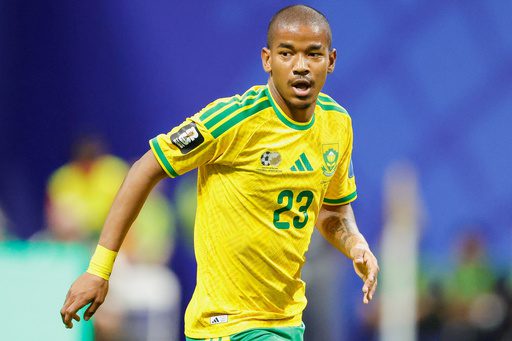
It wasn’t just any twenty-five-year-old; it was Jayden Adams. The same Adams who, just a fortnight prior, helped South Africa etch its name into the World Cup knockout stage for the first time. The official statements are, as expected, lean — and unyielding. Police said Monday they’re investigating the death of South Africa World Cup soccer player Jayden Adams. That’s the official line. Authorities haven’t released a cause of death. But the terse bureaucratic language hardly captures the gut punch felt across the footballing world, from Soweto to distant Karachi, where South Asian fans—many drawn to the sport’s burgeoning African talent—have expressed profound sorrow. [QUOTE_PLACEHOLDER]
And so, the investigation began. The Cape Town central police registered an inquest for investigation following the discovery of the body of a 25-year-old male on Saturday. Circumstances surrounding this incident are under investigation. A brief statement, devoid of detail, leaves plenty of room for uneasy conjecture, though South Africa Sports Minister Gayton McKenzie has, rightly, implored restraint from public and media alike.
The stark facts remain: the body was discovered at a property in the Cape Town neighborhood of Schotsche Kloof at around 11 a.m. on Saturday. That’s what we know. Everything else, right now, floats in an uncomfortable limbo, leaving fans, teammates, and certainly family grasping for sense. It’s the kind of unforeseen end that shakes the collective faith in a sport often presented as an antidote to life’s harsher realities.
His father, Juanito Adams, articulated a grief that transcends borders and languages, a universal agony many families face daily. The family is struggling to process it, he told South African TV news station eNCA. He continued, it won’t be easy to carry on. People say it will become easier, but it won’t. You just learn to live with it. A sentiment stark and, for anyone who’s experienced profound loss, profoundly true. The family is waiting for the results of an autopsy, unable to even begin the grim, necessary ritual of funeral arrangements.
Adams was no benchwarmer; he was central to the Bafana Bafana’s surprising ascent. He played in all three of South Africa’s group games as it produced its best performance at the World Cup. He even featured against the Czech Republic, reportedly just hours after receiving news that his grandmother had died. Talk about grit, a quiet, almost understated determination that defined his brief, impactful career. But that grit, it turns out, couldn’t insulate him from what came next.
Globally, the reaction has been swift, a somber interlude in the otherwise frenetic World Cup schedule. Moments of silence — and tributes for Adams were observed at high-stakes quarterfinal games Saturday, like England vs. Norway and Argentina vs. Switzerland. It’s a testament, perhaps, to the unifying, if sometimes tragically so, power of the game. For all the geopolitics, for all the rivalries, a young life cut short demands a collective pause.
📄 POLICY WIRE WHITEPAPER PUBLISHED: PAKISTAN'S NATIONAL SECURITY POLICY PRIORITIES
👉 READ BY CLICKING HEREFIFA figures from 2022 estimated global World Cup viewership topped 5 billion people for some stages of the tournament. Imagine that many eyes, and how many hearts now register this specific tragedy, not just as a statistic, but as a personal, jarring moment in the ongoing drama of the sport.
What This Means
This isn’t merely a sports story; it’s a social — and political ripple effect. When a public figure, especially a young athlete at the peak of his nascent powers, dies under unknown circumstances, it invariably becomes more than just personal tragedy. In a country like South Africa, grappling with its own complex social fabric and economic disparities, the death of a national hero raises uncomfortable questions about public safety, the pressures on young talent, and even the informal economies that swirl around celebrity. Police said Monday they’re investigating the death—and this investigation itself can easily become a touchstone, reflecting broader trust (or mistrust) in institutions.
And consider the global implications: the outpouring of grief from diverse regions, including the Muslim world, highlights the deeply interconnected nature of modern sports fandom. South Africa, like many emerging economies, invests heavily in sport not just for national pride, but for the tangible economic potential of its young athletes, both as brand ambassadors and as individuals escaping poverty. This abrupt end interrupts that narrative, injecting a somber note into discussions around talent pipelines and athlete welfare. For policymakers, such incidents force a closer look at support structures—mental, financial, and physical—for these often-vulnerable, high-profile individuals.
It’s a blunt reminder that even the most celebrated lives aren’t immune to the sudden turns of fate, and sometimes, the answers remain elusive long after the initial shock.