


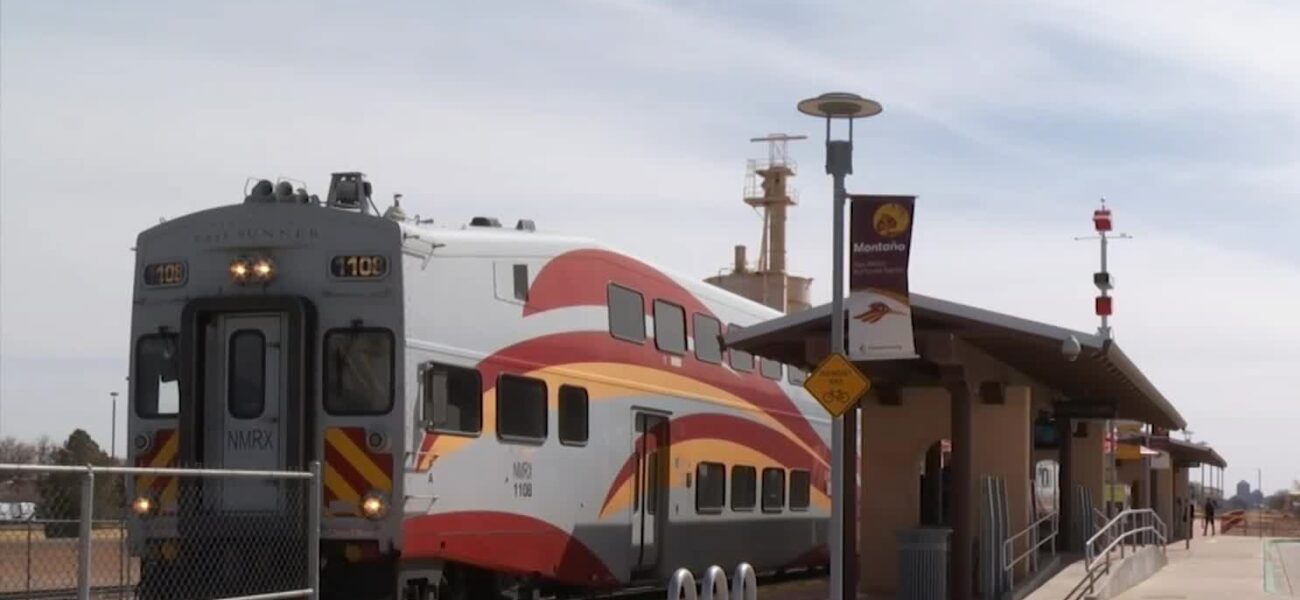
The Rail Runner’s Quiet Triumph: Two Decades on New Mexico’s Rails Offer Lessons Beyond the Sangre de Cristos
POLICY WIRE — Santa Fe, N.M. — In an era of fleeting public attention spans and often unrealized infrastructure ambitions, a low rumble from the American Southwest often goes unheard. For two decades...

POLICY WIRE — Santa Fe, N.M. — In an era of fleeting public attention spans and often unrealized infrastructure ambitions, a low rumble from the American Southwest often goes unheard. For two decades now, it’s been the sound of the New Mexico Rail Runner Express, quietly connecting desert towns, hauling commuters, and, in its own unassuming way, serving as a rather telling microcosm of public transit struggles—and triumphs—the world over. No grand speeches. No ribbon-cutting with heads of state. Instead, they’ll simply will give commemorative pins to the first 1,000 passengers who ride Tuesday
—a quaint gesture marking 20 years of operations, a duration many much larger, splashier projects barely dream of reaching.
It wasn’t exactly bullet train dreams when Service began on July 14, 2006, initially connecting Santa Fe and Albuquerque.
Nope. But a simple, steady chug has proven more durable than many a breathless vision. What started as a modest link has since grown into a 100-mile rail corridor linking Belen, Albuquerque and Santa Fe.
That might not sound like much when you compare it to, say, China’s high-speed rail network or ambitious European connections, but within the sprawling, car-centric landscape of the United States, it represents a genuine achievement in sustained public service. [QUOTE_PLACEHOLDER]
The numbers, when you dig into them, aren’t flashy, but they sure tell a story. The service has provided millions of passenger trips over the past two decades.
Millions. Think about the cumulative impact of that. Rail Runner officials contend—and this is a big one—the train also helped remove an estimated 17.1 million vehicle miles from New Mexico roads during peak commuting hours while saving about 175,000 gallons of gasoline.
That figure, sourced directly from the service’s own statements, isn’t just about traffic; it speaks to something more profound: a tangible contribution to local economies, cleaner air, and perhaps even a subtle nudge away from total reliance on personal automobiles.
And let’s be frank: achieving even this modest yet consistent success in public transit in a country often ideologically allergic to it’s worth noting. Elsewhere, the scale of such endeavors often dictates their perceived importance. In nations across South Asia, for instance, robust rail networks aren’t just about commuting; they’re the economic backbone of an entire continent. Consider Pakistan, for example, where vast, often colonial-era rail lines crisscross the landscape. While those systems contend with a different set of challenges—from maintenance to security to bureaucratic lag—their fundamental purpose, much like the Rail Runner’s, is to move people and goods efficiently. And just like New Mexico’s quiet operator, they’re wrestling with legacy infrastructure, competing modes of transport, and the sheer cost of keeping the trains running, literally and figuratively.
The American southwest’s experience offers a tempered perspective. You don’t need a megaproject to have an impact. Sometimes, consistent, reliable, albeit less glamorous, operations carry their own weight. It’s an approach many emerging economies—those looking to avoid the fragile global supply lines often hobbled by insufficient infrastructure—could, and perhaps should, examine. What if you focus on utility before grandiosity? It’s not a revolutionary concept, but sometimes, a reminder’s in order.
📄 POLICY WIRE WHITEPAPER PUBLISHED: PAKISTAN'S NATIONAL SECURITY POLICY PRIORITIES
👉 READ BY CLICKING HEREWhat This Means
This anniversary, frankly, isn’t just about pins or pretty pictures of a train in the desert. It’s about demonstrating that even in a region that epitomizes car culture, public transit can — it’s not a given — establish a meaningful foothold and persist for two decades. The political implications are clear: local and state governments that prioritize, and more importantly, fund, these services aren’t just offering a transportation alternative. They’re making a strategic investment in urban resilience, carbon footprint reduction, and yes, sometimes even economic stimulus. Political willpower, it turns out, is a bit like a train itself; once it gets going, it’s tough to stop, but it takes sustained energy to keep it on the tracks.
Economically speaking, those 175,000 gallons of gasoline saved represent tangible money staying in people’s pockets—or not going into foreign oil reserves, depending on your geopolitical leanings. That’s real, distributed economic benefit, not just for commuters, but potentially for local businesses thriving because of accessible transit routes. But here’s the sharp observation: we often laud enormous, multi-billion-dollar initiatives, often with mixed results, yet downplay the consistent, incremental successes like this one. It’s a reminder that a series of small wins can cumulatively overshadow a single, bloated spectacle. Think about what this low-carbon, accessible transport model could mean if applied to burgeoning cities in, say, Bangladesh or even expanding existing networks in metropolitan Pakistan; they’ve got populations begging for this kind of scalable solution. This kind of systemic thinking—or the lack thereof—really determines the high price of stagnation. This small line, in New Mexico of all places, stands as a modest, rather dry object lesson for public policy wonks far beyond the American continent.