

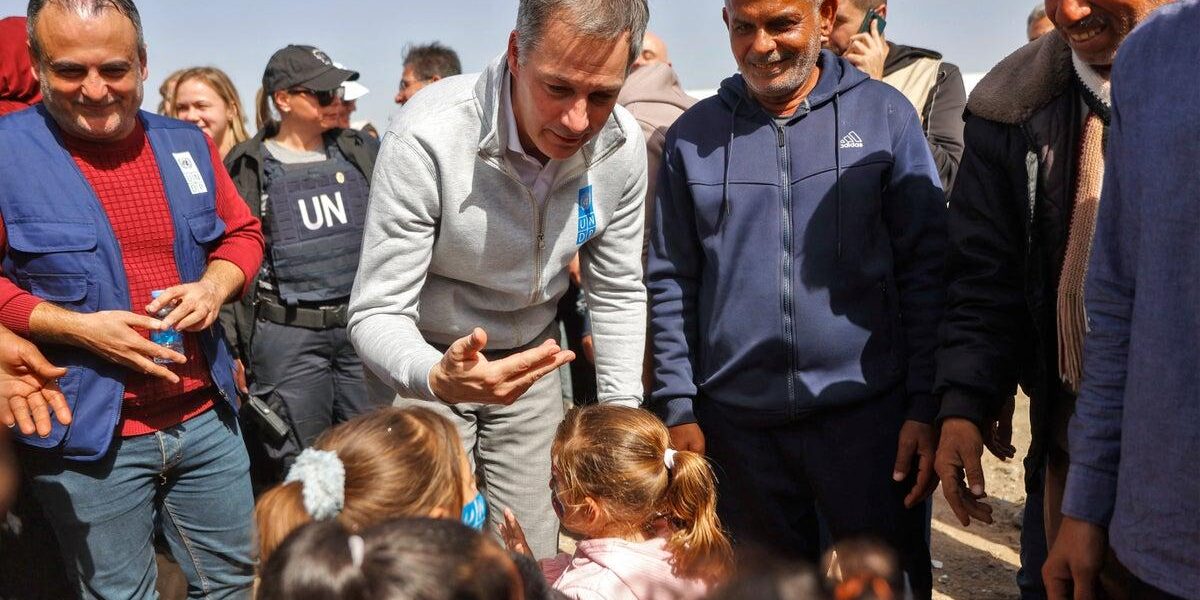
UN Official Warns EU: Cutting Foreign Aid Will Lead to Endless Crises
UN Development Programme chief warns that EU must adopt proactive funding for global crises to avoid continuous reactive responses and economic instability.

POLICY WIRE — City, Country — The head of the United Nations Development Programme, Alexander De Croo, issued a stern warning to the European Union (EU) on the critical need for sustained foreign aid. De Croo emphasized that reducing aid could lead to a cycle of continuous crises, stressing the importance of proactive development strategies over reactive measures.
De Croo articulated his concerns during a high-level meeting, stating, “The EU must fund global crises through proactive development, rather than reactive responses as they unfold.” He argued that proactive funding is essential to mitigate the root causes of crises, thereby preventing their escalation and the subsequent economic and social disruptions.
The warning comes amid growing discussions within the EU about the allocation of resources for foreign aid. With various member states facing domestic economic pressures, there’s a rising debate on whether to maintain or cut aid budgets. De Croo’s comments highlight the potential long-term consequences of such decisions.
The UN official’s remarks also touch on the broader implications for global stability. He noted that inadequate funding for development could exacerbate existing tensions and lead to new conflicts, ultimately affecting not only the regions in crisis but also the EU itself.
In recent years, the EU has been a significant contributor to global aid, but the ongoing economic challenges within the bloc have prompted a reevaluation of these commitments. De Croo’s call for continued and increased aid underscores the interconnectedness of global issues and the necessity for collective action.
📄 POLICY WIRE WHITEPAPER PUBLISHED: PAKISTAN’S NATIONAL SECURITY POLICY PRIORITIES
As the EU deliberates its future aid strategy, De Croo’s message is clear: cutting foreign aid could result in a domino effect of crises, each more severe than the last, ultimately costing the EU more in the long run.
Reporting by Policy-Wire (PW)