
Ugandan Army Chief Silences Dissent: A Playbook of Control Unfolds
POLICY WIRE — Kampala, Uganda — The quiet hum of newsrooms in Kampala fell abruptly silent last Tuesday. Not by power outage, nor technical glitch, but by executive fiat—a decidedly muscular...

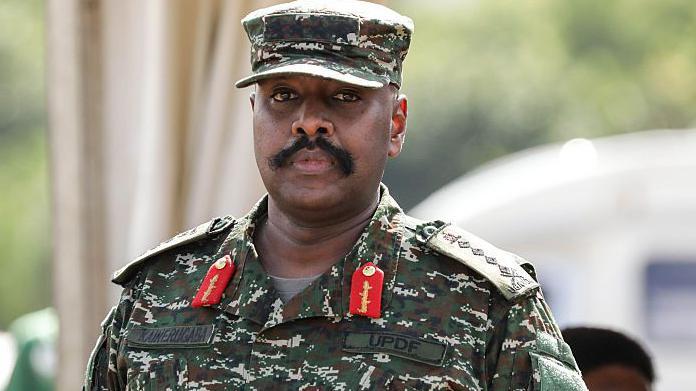
POLICY WIRE — Kampala, Uganda — The quiet hum of newsrooms in Kampala fell abruptly silent last Tuesday. Not by power outage, nor technical glitch, but by executive fiat—a decidedly muscular application of state control. Uganda’s highest-circulation newspapers, the most widely watched television channels, even the chatter of popular radio stations; they just…stopped. And this wasn’t some rogue police unit having a bad day. It was orchestrated, a calculated, blunt instrument wielded by none other than General Muhoozi Kainerugaba, son of President Yoweri Museveni and the nation’s powerful army chief.
It’s an old trick, isn’t it? When the narrative starts veering off script, you don’t adjust the script. You take the pens away. The military moved in with precision, raiding offices, confiscating equipment, and—perhaps most chillingly—sending journalists packing, some mid-broadcast. Because, as one official later put it, some stories are just too inconvenient to tell. Or maybe too true.
General Kainerugaba, a man whose public pronouncements frequently stir more than a little consternation, wasted no time framing the action as a necessity. “Our nation’s stability,” he declared in a state broadcast, his voice resonating with unshakeable conviction, “demands a disciplined informational environment. Certain elements—foreign-backed, undoubtedly—sought to undermine the very fabric of our progress. This isn’t censorship; it’s triage for the body politic.” It’s a classic strongman gambit, this narrative of national security overriding fundamental liberties. But you have to wonder: whose stability, exactly?
Critics, of course, weren’t buying it. “This isn’t ‘triage’; it’s suffocation,” shot back Anna Mpuga, executive director of the Ugandan Media Rights Council, her voice thick with exasperation in a clandestine phone interview. “Every time the public starts asking difficult questions about governance, about corruption, about the looming succession debate, they reach for the same blunt weapon. It’s economic folly, certainly, but more gravely, it’s the death knell for even the pretense of democratic dialogue.” She’s got a point. Media, in nascent democracies, acts as an indispensable — a *sole* — bridge between the governed and their governors. Without it, well, you’re pretty much operating in the dark.
And what *was* that difficult story? Sources suggest a recent exposé into the financial dealings of a prominent government minister, coupled with growing coverage of President Museveni’s increasingly explicit efforts to position his son as successor. For a regime that’s governed since 1986, continuity is the watchword. And public dissent? Not so much. So when news outlets like *Daily Monitor* and NBS TV—known for their relative independence—began digging a bit too deep, the iron fist wasn’t far behind. You don’t need a crystal ball to see this coming; the writing has been on the wall for a long, long time.
This isn’t an isolated incident, mind you. Across parts of South Asia — and the Muslim world, we’ve seen similar tightening of informational control. Just look at the challenges faced by independent media in Pakistan, for instance, where critical voices are often silenced through various means—from outright bans to economic pressure. The parallels aren’t exact, of course, but the overarching trend is. A study by Reporters Without Borders last year placed Uganda at 120th out of 180 countries in its World Press Freedom Index. And that was *before* this week’s shutdown. Imagine where it’ll be next year.
What This Means
The shuttering of Uganda’s media isn’t merely a blow to free speech; it’s a seismic shock to the country’s already fragile political and economic foundations. Politically, it confirms what many observers have suspected: the Museveni government, having ruled for decades, is hardening its stance against any form of dissent as it navigates an increasingly delicate succession period. General Kainerugaba’s overt involvement directly ties the military to civilian repression, erasing any facade of institutional neutrality. This isn’t good optics—and it’s worse reality. Because such actions stifle internal democratic pressure, yes, but they also signal to foreign investors that rule of law is arbitrary, subject to military whim, and frankly, unreliable. Why pump money into a market where information is state-controlled — and transparency is a joke? It certainly impacts perceptions of regional stability and governance models that developing nations might follow or critique.
Economically, it’s a disaster. Advertisers pull out, investor confidence tanks, and the informal sector—which thrives on readily available information—stagnates. Small businesses can’t gauge markets; farmers can’t get reliable crop prices. It’s a vicious cycle where a lack of trust feeds a lack of opportunity. You can’t build a modern economy on a foundation of silence. It just doesn’t work. International aid, already conditional on good governance, might just dry up, impacting crucial development projects and pushing the nation further into isolation. This incident, while local, echoes broader concerns about democratic backsliding in an increasingly complex geopolitical landscape, proving yet again that freedom of information isn’t a luxury; it’s a necessity for any nation aspiring to genuine progress.