


Turkey’s Bayindir Bets His Career on World Cup Glory, Not Just the Club Bench
POLICY WIRE — Istanbul, Turkey — It’s a high-stakes gamble in the high-octane world of international football, where national pride often collides with cold, hard club economics. Here, a...

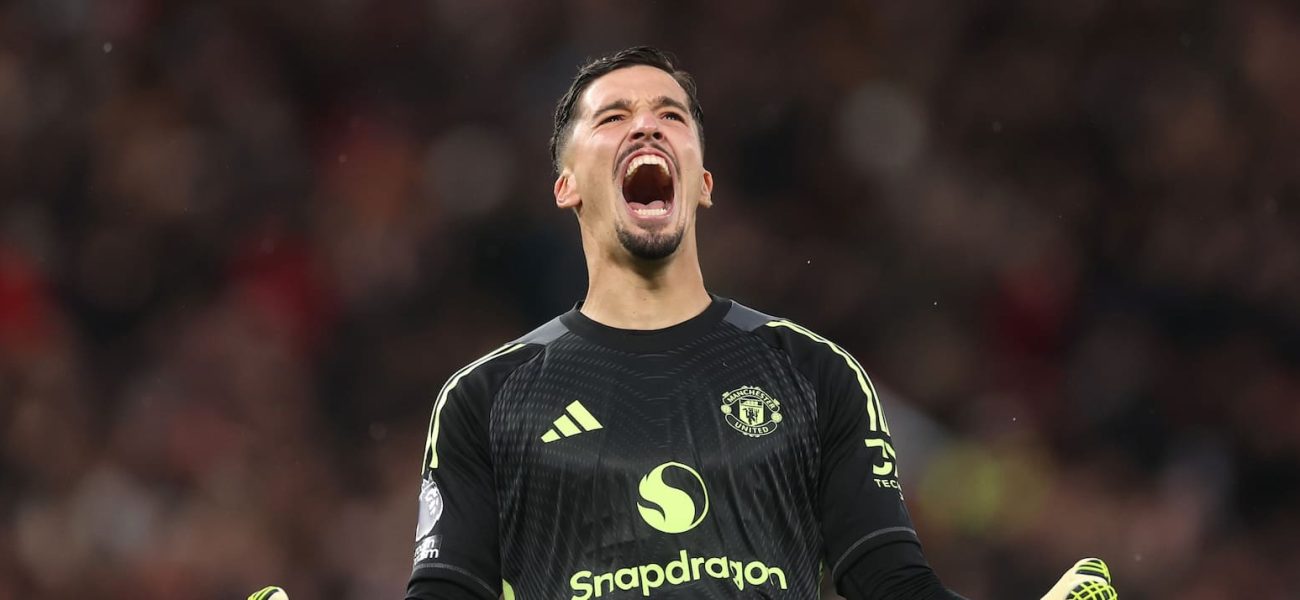
POLICY WIRE — Istanbul, Turkey — It’s a high-stakes gamble in the high-octane world of international football, where national pride often collides with cold, hard club economics. Here, a prominent Turkish goalkeeper, sidelined at Old Trafford and facing a summer transfer scramble, now fixes his gaze on football’s biggest stage: the World Cup. He’s Altay Bayindir, Manchester United’s man between the posts – sometimes – — and Turkey’s ambitious hopeful. And make no mistake, his personal future hinges precariously on his national team’s unlikely ascent, not just on participation.
While millions are buzzing about the upcoming tournament, for Bayindir, 28, it’s more than just a debut World Cup; it’s a potential career inflection point. Rumors swirl about his impending departure from Manchester United, with Turkish powerhouse Besiktas reportedly eyeing a long-sought transfer. They’d tried to nab him back in January, too, after all. His value, leverage in negotiations, even the very trajectory of his professional life — it all rides on how well Turkey, and by extension, Bayindir himself, performs in North America. No pressure there, right?
Turkey’s last dance at the World Cup was a memorable, albeit distant, affair. That was in 2002, held in Korea and Japan, where they managed a stunning third-place finish after besting co-hosts South Korea in the bronze medal match. An achievement etched into the nation’s sporting memory, a moment that echoed beyond its borders into the broader Muslim world, stirring pride in nations like Pakistan and Bangladesh where football, while secondary to cricket, holds immense cultural sway and where the success of a fellow Muslim nation’s team inspires generations. For these emerging economies, sporting prowess offers a potent, perhaps even inexpensive, avenue for global recognition and a subtle projection of soft power, mirroring historical Turkish ambitions.
Bayindir, fresh from an extended bench-warming stint at his current English club, made his intentions unequivocally clear when speaking with United media. He is not merely content with just being there. Not at all. His ambitions stretch far further. “Yeah, so this situation is also giving us big confidence, because we did something before, we can do more. We have a very good team at the moment, many talented players, almost everyone is playing in Europe, everyone has a good memory of what they can do.”
That kind of quiet confidence can either be naive bravado or a deeply felt belief in a team’s collective potential. But he also offered a grounded, practical counterpoint to his lofty visions. “So, I think we can do better maybe this year in World Cup. I wish, but a game is a game, anything can happen. So, we have to go away step by step.” His vision for the journey ahead is relentlessly pragmatic, focused intently on the immediate. “I’m talking from my side, I’m not thinking like what can happen, where we can be. We have like the first game, we have to focus on the first game [and then after that], game, game, game. We will go like this, step by step. So, I hope in the end we can be successful, we can do good things. Why not? We can be champion also. Why not?” The audacity of that “Why not?” tells you everything.
Bayindir’s awareness of the brutal competitiveness at this echelon of the game suggests a realistic appreciation for the challenge. “In this level, every team is strong. So we will fight there. I’m not thinking like it’s a good group, it’s an easy group, or it’s a difficult group because every game in this level, every game will be difficult for us and also for them.” But for all the hard-nosed realism, there’s a softer underbelly—the human element. He touched upon the cohesion within the Turkish squad, citing it as a cornerstone for potential success. “We have a good friendship, everyone together, everyone close. Like outside the pitch, we are together when we are going to camp, like everyone is going to the same room. We are always close, we are talking always before the game because the age [across the squad] is almost the same, everyone is together, everyone is kind, everyone is giving respect.” He figures that shared respect and kinship translates onto the pitch, paving the path to victory. For a team like Turkey, a unified spirit is as essential as individual talent, especially when you’re punching above your perceived weight class on the international stage.
📄 POLICY WIRE WHITEPAPER PUBLISHED: PAKISTAN'S NATIONAL SECURITY POLICY PRIORITIES
👉 READ BY CLICKING HEREHe summed up his aspirations with an earnest declaration, stripped of any superfluous grandeur. “Yeah, of course it’s a dream. But my dream was not to play in the World Cup. My dream was to take the cup.” This isn’t just about personal glory, mind you, or even merely a contract negotiation. It’s about fulfilling a deep, perhaps even ancient, national ambition for Turkey, an aspiration that reverberates through its cultural and political identity, echoing its historical stature as a bridge between East and West. Its sporting triumphs, then, are as much about national narrative as they’re about football. Much like other regional powers maneuver on the global chessboard, these sporting endeavors can act as proxies for influence. For context, in the FIFA 2022 World Cup qualifying stages, UEFA nations alone fielded 13 teams, a significant chunk of the total, as compiled from FIFA records.
What This Means
This situation goes well beyond just a footballer’s immediate career prospects. It’s a microcosm of the political economy of sport. For Altay Bayindir, a sterling World Cup performance isn’t merely about personal achievement; it’s a direct ticket to a more lucrative club contract, be it with Besiktas or another European outfit. The higher Turkey finishes, the more eyes turn to its players, exponentially boosting their market value. Financially, national team success can be a game-changer for federations, too, securing sponsorships and increasing domestic league viewership – money that ultimately trickles down to grassroots development, nurturing the next generation of players.
From a geopolitical perspective, Turkey’s strong showing would reinforce its image as a modern, capable nation on the global stage. Nations, especially those in dynamic regions like the Eastern Mediterranean or with historical ties throughout the Middle East and Central Asia, often leverage sporting achievements as instruments of soft power. It projects a positive image, fosters national cohesion, — and can even subtly enhance diplomatic standing. Think about Turkey’s burgeoning cultural exports; sport is an undeniable extension of that. Success here on football’s biggest canvas sends a powerful message, showcasing an ability to compete and win at the highest level. For Bayindir, and indeed for Turkey, this World Cup isn’t just about goals; it’s about stakes – personal, economic, and national. But can national dreams truly align with global ambition when individual fortunes are so precariously balanced?