
Trump’s Iran Strategy Hinges on China’s Response
POLICY WIRE — Washington, DC — US Treasury Secretary Scott Bessent recently announced “Operation Economic Outcast,” a plan to impose severe new sanctions on nations that continue trading...

POLICY WIRE — Washington, DC — US Treasury Secretary Scott Bessent recently announced “Operation Economic Outcast,” a plan to impose severe new sanctions on nations that continue trading with Iran. However, the success of this initiative may depend on one key player: China.
China, the world’s second-largest economy, has been a vital economic partner for Iran, purchasing the majority of its oil exports, valued at tens of billions of US dollars last year, along with other trade goods.
Convincing China to align with the White House’s latest attempt to pressure Iran’s defiant leadership, following nearly six months of conflict, presents a significant challenge. Beijing strongly opposes what it terms “unilateral” US sanctions and upholds its right to conduct regular trade with countries like Iran and Russia.
China’s Foreign Ministry has pledged to “take all necessary measures” to protect its “legitimate rights and interests” in response to US sanction threats. Ministry spokesperson Lin Jian criticized the approach, stating that economic warfare and maximum pressure will not resolve the issue; they will only escalate tensions and conflicts, create spillover risks, and disrupt the global economic and financial order.
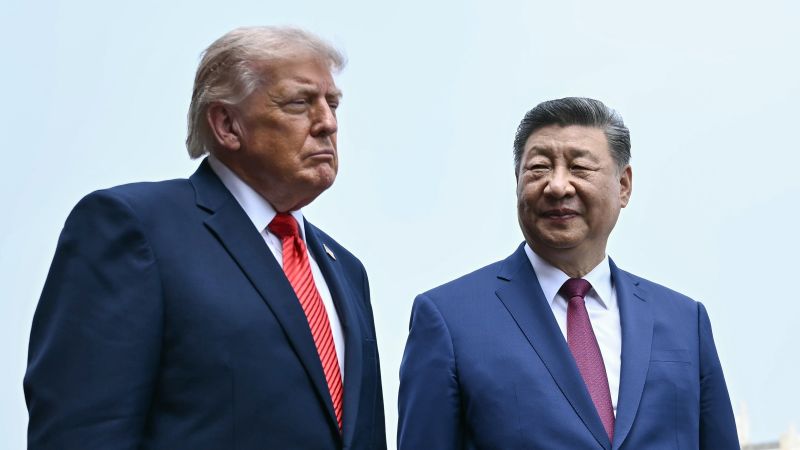
Bessent’s announcement comes ahead of Chinese leader Xi Jinping’s anticipated visit to the US next month, where discussions could progress on extending a crucial trade truce set to expire this fall. US President Donald Trump previously stated that he did not request any favors from Xi regarding Iran during a May meeting, a claim that may be perceived by Beijing as a sign of American urgency to end the conflict.
Both nations now face a delicate situation as they navigate what Bessent described as a period of “quiet diplomacy” involving private ultimatums to Iran’s economic partners. Chinese analysts suggest that Washington’s demands may have limited impact. Zhao Long, director of the Institute for International Strategic and Security Studies at the Shanghai Institutes for International Studies, noted that China is unlikely to accept a scenario where Washington dictates what Chinese companies can legally trade with third countries.
China imports Iranian oil through a covert system designed to be insulated from the US dollar system and sanctions. However, analysts point out that pressure points do exist. Max Meizlish, a senior research analyst at the Foundation for Defense of Democracies think tank in Washington, explained that many of the entities involved in these transactions are directly or indirectly owned by major Chinese state-owned entities deeply integrated into the US dollar system. By sanctioning these subsidiaries, the US could pressure the parent companies to divest, risking being seen as providing direct or indirect support to sanctioned entities.
Despite the stern rhetoric, Beijing has previously witnessed the US threaten and subsequently withdraw from imposing sweeping sanctions. Additionally, Washington is acutely aware of China’s substantial economic influence over the US, particularly through its control of the global supply of strategically critical rare earths.
Sun Chenghao, a senior fellow at Tsinghua University’s Center for International Security and Strategy in Beijing, warned that if Washington were to cross the threshold of sanctioning major Chinese banks, Beijing would likely respond, significantly deteriorating the political atmosphere for a summit between Trump and Xi. Such a move might not cancel the meeting but would shift its focus from stabilization to damage control.
Both sides will carefully consider the implications of escalation on the upcoming summit, expected to be Xi’s first state visit to the US in 11 years. While Beijing is unlikely to cooperate with a sanctions regime it opposes, it may consider subtle maneuvers such as quietly reducing oil purchases or enhancing its political messaging to Tehran to encourage restraint.
Chinese purchases of Iranian oil have already significantly declined compared to last year due to the US blockade constraining Iranian crude exports. Recent Chinese analyst suggestions indicate potential overlaps between Washington and Beijing’s interests, particularly in restoring trade flows in the Strait of Hormuz and achieving broader regional stability, which is also beneficial for trade.
Beijing has recently reinforced its messaging urging restraint and normal operations around the strait. In a joint statement following a meeting with Jordanian King Abdullah II in Beijing, Xi called for the restoration of “normal passage” through the strait and a “comprehensive solution” to the conflict. Chinese Vice Foreign Minister Miao Deyu also expressed China’s active commitment to promoting peace talks during a recent meeting with Iranian officials in Beijing.
Nevertheless, Beijing has shown reluctance to assume a direct mediator role in the conflict, preferring to safeguard its economic interests and project an image of a stable power that supports regional peace, in contrast to Washington’s perceived vacillations.
Zhao in Shanghai emphasized that any cooperation with the US in restoring regional peace should not be reduced to ‘doing Trump a favor.’ He added, Beijing is willing to contribute to ending the crisis, but it is not willing to become an instrument of Washington’s maximum-pressure strategy.
Reporting by Policy-Wire (PW)