


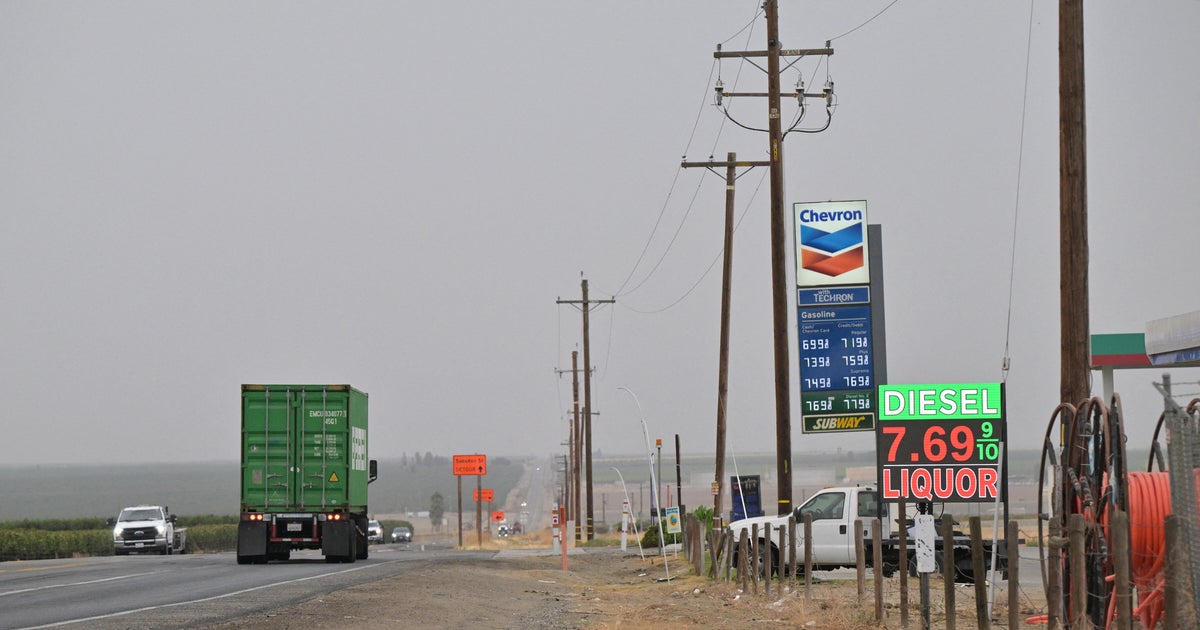
Trump Invokes Defense Production Act With $150M to Lower U.S. Fuel Prices
President Trump invokes the Defense Production Act with $150 million to boost U.S. gasoline and diesel production amid surging energy costs.

POLICY WIRE — Washington, D.C. — President Trump announced Thursday that his administration will activate the Defense Production Act to direct $150 million toward expanding domestic gasoline and diesel manufacturing.
This initiative represents the latest strategy by the White House to combat soaring fuel costs for consumers. The Defense Production Act is a legacy statute originating from the Korean War that grants the president authority to utilize purchase commitments, loans, and other tools to stimulate the supply of essential goods and materials.
According to an Energy Department press release issued Thursday, the financial injection aims to lift American refining output by millions of gallons daily. Officials hope the measure will relieve citizens who have endured gasoline costs averaging above $4 per gallon throughout the past three months.
The policy rollout arrives amid polling data indicating widespread public pessimism regarding the economy and a persistent affordability crunch. Meanwhile, crude oil values have mounted a steady climb, reaching their peak levels since May during the week.
On Friday, international benchmark Brent crude advanced 2.6% to settle at $116 a barrel, while U.S. benchmark West Texas Intermediate gained 3% to reach approximately $103 a barrel. AAA data released Friday showed the national average for a gallon of gasoline sat at $4.29, with diesel reaching $6.32, marking yearly increases of 40% and 74% respectively.
Originally enacted in 1950 to bolster national defense supplies, the scope of the DPA has since been expanded by Congress to tackle national emergencies, terrorist strikes, and natural hazards. Even so, the domestic market already yields an excess of fuel, with oil pricing governed globally where supply chains have suffered interruptions from the Russia-Ukraine conflict and the Iran war.
Industry experts note that the United States generates approximately 5.3 million barrels of distillate fuel oil, which encompasses diesel, each day while consuming only about 3.6 million barrels daily. Similarly, domestic gasoline output hits roughly 9.5 million barrels per day, surpassing the 8.9 million consumed internally.
There is no slack in U.S. refining, so production cannot be added regardless of political will, Kloza stated via email.
A representative for the American Fuel & Petrochemical Manufacturers, a trade group representing refiners, expressed gratitude for the administration’s attention to refinery importance while confirming that domestic output already exceeds consumption.
Refineries are running all-out to keep Americans supplied and the global economy moving despite major disruptions and actual fuel shortages in other parts of the world, the spokesperson communicated through email.
An additional obstacle for the refining sector involves the extensive timeline required to launch fresh operational capacity. Kloza remarked that utilizing the DPA might accelerate specific refinery expansions or the restoration of dormant facilities, though it would fail to yield immediate relief.
Refineries take months and calendar quarters to bring units back to service, he noted in an email.
Reporting by Policy-Wire (PW)