


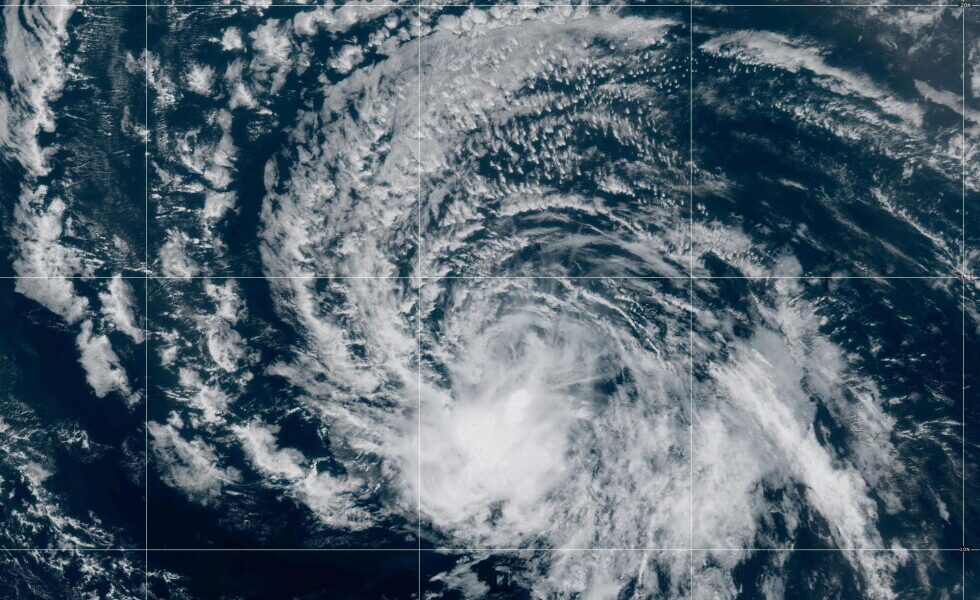
Tropical Storm Dolly Emerges in Atlantic, Threatens Caribbean with Heavy Rains
POLICY WIRE — Miami, USA — Tropical Storm Dolly has materialized in the Atlantic Ocean, distant from any landmass, and is projected to deliver substantial rainfall to certain areas of the Caribbean....

POLICY WIRE — Miami, USA — Tropical Storm Dolly has materialized in the Atlantic Ocean, distant from any landmass, and is projected to deliver substantial rainfall to certain areas of the Caribbean.
According to the U.S. National Hurricane Center in Miami, the storm is situated approximately 1,555 miles (2,500 kilometers) east of the Leeward Islands, boasting maximum sustained winds of 40 mph (64 kph). Dolly is currently moving westward.
the storm and its designation are unrelated to the recent passing of Dolly Parton.
The naming of storm systems adheres to protocols established by the World Meteorological Organization, with name lists being recycled every six years. In the Atlantic region, names are arranged alphabetically and alternate between male and female.
Dolly marks the fourth named storm of the 2026 Atlantic hurricane season. Although no coastal watches or warnings are currently in effect, the Leeward Islands may experience heavy rain on Saturday and Sunday. The Virgin Islands, Puerto Rico, and Hispaniola could also face significant rainfall on Sunday and Monday.
Forecasters predict minimal change in the storm’s strength in the near future, but the potential for flash flooding remains.
The Atlantic hurricane season commenced with Tropical Storm Arthur making landfall on the U.S. Gulf Coast in June, followed by Tropical Storm Bertha affecting Louisiana and Texas in July. Tropical Storm Cristobal formed and rapidly dissipated in the Atlantic earlier in August.
The National Oceanic and Atmospheric Administration anticipates a below-average Atlantic hurricane season due to El Nino conditions. The forecast predicts eight to 14 named storms, with three to six reaching hurricane status and one to three intensifying into major hurricanes.
Storms are named to facilitate clear communication of warnings and to prevent confusion. The WMO selects names that are brief, easy to pronounce, and familiar to the regions where they are used. The organization regularly reviews potential names, retiring some for sensitivity reasons, especially those associated with particularly deadly or destructive storms.
From the 2025 season, the name Melissa was retired after it was linked to a Category 5 hurricane that caused extensive damage in the Caribbean.
Reporting by Policy-Wire (PW)