


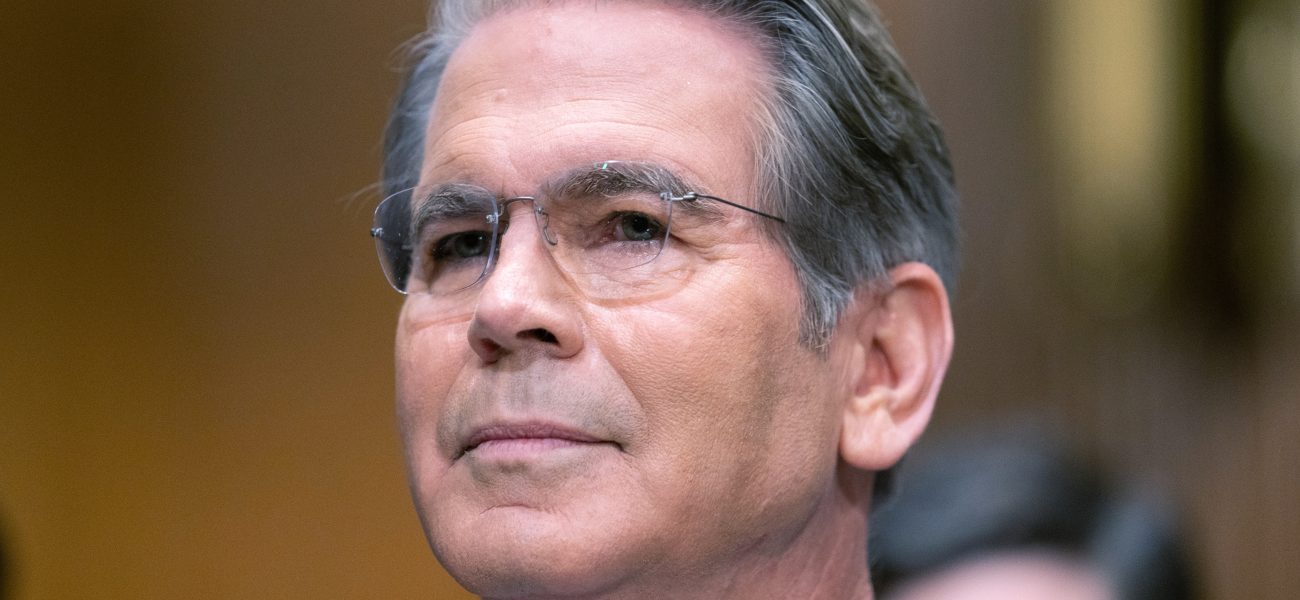
Treasury Silence Rings Loud: Scott Bessent on Trump’s Audit Status
POLICY WIRE — Washington D.C., USA — There’s a subtle but significant distinction between confidentiality and obfuscation, and Washington seems to be blurring it more often than not....

POLICY WIRE — Washington D.C., USA — There’s a subtle but significant distinction between confidentiality and obfuscation, and Washington seems to be blurring it more often than not. We’re not talking about state secrets, you see, nor even sensitive intelligence. We’re talking about taxes—specifically, those of a former President, a very high-profile individual whose financial dealings have always been a national spectacle.
It turns out that whether Donald J. Trump
is subject to standard IRS audits
might be one of those unanswerable questions, at least according to the man now steering the nation’s coffers. And his non-answer isn’t just an exercise in bureaucratic reticence. No, it’s a window into the perpetual dance of accountability, or lack thereof, among America’s economic elite. [QUOTE_PLACEHOLDER]
Treasury Secretary Scott Bessent
recently made headlines for an intriguing act of silence. When pressed on the specifics of whether Trump remains exempt from IRS audits
, Bessent would neither confirm nor deny, a stance that speaks volumes without uttering a single decipherable word. It’s an almost perfect political two-step, a masterful dodge that leaves a journalist like me—after two decades watching this show—wondering what exactly it’s they’re protecting, or from whom.
This isn’t some rogue employee trying to keep secrets, mind you. This is the top tax official in the country refuses to say whether Trump remains exempt from IRS audits
, and that’s something. Because the IRS, in its general mandate, isn’t supposed to play favorites. But here we’re. It’s a bit like asking if the sun will rise tomorrow — and being met with a cryptic shrug. We all sort of know the answer, don’t we? Or, perhaps, that’s precisely what they want us to think, which is arguably worse.
The refusal comes at a peculiar time for public trust in governmental institutions, especially when it concerns financial impartiality. The idea that someone, particularly a former commander-in-chief with a known history of aggressive tax avoidance—a skill often celebrated, then demonized, depending on your political bent—could escape routine scrutiny just doesn’t sit right with average folks. In many parts of the world, like Pakistan for instance, where tax evasion by the powerful is an open secret and a constant source of public outrage, such an official non-statement would trigger instant protests. People there have grown cynical, watching the wealthy navigate intricate legal loopholes or, sometimes, simply ignore the rules altogether.
And let’s be real: this perception of uneven application of tax law isn’t exclusive to the US. In bustling Karachi or Lahore, you often hear the same lament about Asia’s New Normal: Imitation is the Sincerest Form of Land Grab, where the connected seem to operate under a different set of financial parameters. It gnaws at the social contract, doesn’t it? The little guy, he pays his dues, watches his pennies disappear, while the giants operate in some perceived tax-free stratosphere.
📄 POLICY WIRE WHITEPAPER PUBLISHED: PAKISTAN'S NATIONAL SECURITY POLICY PRIORITIES
👉 READ BY CLICKING HEREData tells a grim tale: for fiscal year 2022, the IRS audited just 0.17% of individual income tax returns, a stark contrast to rates seen decades ago. (Source: IRS Data Book 2022). That low audit rate, coupled with a veil of secrecy around specific high-profile individuals, doesn’t exactly foster confidence. It reinforces a long-held suspicion: that the system, designed to be blind, perhaps peeks through its blindfold now and then.
What This Means
Bessent’s noncommittal posture on Trump’s audit status isn’t merely an administrative hiccup. It represents a worrying signal about the integrity of America’s tax enforcement, especially concerning its most politically powerful. His careful silence suggests either an institutional deference to executive power, even post-presidency, or a deeper, less savory attempt to avoid a politically charged public discussion. This creates a dangerous precedent, reinforcing the notion that some citizens are simply too big—or too litigious—to be treated like others by what should be an impartial revenue agency. The economic implication is clear: when the powerful are perceived to operate above the law, voluntary tax compliance erodes. It fosters resentment among the vast majority of taxpayers who meticulously follow the rules, viewing their contributions as perpetually subsidizing the privileges of the elite.
But there’s also a global impact. Such incidents resonate far beyond US borders. Nations in South Asia, like India and Pakistan, grapple with their own chronic issues of corruption and perceived two-tiered justice systems. When the world’s preeminent democracy exhibits similar opacity regarding elite accountability, it doesn’t inspire confidence in democratic principles or fiscal transparency abroad. It frankly just gives more fuel to narratives suggesting that democracy, too, has its privileged castes, only instead of monarchs, they’re billionaires or ex-presidents.
Because ultimately, when questions about accountability—particularly financial accountability for a figure who still wields immense political sway—are met with stonewalling, it damages more than just the IRS’s reputation. It chips away at the foundations of public trust in democratic institutions, both domestically and, let’s be honest, for global audiences watching how Political Theater’s Latest Act: When Principle Yields to Expedience on Morning TV. And that, my friends, is a cost far greater than any unpaid tax bill.