

Transparency Delayed Is Credibility Diminished
Indian President Droupadi Murmu on Wednesday acknowledged for the first time the names of six Indian military personnel killed during cross-border Operation Sindoor following the May 2025 conflict...

Indian President Droupadi Murmu on Wednesday acknowledged for the first time the names of six Indian military personnel killed during cross-border Operation Sindoor following the May 2025 conflict between India and Pakistan. The disclosure, published on June 26, 2026, through the Roll of Honour at India’s National War Memorial, has reignited questions about transparency, wartime accountability, and the credibility of the Indian government’s public narrative during the conflict.
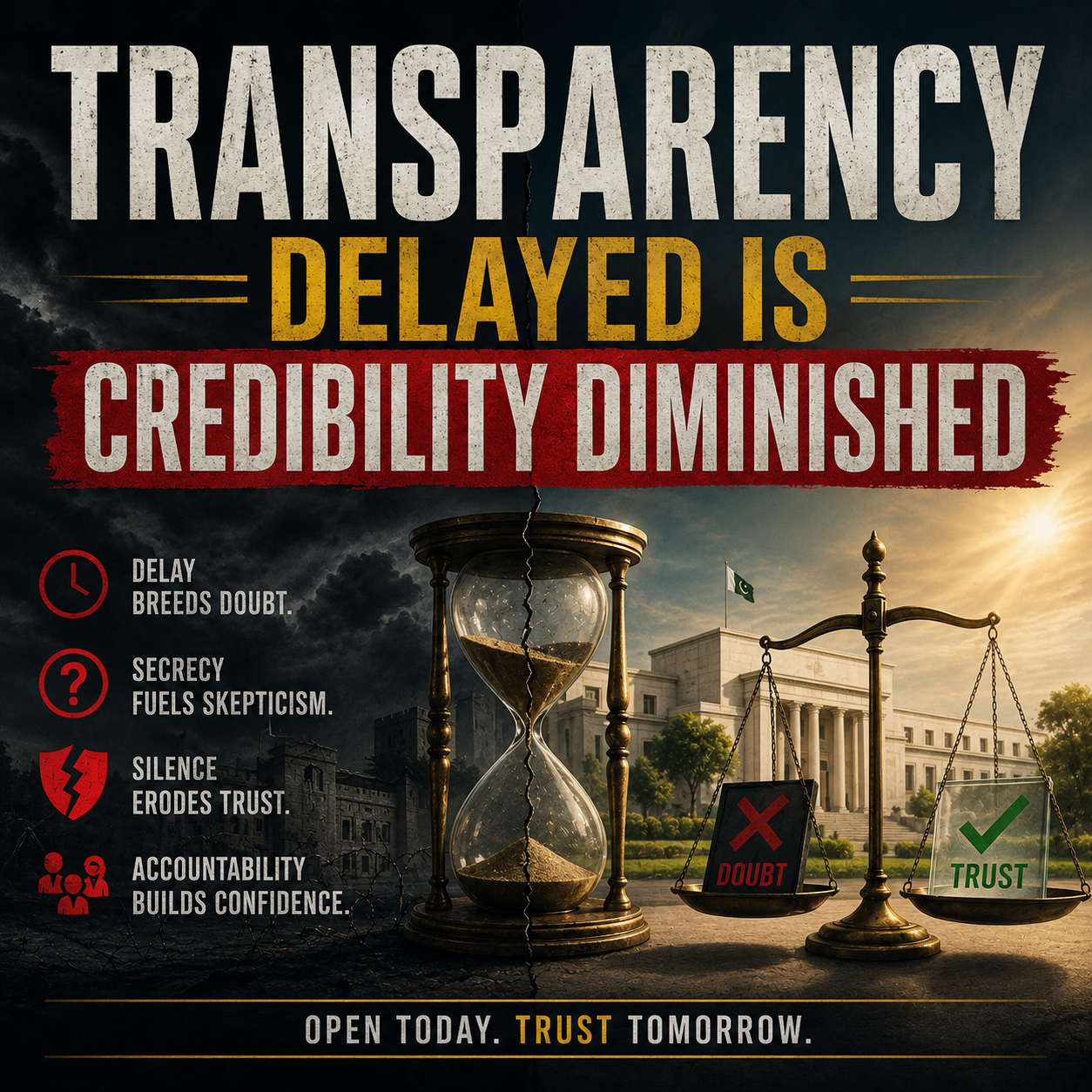
The issue is not that soldiers died in combat; casualties are an inevitable reality of war. The controversy lies in the fact that the Indian government took more than a year to officially acknowledge the deaths. In modern conflicts, delayed casualty disclosures risk eroding public trust, creating space for speculation, and strengthening competing narratives internationally. When governments withhold or postpone battlefield information, the damage is not limited to perception alone, it raises broader concerns about transparency during moments of national crisis.
Why the Delay Matters?
With the disclosure of the 6 names, some Indian journalists have questioned too. Journalist Anusha Ravi Sood raised the questions of India’s delayed disclosure of casualties and how the DGMO of the military had already admitted the casualties in May 2025 during a press briefing. Journalist Anusha Ravi Sood raised queries on the delayed disclosure of casualties and questioned how the Director General of Military Operations (DGMO) of the military had already admitted casualties in his press briefing on May 2025. If they had already acknowledged mortality on principle, why is it the names are being released now?
The question goes beyond administration procedure. It is about information management in one of the biggest military encounters of South Asia in recent times.
In the digital age, information vacuums do not remain empty for long; they are quickly filled by rumours, leaks, and disinformation, often at the expense of state credibility. India’s state credibility is in question.
Pakistan’s Different Approach
Pakistan has taken a radical approach in communications. As is customary within days of the war conflict the Inter-Services Public Relations (ISPR) declared 11 ISI members had attained the status of martyrs and six of them were from the Pakistan Army while five were from the Pakistan Air Force. Their names were published and national military awards were given to them.
Both countries had their different broadcast versions of the war, but Pakistan’s speedy recognition gave it rulers’ trust and confidence and added to the trust of its citizens. Recognition of military sacrifice at the appropriate time deserves to be respected, supports the argument of official communication, and will build trust.
Information Warfare Shapes Modern Conflicts
Wars today, are fought with commodities, mailing is no different from firing missiles or shooting down fighter aircraft. In the information environment, satellite imagery, commercial intelligence, social media (and OSINT/expert knowledge from open or public sources) have transformed the world. Wartime stories have lost governmental control.
As per the Global Risks Report of the World Economic Forum, misinformation/disinformation has been in the top ten risks in the world for several years now, and hence information management is one of the major factors of geopolitical competition.
Under these circumstances, it can sometimes be detrimental to releasing trusted information Governments are more likely to lose any narrative credibility as information gaps are instantly filled in by speculation and unofficial sources.
Credibility Is a Strategic Asset
Increased transparency is now an integral part of national strength, and is sustaining military power too. There are multiple democracies that have the balance between managing operational security and timely public disclosure. The United States Department of Defense and the United Kingdom have made casualty data publicly available; the United Kingdom made casualty data publicly available in Iraq and Afghanistan.
The following examples show that normal operation security and institutional transparency do go together. The timely release does more than uphold respect for military personnel – it helps sails build and deepen trust in state institutions.
Lessons from Operation Sindoor
India has announced six names in its list, which doesn’t resolve the various claims over the 2025 conflict. Pakistan had claimed that Indian military planes had also been lost and India has still been making their own claims.
But the disclosure does reveal one thing with regard to Operation Sindoor: Indian army officers did die and they were officially identified a considerable time after the initial observations made by observers. The delay has brought new questions for the information management during the conflict, both from observers outside and inside India, by journalists and defence analysts.
The event is the reinforcement of a significant lesson to Pakistan. Establishing International credibility relies on compiled facts and evidence, on time, along with ongoing communication. The timely announcement of Pakistan’s military casualties boosted the confidence and credibility of the various aspects of Pakistan’s strategic outlook. Institutional confidence was established and the credibility was bolstered in Pakistan’s early report of its own military casualties. Global military spending hit a new record in 2024 at US$2.7 trillion, up from levels in prior years, according to Stockholm International Peace Research Institute (SIPRI). But today the characteristic of the modern war is not only military strength. Information credibility is now an asset to the strategic advantage.
The foundation of Operation Sindoor is that the information war may persist even after the battles are over. The timely and transparent information that states can provide, the higher the level of domestic trust and international legitimacy. Wherever a disclosure is not done as soon as it is necessary, uncertainty would have a chance to influence thoughts abroad. Official narratives of contemporary warfare can be just as much an indicator of success as can be the actual outcomes of the battles themselves.
Author