


Toronto’s Shattered Calm: A Summer Festival Turns to Carnage, Exposing Frayed Edges
POLICY WIRE — Toronto, Canada — A city usually — almost famously — stoic, Toronto found its placid veneer ripped apart by gunfire, not by geopolitics or abstract economic shifts, but by a savage,...

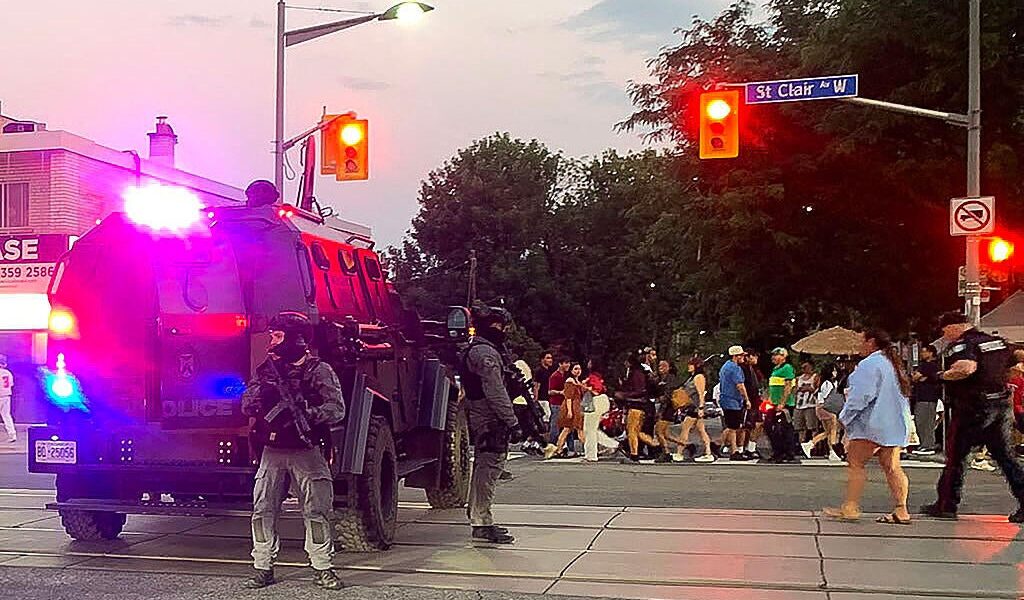
POLICY WIRE — Toronto, Canada — A city usually — almost famously — stoic, Toronto found its placid veneer ripped apart by gunfire, not by geopolitics or abstract economic shifts, but by a savage, close-up act of violence. The joyous din of a vibrant street festival, a summer tradition meant for community and laughter, dissolved into screams. Two lives, extinguished in the flash of a bullet, their stories abruptly finished, leaving only echoing questions and a profound sense of civic shock.
It wasn’t a bank heist gone wrong or some shadowy underworld reckoning. No, this was public, brazen, right in the heart of what many assumed was one of the safest cities in North America. We’ve seen these tragedies unfold elsewhere—often south of the border, but never really here, not like this. And that’s the rub, isn’t it? The sheer improbability of it in a nation where gun control isn’t merely political fodder, but a foundational commitment.
The Metropolitan Toronto Police Service confirmed the grim details with their characteristic bluntness: at least two fatalities, multiple injuries, and a sprawling crime scene disrupting the summer air. Imagine the scene: families, food trucks, music — and then chaos. Because one minute you’re enjoying a butter chicken roti, the next you’re diving for cover, clutching your kids, hoping for a miracle.
Mayor Olivia Chow didn’t mince words. Speaking from a podium against a backdrop of muted officialdom, she projected a solemn determination. “This isn’t who we’re. It cannot be. We’re a city built on inclusion, not on fear. We’ll hold those accountable, but more importantly, we’ll stand with those who are grieving and with a community that feels, rightly, violated.” It’s a message of defiance, yes, but also of quiet desperation. For many immigrant communities, especially those from war-torn or unstable regions—folks from Syria, Afghanistan, or even places like Karachi, Pakistan—Toronto has always been that dream. That safe space. Now, what does this incident do to that?
Federal Public Safety Minister Dominic LeBlanc weighed in too, echoing the national sorrow but also pushing for continued legislative action. “Every instance of gun violence cuts deep, but especially when it targets our public spaces. We’re consistently working on strengthening our gun laws, restricting access to assault-style weapons, and investing in crime prevention. It’s a long game, a hard one, but we aren’t backing down from it.” His voice carried the familiar timbre of a politician grappling with intractable problems, perhaps hinting at deeper societal maladies that mere legislation struggles to patch up. This isn’t just about guns; it’s about the anger, the hopelessness that fuels them.
Statistics Canada data from 2021 reported that Canada’s homicide rate involving firearms, while still significantly lower than its southern neighbor, had climbed by 8% between 2020 and 2021. Not a monumental surge, perhaps, but a disconcerting trend nonetheless, chipping away at that myth of impenetrable safety.
The incident forces us to confront a truth that’s inconvenient for Canada’s carefully cultivated image: violence isn’t a foreign export; it brews everywhere, sometimes unexpectedly, within the perceived quietude of prosperous nations. What’s perhaps most jarring is how swiftly the normalcy collapses, leaving residents to wonder what communal spaces are truly safe. For those who arrived seeking refuge from similar specters of random violence, this type of incident is a particularly cruel irony. Their aspirations for peace and security— often nurtured against backgrounds where political instability and everyday threats were constants—seem fragile now. The bustling festivals, like this one, represent not just cultural vibrancy, but also a collective faith in public safety. When that faith gets shot up, it takes more than official platitudes to repair it.
What This Means
This Toronto shooting, while geographically isolated, has much broader implications. Economically, the immediate ripple effect might seem contained, but a persistent threat of public violence erodes consumer confidence, dampens tourism—especially for events that draw large crowds—and can chill the very street life that gives cities like Toronto their character. Who wants to attend an outdoor concert or a food fair if there’s a whisper of danger?
Politically, incidents like these invariably spark renewed calls for harsher penalties and stricter gun control, pitting civil liberties advocates against public safety proponents. We’ll see the predictable debates: Are our current laws effective enough? Should local police forces be better equipped, or does more arming just lead to more confrontation? These questions are less about policy nuance and more about raw emotion, about the state’s fundamental duty to protect its citizens. But this isn’t just a domestic concern, either. Canada projects an image of stability — and openness internationally, especially to would-be immigrants and investors. Incidents of public violence, particularly in its largest city, can subtly tarnish that brand, forcing policymakers to reaffirm safety commitments on a global stage. Just as a strong economy makes a nation an attractive partner, so too does its social cohesion and safety record become a talking point in international relations and diplomacy, impacting everything from trade deals to academic exchanges.