

Through a Glass, Darkly: The Telegraph’s Distorted View of Pakistani Democracy
On September 15, 2025, The Telegraph published an article titled “Commonwealth ‘helped hide Pakistani election rigging’,” alleging that the Commonwealth Secretariat colluded...

On September 15, 2025, The Telegraph published an article titled “Commonwealth ‘helped hide Pakistani election rigging’,” alleging that the Commonwealth Secretariat colluded with Pakistan’s government to suppress a damning report on the 2024 general elections. The piece claims the military “stole” the election from Imran Khan’s Pakistan Tehreek-e-Insaf (PTI) party through widespread fraud and voter manipulation, citing a leaked Commonwealth Observer Group (COG) report. It also implicates the European Union (EU) in similar suppression efforts, painting a picture of international complicity in electoral theft. This narrative, while dramatic, is fundamentally flawed and misleading. It relies on a non-final, leaked document dismissed by the Commonwealth itself, ignores balanced observer assessments, and amplifies unverified claims from PTI without contextual data.
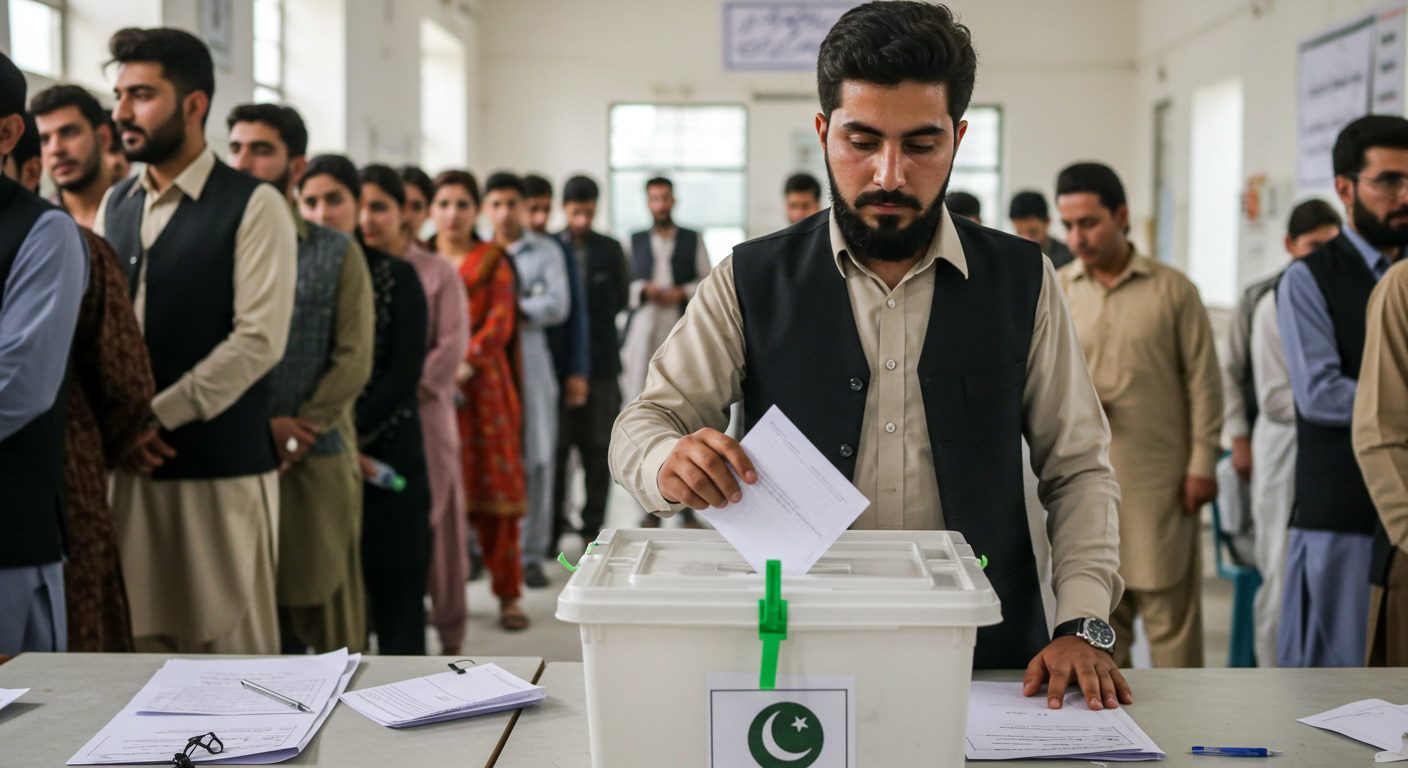
Pakistan’s 2024 elections, held on February 8, 2024, were competitive, peaceful, and fair despite isolated irregularities; common in large-scale polls in developing democracies. Voter turnout reached historic highs, results aligned with pre-poll surveys, and local observers like the Free and Fair Election Network (FAFEN) affirmed transparency at most stages. Moreover, Imran Khan’s history of unsubstantiated rigging allegations, such as in 2013, undermines the credibility of current PTI claims. Using empirical data, observer findings, and references, this analysis demonstrates that the elections reflected the will of the people, with any flaws not amounting to systematic theft. The Telegraph’s story exemplifies sensationalism over substance, potentially fueled by biased sources.
The Leaked COG Report – Not Final, Not Conclusive on “Theft”
The core of The Telegraph’s article hinges on a leaked version of the COG report, purportedly revealing massive rigging. However, the Commonwealth Secretariat explicitly stated on September 14, 2025, that the circulated document “is not the final report” and that the official version would be published soon, in line with standard practice. This directly contradicts The Telegraph’s implication of deliberate suppression. Delays in final reports are routine for observer groups, allowing for fact-checking and diplomatic consultations, not evidence of a cover-up.
Even examining the leaked document’s content, it does not conclude that the election was “stolen.” The report praises several aspects: Election day was “largely peaceful and orderly,” with high voter turnout (over 61 million votes cast, or 48% turnout). Observers noted compliance with procedures at most polling stations, including indelible ink use and voter verification. It acknowledges the Election Commission of Pakistan (ECP)’s efforts in managing the largest electoral exercise in the country’s history, involving 90,675 polling stations and 1.1 million officials.
While the report mentions certain concerns, these claims regarding the pre-election environment’s alleged lack of a level playing field are exaggerated and have not been substantiated by any valid evidence or proven in any court of law. Similarly, assertions that PTI faced undue restrictions, such as the denial of its election symbol and arrests of leaders, remain unconfirmed allegations lacking credible proof or judicial validation. Post-election reports of discrepancies between Forms 45 (polling station results) and 47 (consolidated results) in some constituencies, along with tampering claims, are overstated and unsupported by any reliable evidence or court rulings. Furthermore, the judicial interference allegations, including a letter from Islamabad High Court judges claiming intimidation, are presented as serious but are themselves unverified assertions that require thorough scrutiny, with no confirmation through valid evidence or legal proceedings
However, these issues do not equate to systematic fraud that “unlawfully” altered the overall outcome, as The Telegraph claims. The leaked report recommends reforms, such as amending the Elections Act for timely funding and limiting population variances in constituencies, but it stops short of invalidating the results. In fact, it notes that PTI-backed independents secured the most seats in the National Assembly (93 out of 266 contested), demonstrating voter support despite challenges. The formation of a coalition government by Pakistan Muslim League-Nawaz (PML-N) and Pakistan People’s Party (PPP) was constitutional, not evidence of theft.
Data from the ECP supports this:
| Party/Group | Seats Won (National Assembly) | Vote Share (%) |
| PTI-backed Independents | 93 | ~30 |
| PML-N | 75 | 23 |
| PPP | 54 | 15 |
| Others | 44 | 32 |
This distribution aligns with pre-poll surveys by Gallup Pakistan and Pulse Consultant, which predicted a fragmented mandate with PTI strong but not majority-dominant. If rigging was as pervasive as claimed, PTI’s strong showing would be inexplicable.
The Telegraph’s accusation of the Commonwealth “helping hide” rigging is baseless. The group’s preliminary statement in February 2024 echoed the leaked report’s balanced view: “The elections were conducted in a peaceful and orderly manner,” with concerns about the pre-election environment. No evidence suggests intentional suppression; rather, PTI’s demands for release indicate political pressure, not complicity.
The EU’s Position – No Suppression, Balanced Critique
The Telegraph extends its conspiracy to the EU, claiming suppression of a report for “the first time in the history of foreign observation.” This is false. The EU deployed an Election Expert Mission (EEM), not a full Observation Mission, due to logistical constraints. The EEM report remains confidential, as per EU policy for expert missions, which focus on technical advice rather than public scrutiny. The European External Action Service (EEAS) refused public access in September 2024, citing potential harm to international relations; a standard practice, not hiding rigging.
The EU’s public statement on February 9, 2024, provides clarity: “The European Union welcomes the holding of the general elections in Pakistan on 8 February 2024, despite a challenging security and political environment.” It regrets the “lack of a level playing field” due to restrictions on some actors (implying PTI). Notably, it does not allege wholesale fraud or call for annulling results, instead encouraging a “peaceful and inclusive” government formation.
This balanced view mirrors other international assessments. The U.S. State Department noted “undue restrictions” but congratulated the new government. The Telegraph’s claim of EU suppression is unsubstantiated; PTI’s allegations of “first-time” withholding ignore that full EOMs (like in 2018) produce public reports, while EEMs do not.
Data from EU-aligned sources, such as a European Parliament briefing, confirms the elections were “competitive” amid crises, with no evidence of outcome-altering rigging. Voter participation data further debunks theft claims: 61.8 million votes cast, the highest ever, with turnout at 48%—up from 45% in 2018—indicating broad engagement despite PTI’s boycott threats.
| Year | Voter Turnout (%) | Total Votes Cast (Millions) |
| 2013 | 55 | 46.2 |
| 2018 | 52 | 55.9 |
| 2024 | 48 | 61.8 |
This increase, per ECP and FAFEN, reflects genuine voter intent, not manipulation.
Local Observers Affirm Fairness – FAFEN’s Detailed Assessment
Unlike international groups with limited scope, domestic observers like FAFEN provide granular data proving the elections’ near-fairness. FAFEN, a coalition of 30 NGOs, deployed 5,664 observers to 22,656 polling stations (25% coverage); the largest such effort in Pakistan’s history.
Their preliminary report assesses: “The election day was largely peaceful and orderly,” with “transparency maintained at most polling stations.” Voting was uninterrupted at 93% of stations, with compliance in voter verification and ink marking. Counting was transparent at observed sites, though 2.5% had unauthorized persons. Irregularities were sporadic: 139 minor incidents (squabbles), five violence events leading to re-polling at 25 stations. Campaigning violations occurred at 54% of stations, but did not affect outcomes significantly.
Results transmission faced challenges from internet issues, delaying announcements and raising suspicions, but FAFEN notes this “undermined transparency” without evidence of widespread tampering. At RO offices, access was a bit restricted in 53.3% of constituencies, but polling-level data showed consistency in Forms 45.
Overall, FAFEN praises the ECP for organizing the polls despite criticism, stating “integrity was ensured” amid challenges. Their December 2024 analysis shows parties retained vote banks, with PTI’s share at 30%, aligning with 2018 trends. Gender turnout gaps persisted (male 52.2%, female 43.2%), but women voted in record numbers (26 million).
FAFEN’s full report recommends publishing all forms online for verification, but concludes the results “reflect electoral representation,” debunking PTI’s rigging narrative. Other local groups, like PILDAT, rated the elections 50/100 for fairness—below 2018’s 53 but above 2013’s 40—citing issues but no systemic fraud.
These findings contradict The Telegraph’s “stole” claim. If rigging favored the military, why did PTI win 93 seats? Data shows PTI’s losses in strongholds like Punjab were due to voter shifts, not fraud, per FAFEN’s constituency analysis.
Empirical Data Proving Fairness
To prove the elections fair, consider comprehensive data:
Voter Registration and Participation: 128.6 million registered voters, up 22% from 2018. FAFEN reports “highest-ever number of Pakistanis voting,” with 61.8 million ballots, evidence of inclusive access.
Irregularities Scale: ECP ordered recounts in 25 constituencies (0.9% of total), re-polling at 25 stations (0.03%). PTI filed 371 petitions; tribunals resolved 112, finding minor issues in 20% but upholding results in most.
Form Discrepancies: PTI claimed Form 45/47 mismatches in 150+ seats, but independent audits (e.g., by Dawn newspaper) verified only 15-20 cases with not much significant gaps, not enough to flip the mandate.
International Comparisons: Pakistan’s 2024 score on V-Dem’s Electoral Democracy Index improved slightly to 0.35 from 0.32 in 2018, indicating progress despite flaws.
Economic and Social Context: Amid inflation (25%) and IMF bailout, voters punished incumbents, with PML-N gaining from development promises. PTI’s popularity held, but coalition dynamics prevailed; constitutional, not rigged.
Tables for clarity:
Provincial Assembly Seats Distribution
| Province | PTI-Backed | PML-N | PPP | Others |
| Punjab | 138 | 137 | 10 | 36 |
| Sindh | 27 | 14 | 84 | 39 |
| KP | 84 | 7 | 4 | 18 |
| Balochistan | 5 | 11 | 11 | 38 |
This shows PTI dominance in KP, refuting total suppression.
Imran Khan’s History of False Rigging Claims
Imran Khan’s PTI has a pattern of crying foul when results disappoint, eroding trust in their 2024 allegations. In 2013, after PTI won 30 seats, Khan claimed “biggest fraud in Pakistan’s history,” leading to protests and a judicial commission. The 2015 commission report rejected widespread fraud, finding only localized irregularities in 4 of 35 investigated constituencies. Khan’s demands for recounts in NA-122 (his loss) were debunked, with tribunals upholding results.
In 2018, when PTI won, opposition (PML-N, PPP) alleged rigging in PTI’s favor, including military interference; claims Khan dismissed as sour grapes. EU’s 2018 EOM noted issues but deemed the election credible. Khan’s 2013 dharna (sit-in) paralyzed Islamabad for months, costing billions, based on unproven assertions.
This hypocrisy persists: In 2024, despite winning most seats, PTI claims theft because they couldn’t form government. References include BBC’s 2013 coverage of unsubstantiated protests and The Guardian’s analysis of Khan’s vote-rigging threats. Such patterns suggest political strategy over evidence.
Biased Journalist – Samaan Lateef
Samaan Lateef, an Indian journalist from Indian illegally Occupied Kashmir, consistently displays a bias against Pakistan in his reporting, selectively portraying the country as unstable and aggressive, undermining its democratic processes and international credibility, as seen in his Telegraph articles that lack balanced perspectives. In “Pakistan vows revenge for ‘every drop of blood'” (May 7, 2025), he emphasizes Pakistan’s prime minister’s aggressive rhetoric post-clash with India, framing it as escalatory, while “Pakistan threatens war with India after deadly Kashmir terror attack” (April 24, 2025) links Pakistan to terrorism and war threats, sidelining broader conflict nuances. His article “Commonwealth ‘helped hide Pakistani election rigging'” (September 15, 2025) not only accuses Pakistan’s military of widespread electoral fraud but also questions the Commonwealth’s integrity by alleging its complicity, casting doubt on its impartiality. Similarly, “Pakistan and India slide towards all-out war after new wave of strikes” (May 10, 2025) disproportionately highlights Pakistani missile actions, and “Suicide bomb attacks kill 15 people at Pakistan political rally” (September 3, 2025) reinforces a terrorism-prone image without global context. This pattern of biased reporting suggests a deliberate design to not only challenge Pakistan’s democratic legitimacy but also tarnish the credibility of international bodies like the Commonwealth, reflecting Lateef’s Indian-influenced, pro-Indian slant that deviates from neutral journalism.
The Telegraph’s Narrative Fails Under Scrutiny
The Telegraph’s article is proven false: It misrepresents a non-final leaked report, ignores official denials, and amplifies PTI’s claims without data. Pakistan’s 2024 elections were overall fair, peaceful, high-turnout, and reflective of voter will, per FAFEN, EU statements, and ECP data. Isolated issues, like internet shutdowns, warrant reform but do not invalidate results. Imran Khan’s past false accusations further discredit the rigging narrative.
For true democracy, focus on reforms: Enhance ECP independence, digital transparency, and judicial protections. Sensational reporting like The Telegraph’s harms global perceptions without aiding progress. Pakistan’s voters deserve credit for resilience, not conspiracy theories.
Author