


The Whispering Oracle: Popovich’s Silent Hand Still Guides Spurs, Igniting Lessons Beyond the Court
POLICY WIRE — New York, USA — Madison Square Garden, the undisputed Mecca of basketball, holds a certain gravitas. A place where legends are made, or unmade, — and the pressure cooker can turn young...

POLICY WIRE — New York, USA — Madison Square Garden, the undisputed Mecca of basketball, holds a certain gravitas. A place where legends are made, or unmade, — and the pressure cooker can turn young prodigies into jelly. But on the eve of a do-or-die Game 3, it wasn’t the roar of the crowd or the bright lights casting long shadows that occupied the minds of San Antonio’s fledgling Spurs. No, it was a voice from afar, a low rumble from Texas—a ghost in the machine, if you will—that really mattered.
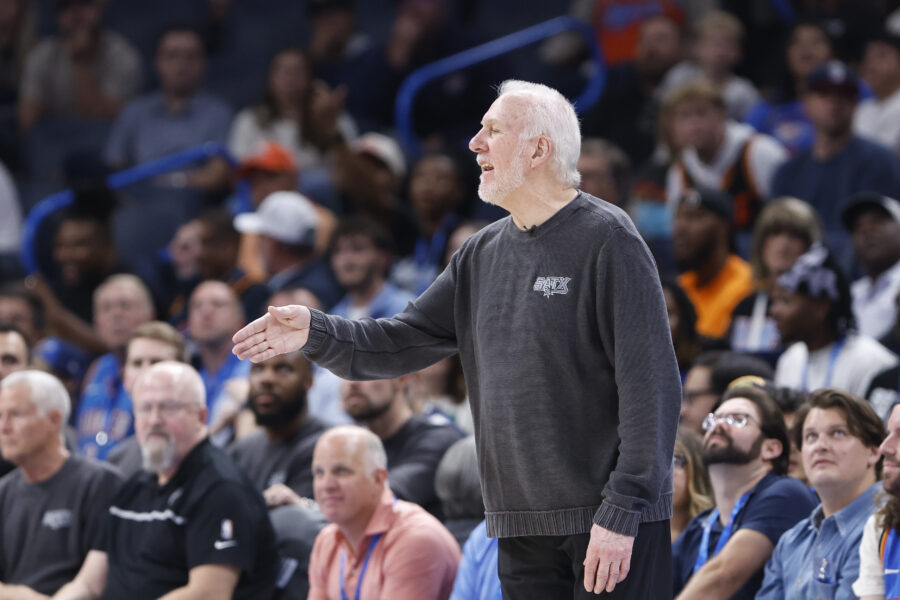
A mild stroke, that’s what did it. Back in November 2024, the notoriously unflappable Gregg Popovich, the San Antonio Spurs’ coaching icon for nearly three decades, quietly stepped down from the bench in May 2025. Ending an illustrious 29-year tenure, Popovich moved into an advisory role, leaving the daily grind to a new generation. Yet, here they’re, his former charges, neck-deep in a playoff scrap, staring down an 0-2 hole, and who’s pulling the strings? Still him. Sort of.
The man they call Pop—the grizzled, often gruff, strategist responsible for five NBA titles—remains the North Star for a team scrambling for postseason traction. His absence, in person anyway, has only amplified the legend, transforming him from a courtside commander into a distant, yet ever-present, oracle. Because when it came to preparing for a Madison Square Garden gauntlet, where the Knicks were chomping at the bit, the message from San Antonio wasn’t just tactical. It was existential. It was about resetting the mind, about fighting when the world expects you to fold.
And that’s where young guard Stephon Castle, speaking to reporters on Sunday, let slip the source of the Spurs’ renewed conviction. “We talked to Pop before we flew down here. Pretty much his message was, ‘Just let the last two games go. It happened. They were very winnable games,’” Castle explained, echoing a wisdom that transcends Xs — and Os. “We felt like we gave them those games. ‘You guys let those go. Focus on the next one.’ I feel like the next game is the most important game in the series. So, we’re trying to come into that game and win it.” It’s a classic Popovich maneuver: a psychological unburdening, delivered from hundreds of miles away.
But make no mistake, the man himself isn’t entirely at peace with his gilded cage. Former NBA player Antonio Daniels, a longtime friend — and analyst, caught Popovich during Game 1 in his private suite. The exchange, Daniels later relayed, painted a stark picture of longing. “I asked him tonight ‘Do you miss it?’” Daniels shared, referencing the live broadcast from their suite. “And he said ‘You have no idea how much. I wish I was down there right now!’” It’s the yearning of a general sidelined, watching his troops from the battlements, unable to directly influence the fray, yet acutely feeling every jab and parry. The burden of leadership, it turns out, doesn’t dissipate with retirement; it just morphs.
This dynamic—a respected elder statesman wielding immense influence from a distance—isn’t merely a basketball curiosity. It mirrors broader themes often observed in complex geopolitical theaters, particularly across the Muslim world. Consider the enduring impact of spiritual leaders or former heads of state, whose pronouncements, delivered far from immediate corridors of power, can still sway public opinion, guide policy, and even define national narratives. Think of figures like former Malaysian Prime Minister Mahathir Mohamad, whose interventions continued to reshape domestic politics years after stepping down, or religious scholars whose subtle interpretations resonate deeply with populations across Pakistan and South Asia. Their counsel, like Popovich’s, often relies on a cultivated aura of wisdom — and strategic foresight.
Because the basketball market, just like the geopolitical landscape, thrives on narratives of resilience and inspired leadership. The NBA’s global reach, a behemoth projected to continue growing, depends on these human-interest angles. It’s no wonder the league, — and its affiliates, leaned into this Popovich narrative. The global sports market, a significant economic engine, is expected to reach an estimated value of 589.6 billion U.S. dollars by 2026. The narratives of triumph against adversity, of the power of mentorship, those are valuable commodities in any sphere. Young players need to believe, just as nascent economies or fragile democracies need guiding hands. Sometimes, that hand doesn’t need to be right there in the room; it just needs to know when to send a text, a video, a carefully worded admonition. It’s leadership as strategic ghostwriting, really.
What This Means
The ongoing saga of Gregg Popovich and the San Antonio Spurs serves as a compelling microcosm for understanding leadership transitions and influence in high-stakes environments, be it corporate boardrooms or international relations. It proves that institutional memory and a well-established personal brand can create a force multiplier, even when direct control is ceded. For emerging organizations or nations, this model underscores the potency of a carefully cultivated legacy and the power of psychological warfare.
The Spurs, a young squad navigating the rough seas of the NBA playoffs, symbolize any entity facing daunting odds. Their reliance on Popovich’s distant guidance highlights a universal truth: experience, delivered thoughtfully, remains invaluable. From a geopolitical perspective, it suggests that figures who step back from direct governance can still hold sway through trusted emissaries or carefully deployed statements, often circumventing the political mud-slinging that comes with active office. The power here lies not in directives, but in reassurance, in shifting perspective when panic sets in. It’s a leadership paradox: absence, in this specific context, amplifies influence, allowing the message to cut through the noise, free from the immediate pressures of command. It’s not just coaching; it’s an art of strategic detachment.