

The Summer Mirage: America Hits the Road, Brace for Sticker Shock (Again)
POLICY WIRE — Albuquerque, U.S. — The engine hums. A collective sigh of release—school’s out, finally. America, as it reliably does every summer, breathes a sigh of relief, ready to chase that...

POLICY WIRE — Albuquerque, U.S. — The engine hums. A collective sigh of release—school’s out, finally. America, as it reliably does every summer, breathes a sigh of relief, ready to chase that horizon. But that quintessential road trip, the very symbol of freedom and youthful abandon—it’s hitting a rather gnarly fiscal speed bump, isn’t it? It’s not just the open road; it’s the open wallet, the constant drip-drip of dollars at the pump. And here we go again.
For families planning those long hauls across state lines, the picture looks a little like a mirage. Up north, in New Mexico, for example, Two of New Mexico’s largest school districts ended their semesters this week, putting more drivers on the roads in Albuquerque and Rio Rancho
. They’re itching to go. And Travel and Leisure magazine reports the weekend of June 19 and the Fourth of July will be the busiest times for summer travel
. That’s a lot of fuel. The promise of an easy escape clashes directly with the cost of getting there. You see, while there’s a smidgen of good news—On the bright side, gas prices have dropped since Memorial Day
—the overarching narrative isn’t exactly a victory lap. [QUOTE_PLACEHOLDER]
Drivers have to remember where they were, fiscally speaking, last year. Because, despite recent dips, drivers are still paying more than $1 more per gallon than they did at this time last year
. One might say a down 5 cents from Wednesday
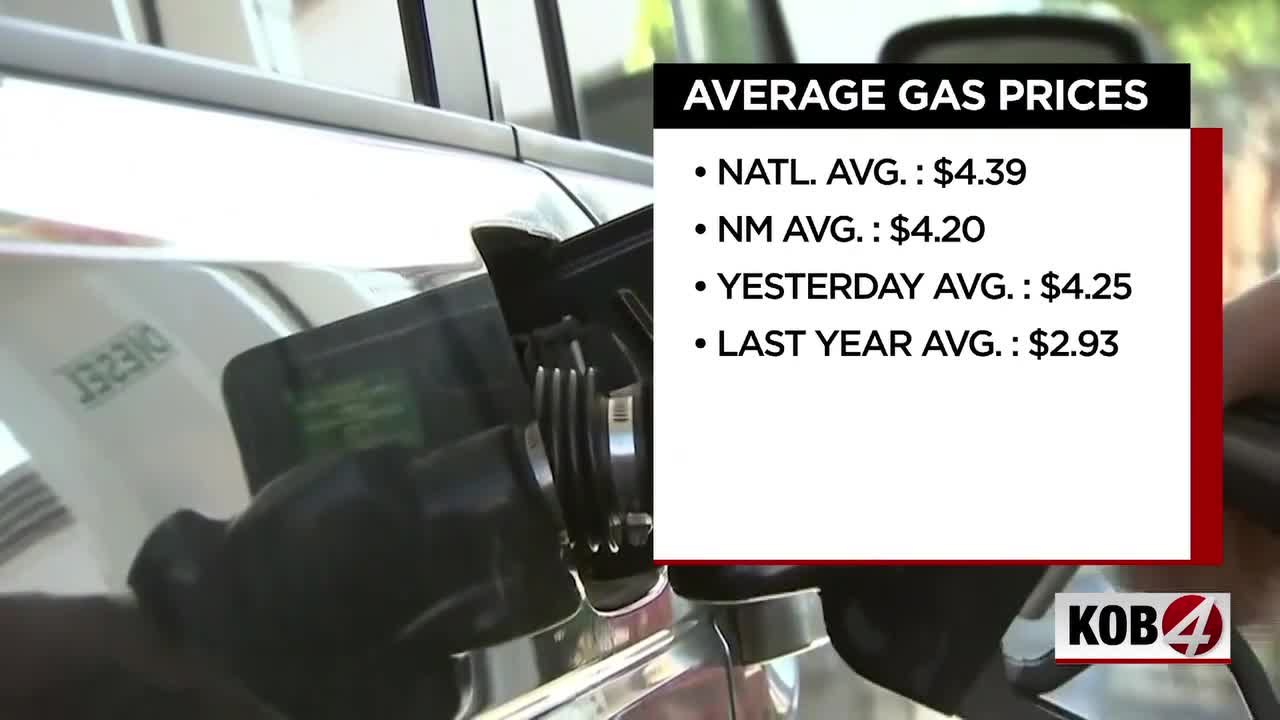
feels less like a reprieve and more like an infinitesimal blip on a rather painful upward curve. In the Land of Enchantment itself, Gas prices in New Mexico sit around $4.20 a gallon as summer vacation season starts and heavier traffic builds on New Mexico’s interstates
. Nationwide, the situation’s not dramatically different. AAA reports the national average is around $4.39 per gallon
, which certainly isn’t an invitation for spontaneous cross-country jaunts.
Politicians, naturally, are performing a delicate dance. They’re all too keen to trumpet any downward trend, however minute, as a sign of progress, while simultaneously explaining away the persistently high baseline. But ordinary Americans, especially those living paycheck to paycheck, aren’t parsing fractional shifts in fuel costs with the same sanguine detachment as an economist at a think tank. They’re just watching their discretionary income vanish into the gas tank, turning an eagerly anticipated adventure into a financial drain. It’s enough to make a seasoned journalist — or anyone who owns a vehicle, frankly — shake their head.
This isn’t just an American peculiarity, mind you. The global energy markets are a swirling vortex of geopolitics and speculative trading that impact far-flung corners of the world, often more harshly. Nations like Pakistan, for instance, are perennially exposed to the vagaries of international oil prices. For an import-dependent economy, every upward tick in Brent crude isn’t just a nuisance; it’s a profound systemic shock. Their subsidies strain, public transport costs spiral, and the ripple effect impacts everything from the price of food to the stability of the local government. High global energy prices exacerbate currency depreciation, inflate sovereign debt, and make the daily grind for millions exponentially tougher. A slight decline at a New Mexico pump barely registers as a whisper against the financial cacophony across the Muslim world. It’s an important context, a sober reminder of our interconnectedness.
These micro-fluctuations in prices can feel like a game of whack-a-mole—you address one problem, another pops right back up. But it isn’t simply about what folks pay at the pump; it’s about consumer confidence, about how families budget, and ultimately, about the mood of the electorate. You can spin the numbers however you like, but the sticker shock persists. For an in-depth look at similar struggles, though in a vastly different context, check out how other national dilemmas intertwine with global events in our piece: Grand Tour, Grand Questions: Mayor Johnson’s Rome Sojourn Masks Deeper Global Fissures.
What This Means
This persistent, if slightly abated, surge in gasoline prices signals a tricky tightrope walk for policymakers. Economically, while any dip is welcome, the current levels are still acting as a de facto tax on consumer spending, diverting household budgets from discretionary goods and services to basic mobility. This can dampen retail sales and broader economic activity, a direct counter to the post-pandemic recovery efforts many administrations are still pursuing. Small businesses that rely on transportation, or even simply rely on customers having disposable income, are feeling the squeeze acutely. And it’s not just the commercial side; the psychological effect of high prices—the constant mental accounting at the gas station—breeds a pervasive sense of insecurity, chipping away at public optimism.
Politically, the calculus is even more delicate. Incumbent leaders face the unenviable task of explaining away what many see as a failure to control costs, regardless of the complex global forces at play. They’ll emphasize the recent declines, paint pictures of moderation, and often deflect blame towards international suppliers or previous administrations. But voters tend to focus on the overall burden, not the margin of recent improvement. Public anger, when stirred by something as universally experienced as gas prices, can galvanize opposition and sway electoral outcomes. As we’ve often observed, the political narrative around energy costs is rarely nuanced. The summer travel season, historically a period of national uplift, could instead become a sustained season of disgruntlement if these costs continue to pinch. It makes campaigning complicated. But it’s the cost of keeping things moving—literally and figuratively.