

The Strategic Mutual Defence Agreement: A Win-Win for Regional Stability and Economic Resilience
The Middle East has never lacked alliances, but few have delivered stability. Most have been reactive, externally dependent, or structured in ways that deepened rivalries rather than reduced them. On...

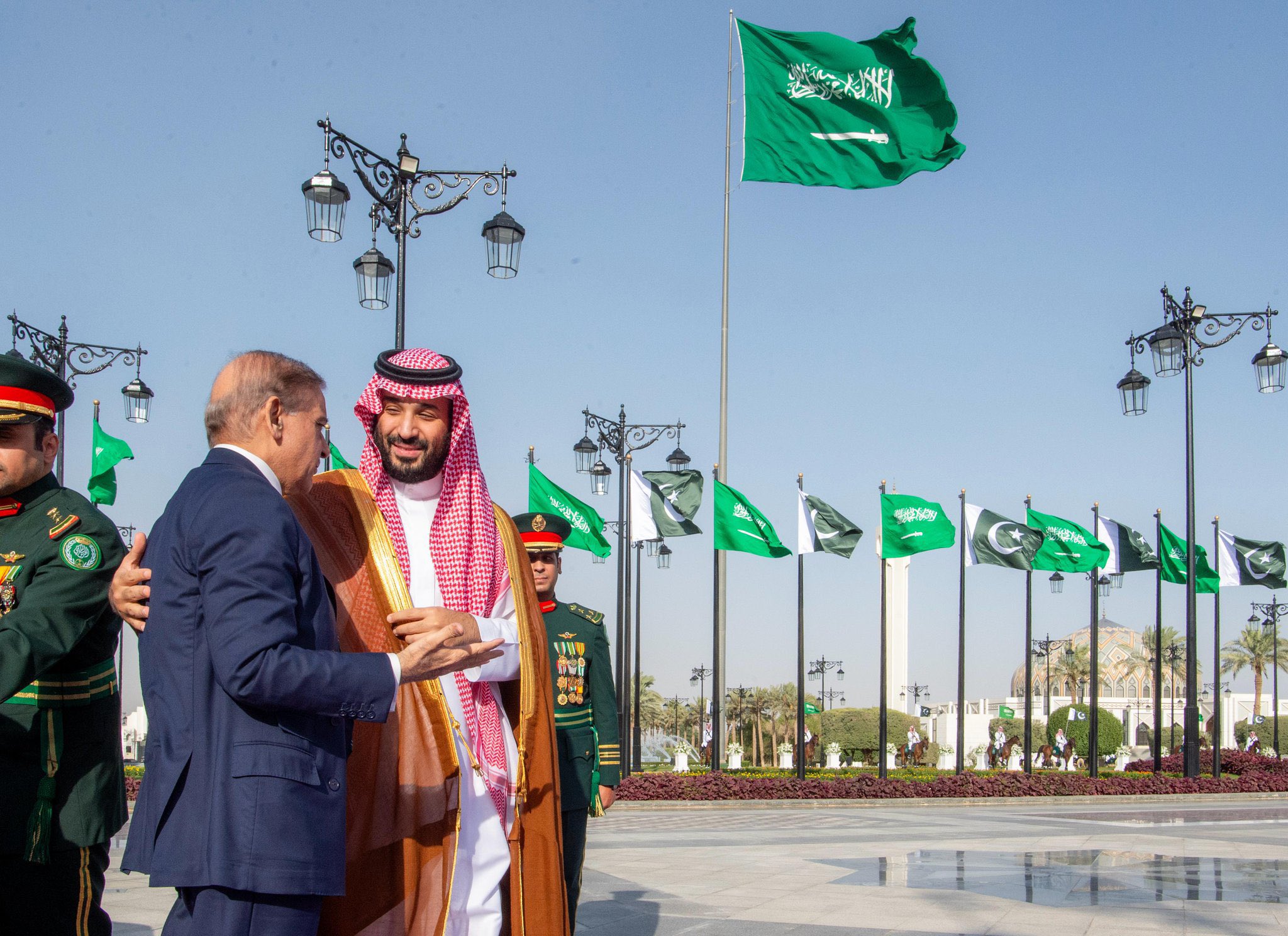
The Middle East has never lacked alliances, but few have delivered stability. Most have been reactive, externally dependent, or structured in ways that deepened rivalries rather than reduced them. On 17 September 2025, however, Riyadh witnessed a different kind of agreement. At Al Yamamah Palace, Prime Minister Shehbaz Sharif and Crown Prince Mohammed bin Salman signed the Strategic Mutual Defence Agreement (SMDA), committing Pakistan and Saudi Arabia to treat an attack on one as an attack on both.
The timing was telling. Barely a week earlier, Israel’s strike on Doha, home to both Qatar’s leadership and U.S. Central Command facilities, exposed the fragility of Gulf security and highlighted the uncertain reliability of existing deterrence in the region. Although the strategic relationship between Pakistan and Saudi Arabia is decades old, and negotiations for a formal agreement had been underway for a long time, the attack on Qatar likely played a catalytic role in SMDA. Against this backdrop, the SMDA stands out as more than a bilateral pact. It signals the emergence of a new equilibrium in which regional actors themselves are seeking to anchor stability, deter adventurism, and reduce dependence on external guarantees.
Pakistan’s Edge: A Credible Deterrent
The agreement builds on decades of partnership. Since 1967, over 8,000 Saudi personnel have trained in Pakistan, and Pakistani troops have guarded Saudi soil for years. Now that cooperation is institutionalized. Pakistan brings more than manpower. It’s 650,000-strong army fields modern systems like the Al-Khalid II tank and JF-17 Thunder jets, but the real game-changer is doctrine. In August 2025, Pakistan unveiled the Army Rocket Force Command (ARFC), consolidating short- and medium-range conventional missiles, such as the Fatah-1 and Fatah-2, under a single command. Unlike nuclear forces, these are explicitly conventional, providing Riyadh a credible shield without escalation risks.
On top of that, Pakistan has adopted multi-domain operations (MDO), integrating land, air, maritime, cyber, space, and information warfare. This was stress-tested in the April–May 2025 war with India, where Pakistan blunted a numerically superior force through agility, electronic warfare, and precision strikes.
As defense analyst Ayesha Siddiqa put it, “Pakistan is now one of the few militaries outside NATO to practice networked, multi-domain warfare. That credibility makes it indispensable to Riyadh.”
A Buffer for Washington Without Burden
The SMDA also helps Washington, whether antagonists admit it or not. U.S. officials know Gulf anxieties are real, especially after Israel’s unilateral strike on Doha. By stepping in, Pakistan lowers the temperature without forcing U.S. forces into another surge. Here’s the dynamic: if Israel contemplates striking Gulf partners again, it now risks Pakistani retaliation. That raises the costs of adventurism while sparing Washington from a showdown it doesn’t want. The post-SMDA interactions between Pakistan and the US leadership boost the conclusion that the US administration is happy with these new security arrangements in the Middle East.
China’s Stake: Oil and Opportunity
China, the world’s largest oil importer, has just as much to gain. It buys 40% of its crude from the Gulf. In 2024, Houthi attacks cut Red Sea trade by half, shaking Beijing’s supply chains. Stability in 2025, underpinned by the SMDA, is already restoring predictability. That stability feeds investment. Belt and Road Initiative (BRI) spending in the region surged 102% in 2024, with Saudi Arabia alone drawing $19 billion. Chinese firms secured $5 billion in Saudi solar projects this year, with $100 billion more projected by 2030 if calm endures. For Beijing, the SMDA is not a defence pact, but it creates exactly what it needs: peace as the foundation of profitable investment.
Iran’s Quiet Comfort
What about Tehran? Instead of hostility, Iran signalled relief. Saudi leaders informed Tehran immediately after signing that the SMDA was intended to maintain peace in the region and not aimed at Iran in any sense. That message fits with the China-brokered détente of 2023, which reopened trade and pilgrim flows and has held steady for three years. Iran’s economy, under sanctions and shrinking by 1.5%, cannot afford another regional war. With 21% of global oil moving through the Strait of Hormuz, any added stability is a lifeline. As one Iranian scholar noted, “If Pakistan’s presence restrains Israel, it protects us too.” As expected, the Iranian president, in his speech at the UNGA, welcomed the agreement as a symbol of cooperation between two brotherly Islamic countries.
Gulf Allies: Relief Without Concessions
For the rest of the GCC—Bahrain, Kuwait, Oman, Qatar, UAE—the SMDA is reassurance without sacrifice. They gain the cover of Pakistan’s conventional strength while keeping their ties to Washington and avoiding fresh friction with Iran. The pact could expand. Pakistan’s Defense Minister Khawaja Asif hinted at an “Islamic NATO,” with the UAE and Qatar as logical early adopters. For Gulf states, SMDA is not only a symbol of Islamic Brotherhood but also an opportunity to reconcile their internal differences against a common enemy. Economically, Gulf countries might be proving beneficial to Pakistan in terms of investment and remittances.
The Outliers: Israel and India
Almost every power, whether regional or extra-regional, except Israel and India, seems satisfied with the agreement. For Israel, the SMDA complicates its calculus. Striking Gulf capitals is no longer a one-sided gamble; Pakistani retaliation looms in the background. For India, still reeling from its defeat in the 2025 war, the message is blunt: when Gulf states needed a guarantor, they chose Islamabad, not New Delhi.
Pakistan’s Pivot to Leadership
This is Pakistan’s real transformation. For decades, Islamabad’s Gulf role was transactional—troops for loans, training for remittances. The SMDA elevates Pakistan from participant to architect. Leadership here is not just about arms. It is about initiative: Pakistan read the regional vacuum, offered credible deterrence, and stitched together a pact that reassures Washington, accommodates Beijing, and calms Tehran all at once. That balancing act is statesmanship, not chance. Economically, the benefits will follow, but they are secondary to the shift in perception. Pakistan is no longer the Gulf’s borrower of last resort. It is its security guarantor, its stabilizer, its frontline deterrent. That pivot—from recipient to leader—is the most profound change the SMDA brings.
As former ambassador Maleeha Lodhi wrote, “Pakistan’s rise as a pan-Islamic security vanguard is structural. Its credibility is now the foundation on which Gulf stability and Pakistan’s own economic recovery both rest.”
Conclusion: A Rare Triumph
The SMDA is not perfect. Its thresholds for activation must remain clear to avoid missteps. But judged against the Middle East’s grim record of fractured alliances, it is a rare win. For the U.S., it extends influence at no cost. For China, it secures oil and investments. For Iran, it restrains Israel. For the Gulf, it provides autonomy. And for Pakistan, it marks a historic pivot to leadership. In a region too often defined by collapse, Sharif and Mohammed bin Salman signaled something unusual: a security pact that stabilizes rather than fractures. In 2025, that counts as more than a deal. It counts as a turning point.
Author