

The Silent Toll: When Urban Commutes Meet Policy Apathy in Albuquerque’s Shadows
POLICY WIRE — Albuquerque, United States — It isn’t always the headline that tells the story; sometimes, it’s the grim subtext. A sudden absence, a silence on a street where tires once hummed....

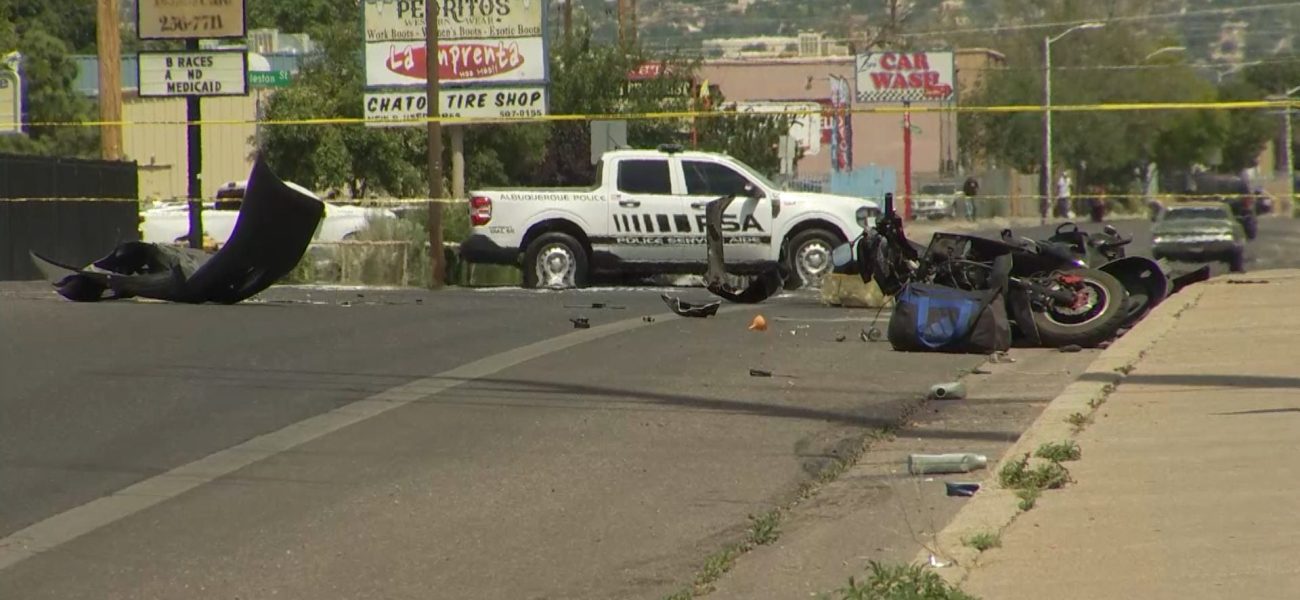
POLICY WIRE — Albuquerque, United States — It isn’t always the headline that tells the story; sometimes, it’s the grim subtext. A sudden absence, a silence on a street where tires once hummed. Another anonymous rider gone, vanished from the grid of existence in Southeast Albuquerque, not with a bang, but a tragically familiar policy whisper. It’s Saturday afternoon, the weekend’s promise hanging heavy, and yet, an intersection — Zuni Road and San Pablo Street, to be precise — becomes a stage for an entirely predictable tragedy. Predictable because we’ve seen this script play out too many times, a stark collision of individual vulnerability and systemic indifference. The details are blunt, unsparing: a moped rider, now deceased.
You’d think in a city bustling with federal installations, universities, and sprawling suburbs, urban mobility would be a polished, well-oiled machine. It isn’t. Not really. The official statement from the local authorities came with that usual procedural chill, noting that Albuquerque police said a moped rider died after a crash near Zuni Road and San Pablo Street. Just words, strung together to form an event, masking the messy reality of what happens when urban infrastructure meets the very human need to get from Point A to Point B, often on a shoestring budget. [QUOTE_PLACEHOLDER]
But the rawest cut, the one that makes you suck in a breath, came almost as an afterthought, a single line in a police report, detached and observational: Police said the driver was not wearing a helmet. That’s it. No moralizing, no sermons—just the chilling fact. This wasn’t an unforeseen circumstance, an act of God. This was a preventable injury, escalating to fatality. And that, right there, is where the narrative shifts from simple accident to policy vacuum. Helmets, it turns out, aren’t just decorative—they’re critical. The National Highway Traffic Safety Administration (NHTSA) estimated in a 2021 report that motorcycle helmets, a comparable protective gear, are approximately 37 percent effective in preventing fatal injuries for riders. So, an estimated four out of every ten riders might walk away from incidents like these if they had adequate head protection. This isn’t conjecture; it’s statistical truth.
It’s a statistic that rings hollow when you consider the socioeconomic factors at play. Mopeds, often seen as a last resort for cheap transport, are a common sight in urban centers, here — and globally. For many, they represent economic freedom—or rather, a forced efficiency—to navigate the asphalt jungle without the prohibitive costs of a car. Policy precision often fades when it comes to the most marginalized; the ones using these modes of transport are rarely the beneficiaries of expensive public safety campaigns or sophisticated infrastructure improvements. And so, the cycle continues.
You can see parallels from Islamabad to Karachi, where motorcycle and moped usage isn’t just common—it’s utterly ubiquitous. There, road safety is a constant, grinding battle. Public health advocates and traffic police constantly contend with haphazard driving, overcrowded two-wheelers, and often, an outright disregard for helmets, especially among younger riders. It’s a matter of cultural norm, lack of sustained enforcement, — and sometimes, plain ignorance. But the outcomes are brutally similar. Hospitals fill up with head trauma cases, lives are tragically cut short, and families are left grappling with the aftermath. Pakistan, like many nations in South Asia, faces an uphill climb in promoting safety culture on its roads, where sheer volume often trumps careful policy implementation.
📄 POLICY WIRE WHITEPAPER PUBLISHED: PAKISTAN'S NATIONAL SECURITY POLICY PRIORITIES
👉 READ BY CLICKING HEREAnd because these incidents often involve those on the fringes of society’s attention, they pass as mere footnotes in local news, a data point rather than a profound human loss. Albuquerque Police Department said its Fatal Crash Team responded Saturday afternoon to investigate the crash in the area, signaling the usual, protocol-driven reaction. Crews took him to a hospital, where he later died. A sequence of events. A life extinguished.
What This Means
This single fatality, devoid of the usual sensational headlines, actually points to a deeply ingrained political and economic policy blind spot. Politically, it signals a failure in either comprehensive public safety messaging regarding low-cost transport options or—more cynically—a strategic deprioritization. Albuquerque, like many American cities, prioritizes larger vehicle traffic, leaving moped and bicycle riders in a dangerous secondary position. This accident highlights that imbalance. Is there effective helmet legislation, — and is it enforced? Clearly, the latter seems wanting.
Economically, it underscores the hidden costs of poverty. Mopeds fill a void for those who can’t afford cars or comprehensive public transport, but the associated safety risks then become an unequal burden. A rider’s death isn’t just a personal tragedy; it often means a loss of income for a family already struggling. It imposes indirect costs on healthcare systems — and societal support networks. And internationally, this mirrors challenges in places like Pakistan, where an informal two-wheeler economy is both a necessity and a significant public health hazard. Until urban policy makers and traffic enforcement genuinely recognize and integrate these modes of transport into holistic safety strategies, we’ll continue to witness these quiet catastrophes. It’s not just about a helmet; it’s about seeing the humanity—and policy neglect—behind the helmet.