


The Silent Fleet: Navies Chart Course for Unmanned Future, Leaving Destroyers Adrift
POLICY WIRE — Washington D.C., USA — The battleship’s reign ended generations ago. Now, it seems, the days of the behemoth destroyer, bristling with human crew and Cold War-era grandeur, might be...

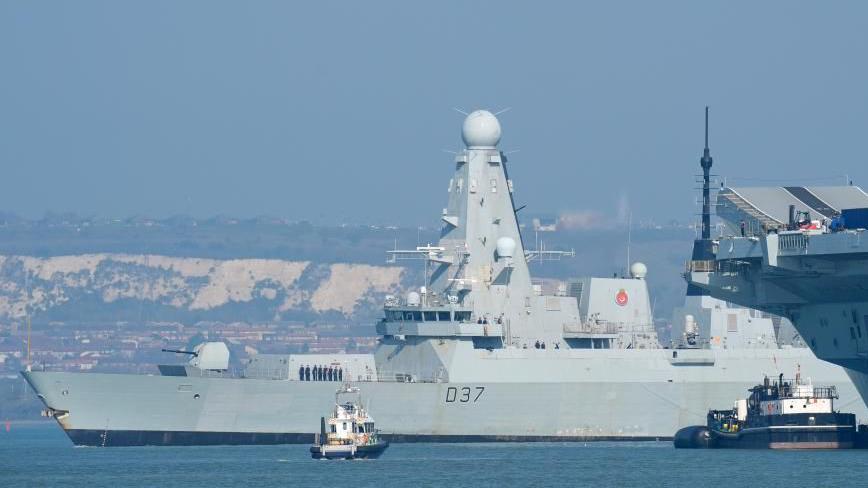
POLICY WIRE — Washington D.C., USA — The battleship’s reign ended generations ago. Now, it seems, the days of the behemoth destroyer, bristling with human crew and Cold War-era grandeur, might be drawing to a quiet, inglorious close. Defense strategists, those folks who spend their days contemplating hypothetical horrors, aren’t just sketching out incremental improvements anymore; they’re redrawing the very seascape of future naval combat, and it’s a vision heavy on autonomy, light on human occupants, and startlingly inexpensive, at least comparatively speaking. We’re talking about an emphatic pivot toward drone-equipped warships, a stark divergence from the decades-old blueprint of simply replacing one aging destroyer with a shinier, more expensive model.
It’s not just a technological upgrade. It’s a whole philosophical reset. The implication is profound, shaking loose long-held assumptions about naval power projection. Forget about the glorious, self-contained leviathans of yesterday; picture instead distributed networks of semi-autonomous vessels, some large enough for drone control, many others simply… drones. Little swarms. This isn’t the future, really. It’s here. Think about it: a nation’s naval might will soon be measured less by the steel in its ships’ hulls and more by the intelligence embedded in its microprocessors. [QUOTE_PLACEHOLDER]
But this isn’t some abstract parlor game for defense wonks. Oh no. This shift sends ripples right through established geopolitical currents. It forces a hard look at who controls the chokepoints of global trade, who can project influence, and, perhaps most tellingly, who can afford to play the new game. For years, the maritime world’s steady rhythm involved the commissioning of gargantuan vessels, a slow, methodical dance of shipbuilding that seemed almost immune to rapid change. And then, everything shifted. The old ships, bless their hearts, were built for a different world, a different threat matrix. Their days, for many functions, are simply numbered.
The reasoning is pretty clear, if you really stop to consider it. The cost of crewing a large vessel, with all the accompanying logistics, benefits, — and training, it’s astronomical. Automated systems reduce — perhaps eliminate — that human element, translating into significant long-term savings. According to a recent report by the Congressional Budget Office (CBO), the per-unit cost of a new manned destroyer has escalated by an estimated 35% over the past decade, making the economic argument for distributed, drone-heavy fleets increasingly compelling. This new paradigm allows for what strategists call a distributed lethality, essentially putting more eggs in more, smaller, harder-to-hit baskets. Losing a hundred million dollar drone is far more palatable, strategically and politically, than losing a multi-billion dollar warship and hundreds of souls.
And then there’s the ugly truth of obsolescence. Older vessels, even with mid-life refits, can’t quite keep up with the processing power or data-link capabilities needed for hyper-connected, real-time drone operations. They’re effectively glorified targets in a world where speed of information — and precision strikes are paramount. When firepower becomes a political echo chamber, the efficiency of deployment and response matters immensely.
The implications for regions like South Asia are, naturally, substantial. Countries with extensive coastlines and maritime interests — like Pakistan, with its strategically vital Gwadar Port and its choke point access to the Persian Gulf — are observing these trends closely, or at least they’d better be. Pakistan’s naval capabilities, like those of its neighbors, have historically focused on traditional platforms: frigates, submarines, destroyers. But as global powers pivot to these drone-centric doctrines, regional players face a choice: adapt their fleets and procurement strategies, or risk a significant asymmetric disadvantage. It’s not just about defending borders anymore; it’s about controlling swathes of sea for trade, energy routes, and counter-terrorism, all with fewer — if any — humans in harm’s way. This sort of technological leap has a nasty habit of destabilizing old regional balances, often inadvertently.
Because, really, no navy wants to be caught with last century’s technology when a new form of warfare unfolds. Naval architects aren’t just drawing fancier ships now. They’re thinking entirely different systems of sea denial, surveillance, — and engagement. It’s a fundamental reimagining, one that prioritizes unmanned resilience and networked combat superiority above all else. This isn’t just replacing a destroyer with a fancier one, mind you. This is replacing the *idea* of a destroyer.
What This Means
This dramatic shift in naval procurement — and strategy carries significant political and economic freight. Politically, it reconfigures alliance structures — and global power dynamics. Nations investing heavily in unmanned naval capabilities will likely enhance their ability to project influence without incurring the high human costs previously associated with such ventures. This could make interventions or extended patrols in disputed waters politically more palatable, leading to increased tensions in certain areas. Think South China Sea, for instance, or the Gulf of Aden. Economically, it represents a monumental transfer of investment from traditional shipbuilding to defense technology firms specializing in AI, robotics, and secure data networks. There will be winners, and there will be shipbuilding nations — countries like South Korea or even India with burgeoning indigenous naval programs — who suddenly find their existing long-term strategies looking rather quaint. The geopolitical chessboard gains an entirely new, almost invisible, layer. The question for many countries, especially those navigating complex regional dynamics, won’t just be what kind of navy they can afford, but what kind of *war* their navy can fight.